From the Bookshelf
Lou Stoppard: Exteriors — Annie Ernaux and Photography

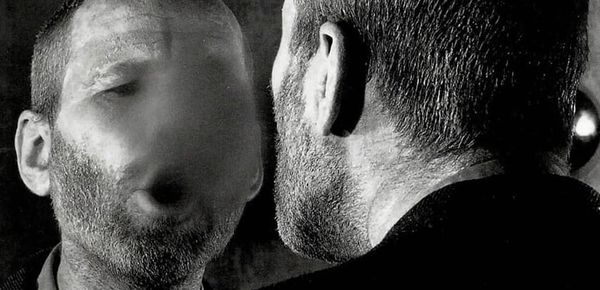
My aim is to describe reality as through the eyes of a photographer and to perceive the mystery and opacity of the lives I encountered.
— Annie Ernaux
A couple of years ago I was in Paris and visited (as I always do) the Maison Européenne de la Photographie (MEP) where I saw Exteriors, an exhibition curated by Lou Stoppard that paired photographs from the MEP collection with extracts from Annie Ernaux’s writing.* It was wonderful. I decided to stay for a panel discussion featuring Stoppard, Lauren Elkin, Federica Chiocchetti and Simon Baker. It was mostly in French, which I don’t speak, so I understood less than a third of what was said. But it was interesting to strain to catch meaning, filling gaps with guesswork, attending to tone and gesture. It felt a bit like looking at photographs.
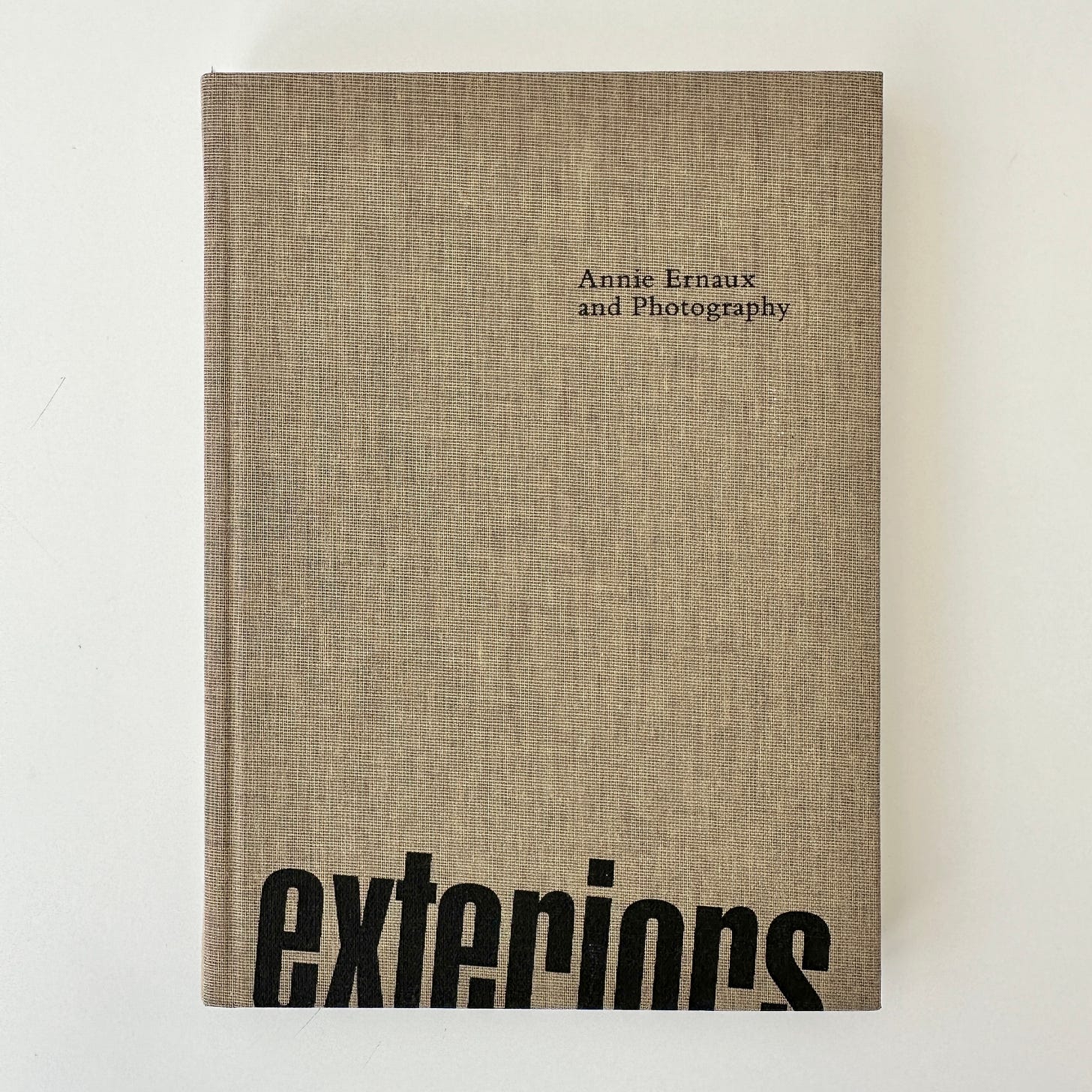
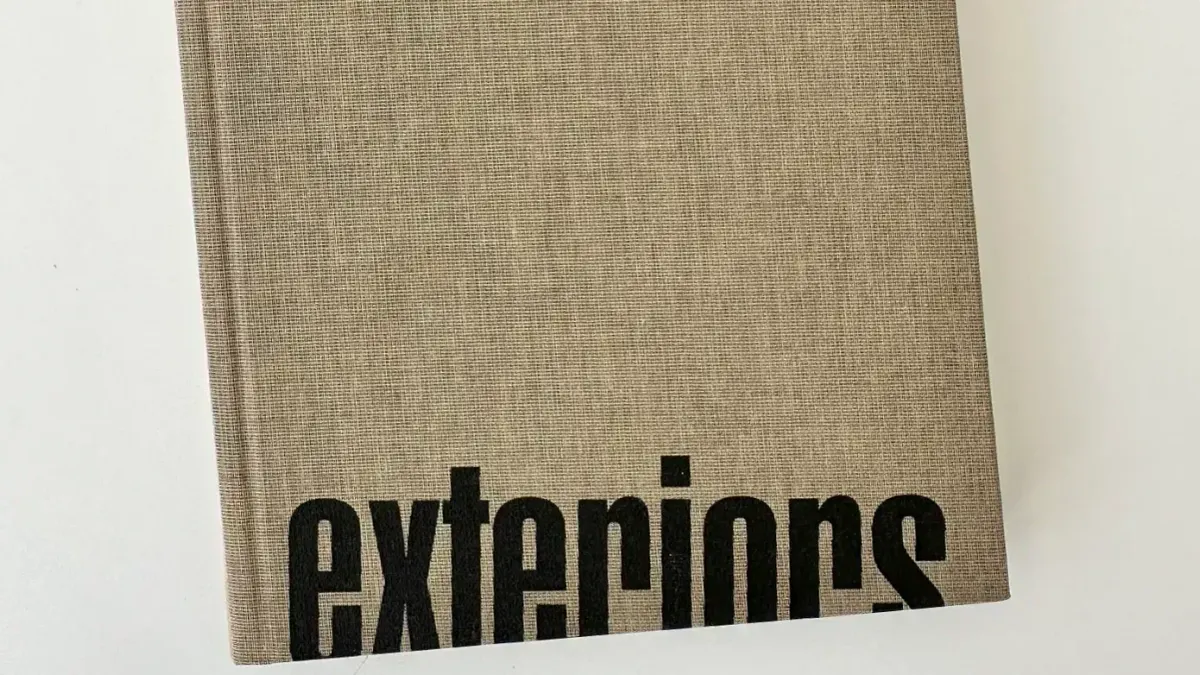
The exhibition catalogue is published by MACK. It preserves the format of the show: images and text interwoven, excerpts from Ernaux’s Exteriors set alongside photographs that don’t illustrate so much as resonate. The pairings are suggestive rather than literal. You’re invited to move between image and text, noticing correspondences, friction, the ways each medium illuminates and obscures. It’s not quite the same experience as moving through the rooms of the exhibition, but it’s beautifully designed and interestingly different.
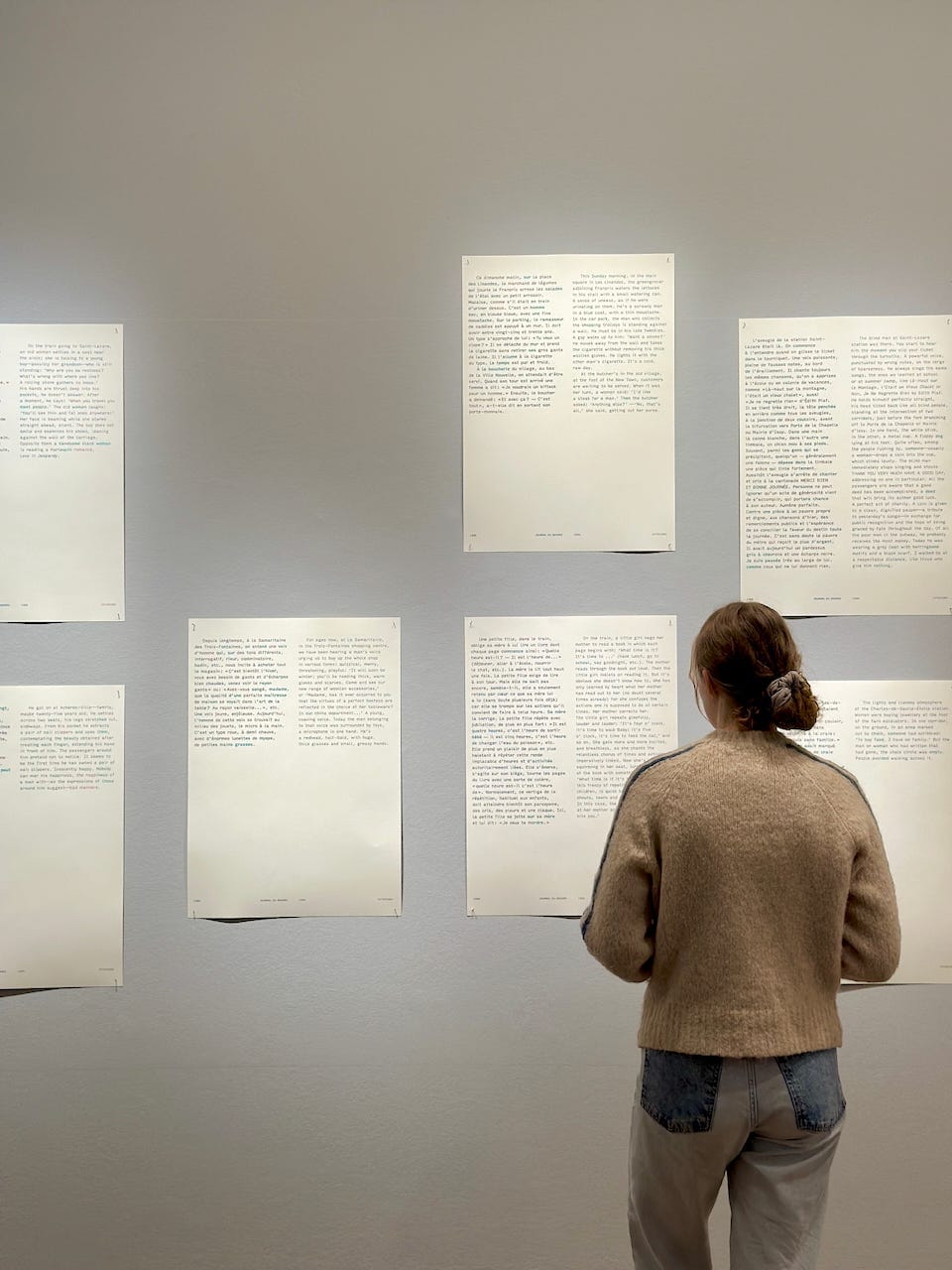
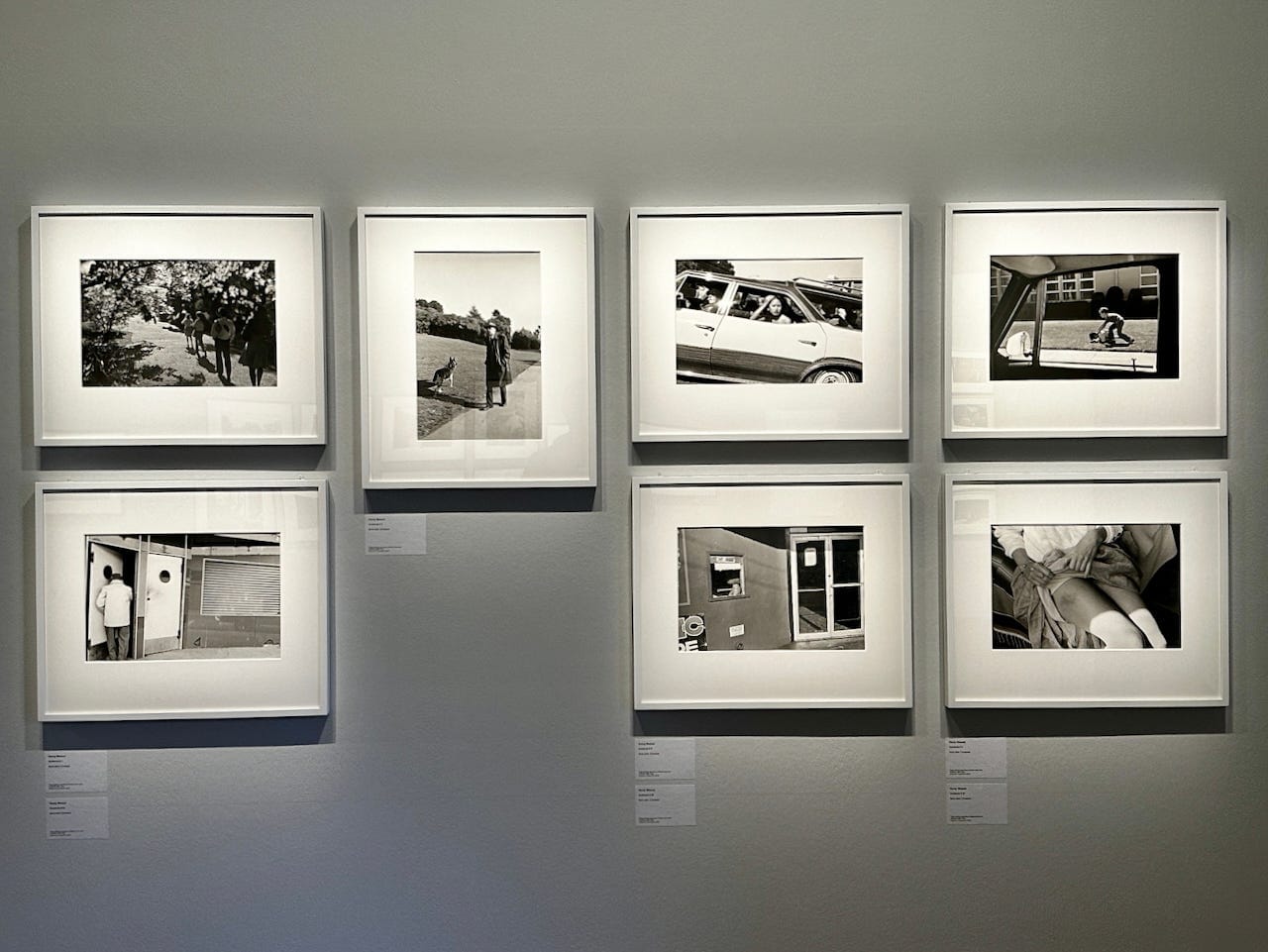
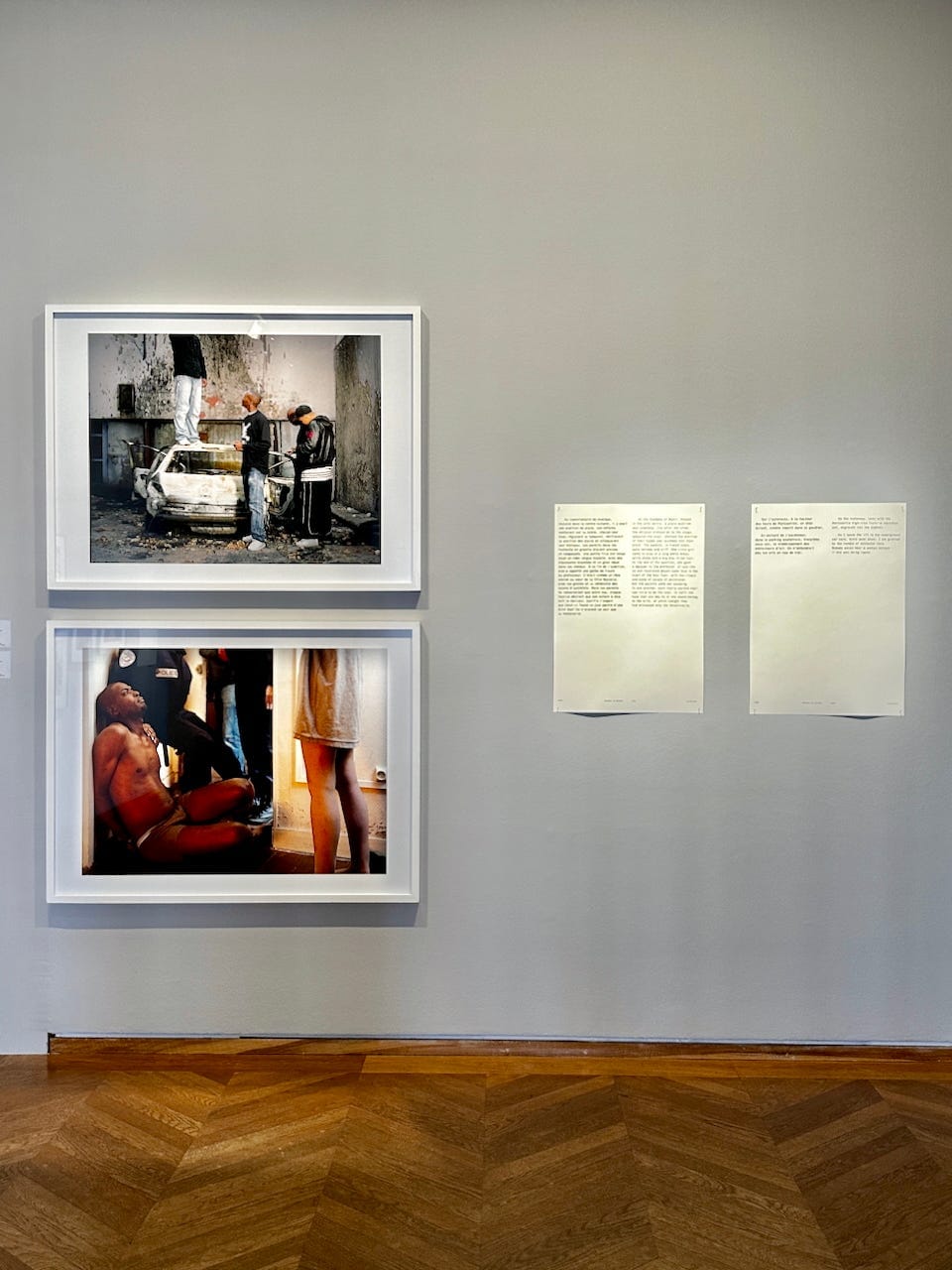
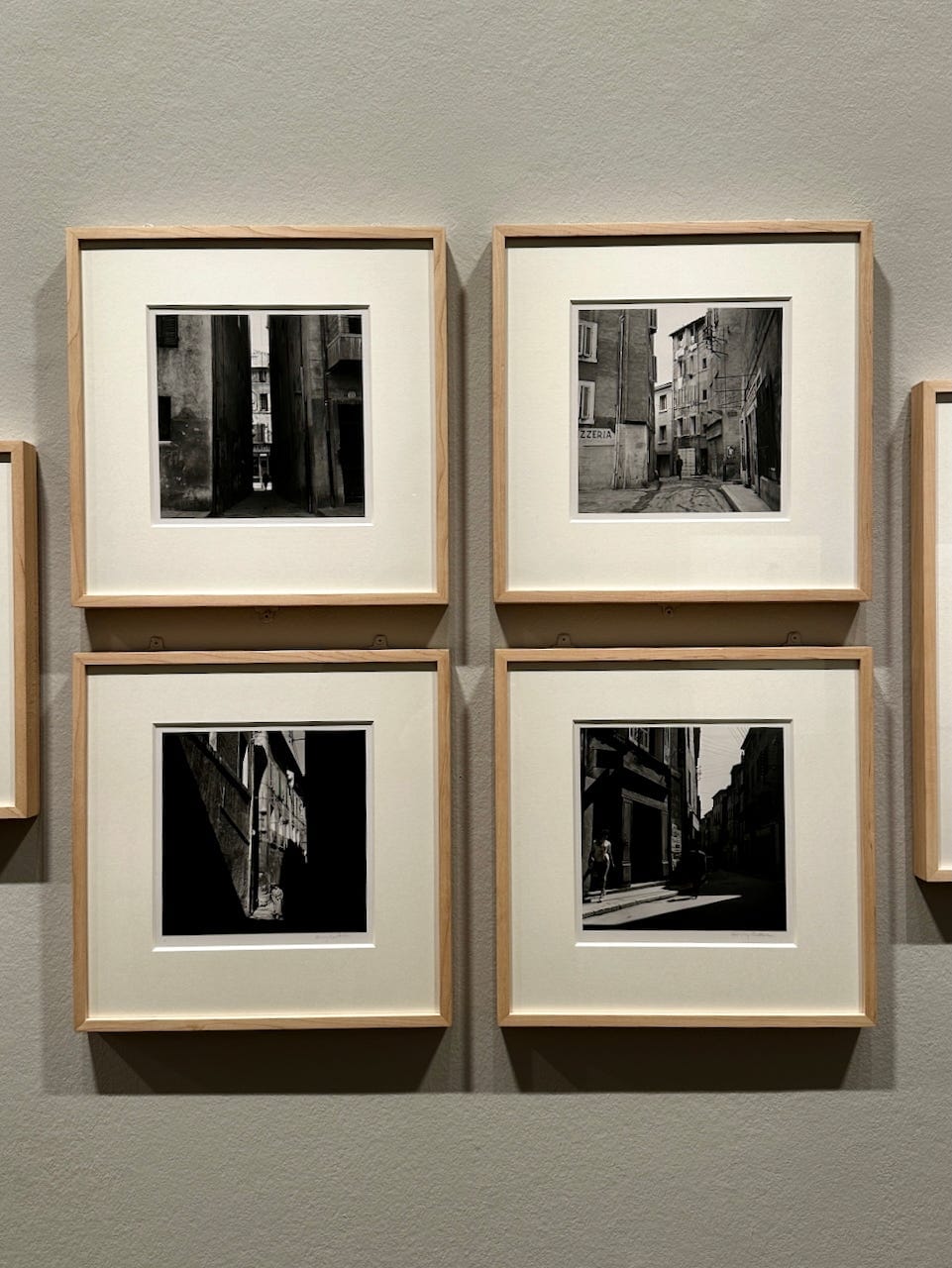
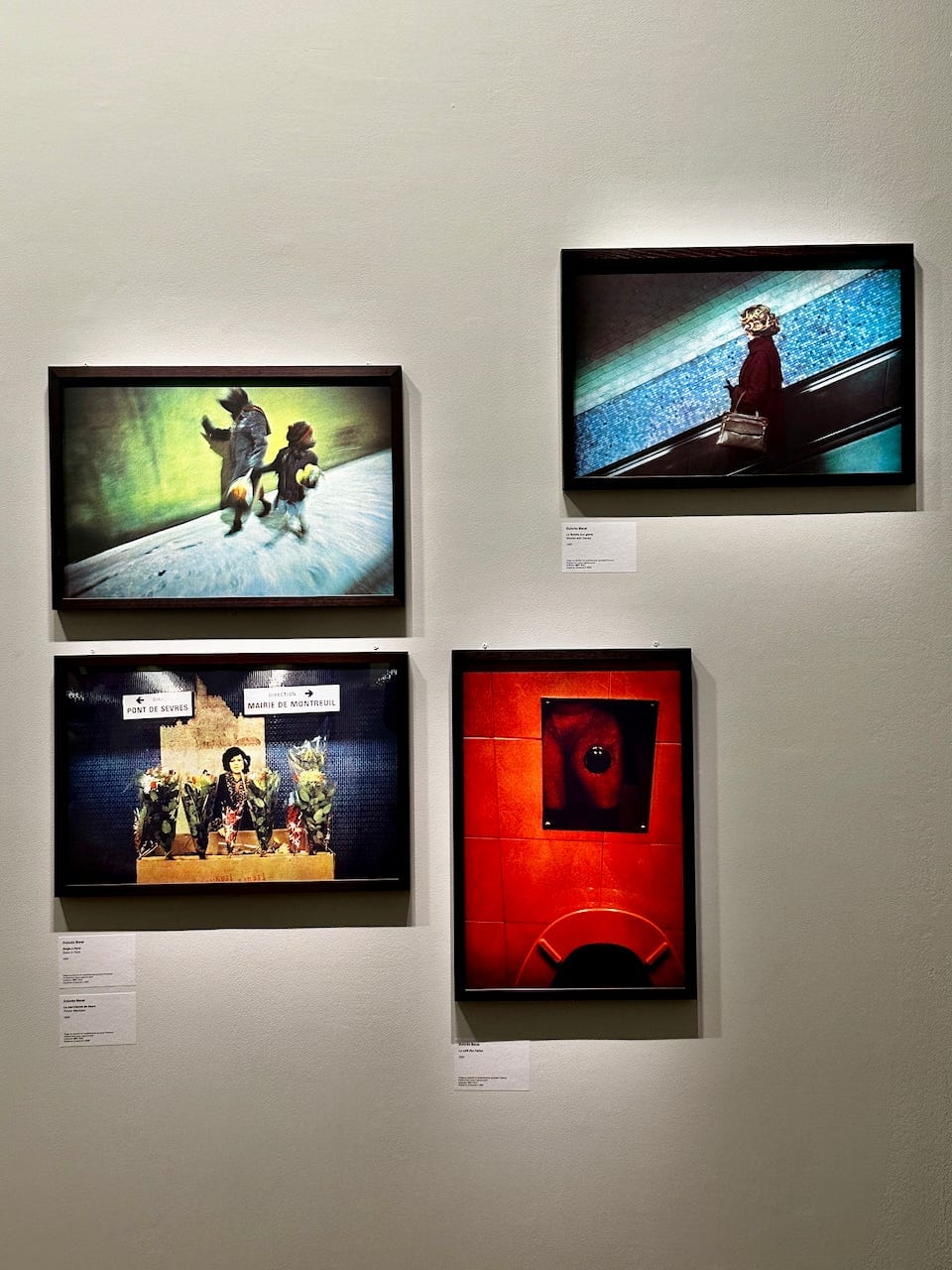
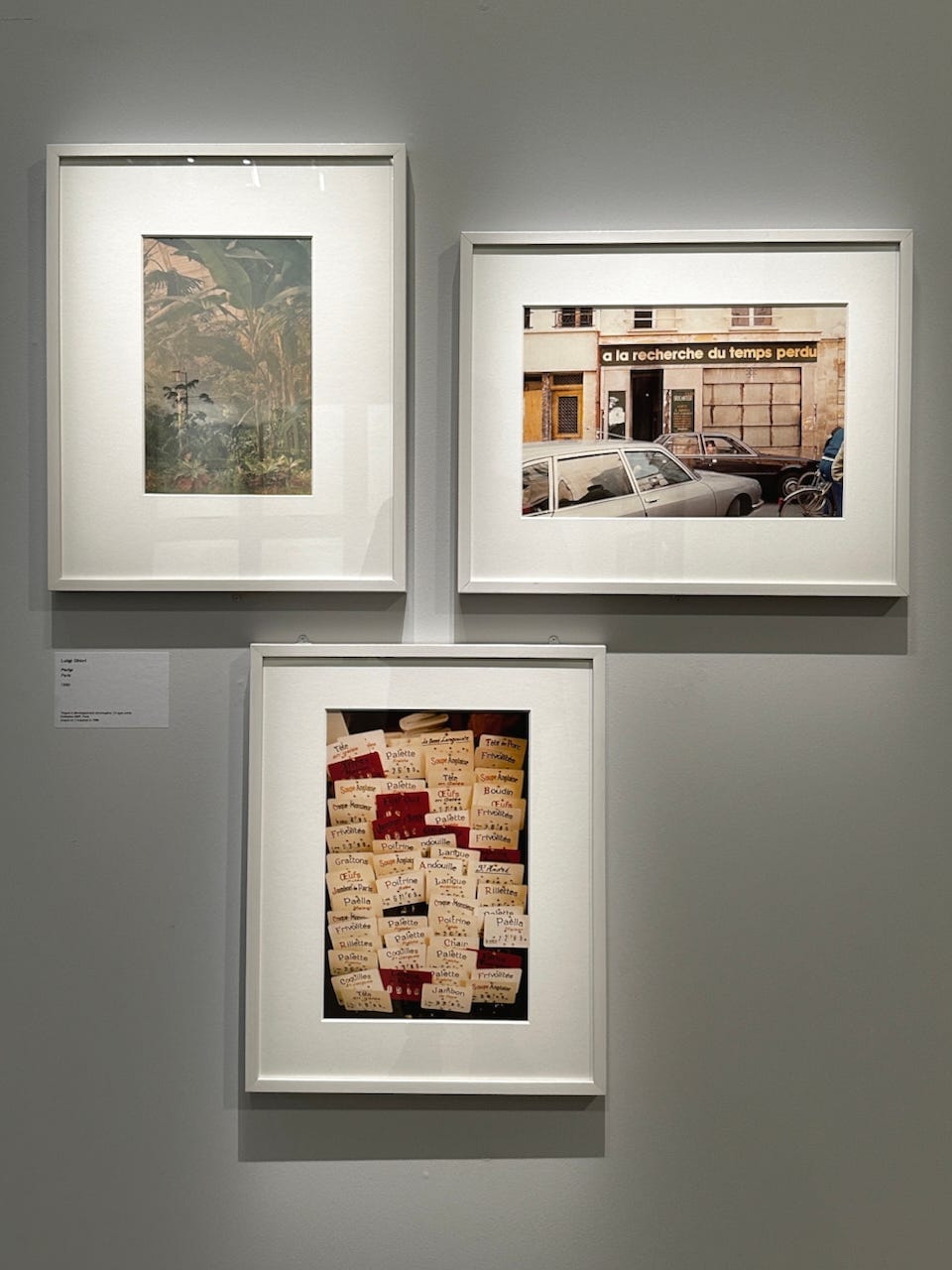
Jon Nicholls - Exteriors: Annie Ernaux and Photography at MEP, Paris, April 2024
The catalogue isn’t a teaching resource in any obvious sense. But the combination of photographs and texts, plus Stoppard’s curatorial essay poses questions that seem essential to anyone thinking about photography and meaning.
Can you see a text? Can you read a photograph? Do texts have more narrative, or more bias, than photographs? Do texts offer the same sense of ‘reality’ as a photograph? Can they ever be ‘proof’ or ‘evidence’ of something?
And my favourite: What does it mean to see ‘as if through the eyes of a photographer’?
Writing photographically
Stoppard identifies something she calls “writing photographically”, a preoccupation that runs through Ernaux’s work. Ernaux doesn’t just describe the world. She records it, with the attentiveness and apparent neutrality of a camera. She returns obsessively to the word “image.” The first line of The Years is: “All the images will disappear.” Her books read like photo albums of fragments of time, family portraits alongside images of the mind, memories that behave like snapshots.
Stoppard pairs two quotations that capture this:
There is nothing as mysterious as a fact clearly described.
— Garry Winogrand
and
Many people don’t see what I see [...] they don’t pay attention to the outside world.
— Annie Ernaux
Both statements claim a kind of radical attention, looking so carefully at what’s there that it becomes strange, mysterious, significant. Both imply that most people don’t look this way. The photographer and the writer share a disposition: they notice what others pass by. The scholar Akane Kawakami describes Ernaux’s approach as being like “a recording surface—as a tool or piece of film.” Stoppard wonders: “Perhaps Ernaux is not only photographer and subject, but camera too?” The self becomes an apparatus for registering the world.
The everyday
Stoppard chose images from the MEP collection that were concerned with the everyday rather than seeking illustrations of Ernaux’s specific scenes. The photographs attend to the banal, the overlooked, the unremarkable, the same territory Ernaux has made her own. She has been called “The Queen of the Supermarket.” Her domain is the RER train, the shopping centre, the waiting room.
Here she is, observing a young woman on public transport:
A young girl on the RER is unwrapping the things she has bought: a blouse and a pair of earrings. She contemplates them and touches them lovingly. It’s a common enough scene: happiness at possessing something beautiful, at seeing our longing for beauty satisfied. So moving, our connection to things.
And at the checkout:
At Super-Discount, a young cashier, maybe a temp, is laughing with some people she knows, two girls standing beside her. The customers waiting in the queue are visibly annoyed: it’s quite clear she doesn’t give a damn about us, she’s just ringing up the items. People resent her openness.
These fragments read like photographs, moments caught and held, charged with implication but withheld from judgement. Ernaux sees and records. She doesn’t explain. The photographs in the exhibition work similarly. Luigi Ghirri’s Parigi (1980) shows an unremarkable Parisian street corner, the everyday made luminous through attention. Dolores Marat notices a Woman with Gloves (1987) on the Metro. Janine Niépce’s H.L.M. à Vitry (1965) captures a mother and child in a housing project. ordinary life, rendered visible. Garry Winogrand’s Los Angeles, California (1969), one of my favourite photographs, catches an uncomfortable collision of figures in transit, a moment of life unfolding that would be meaningless if it weren’t so precisely seen.
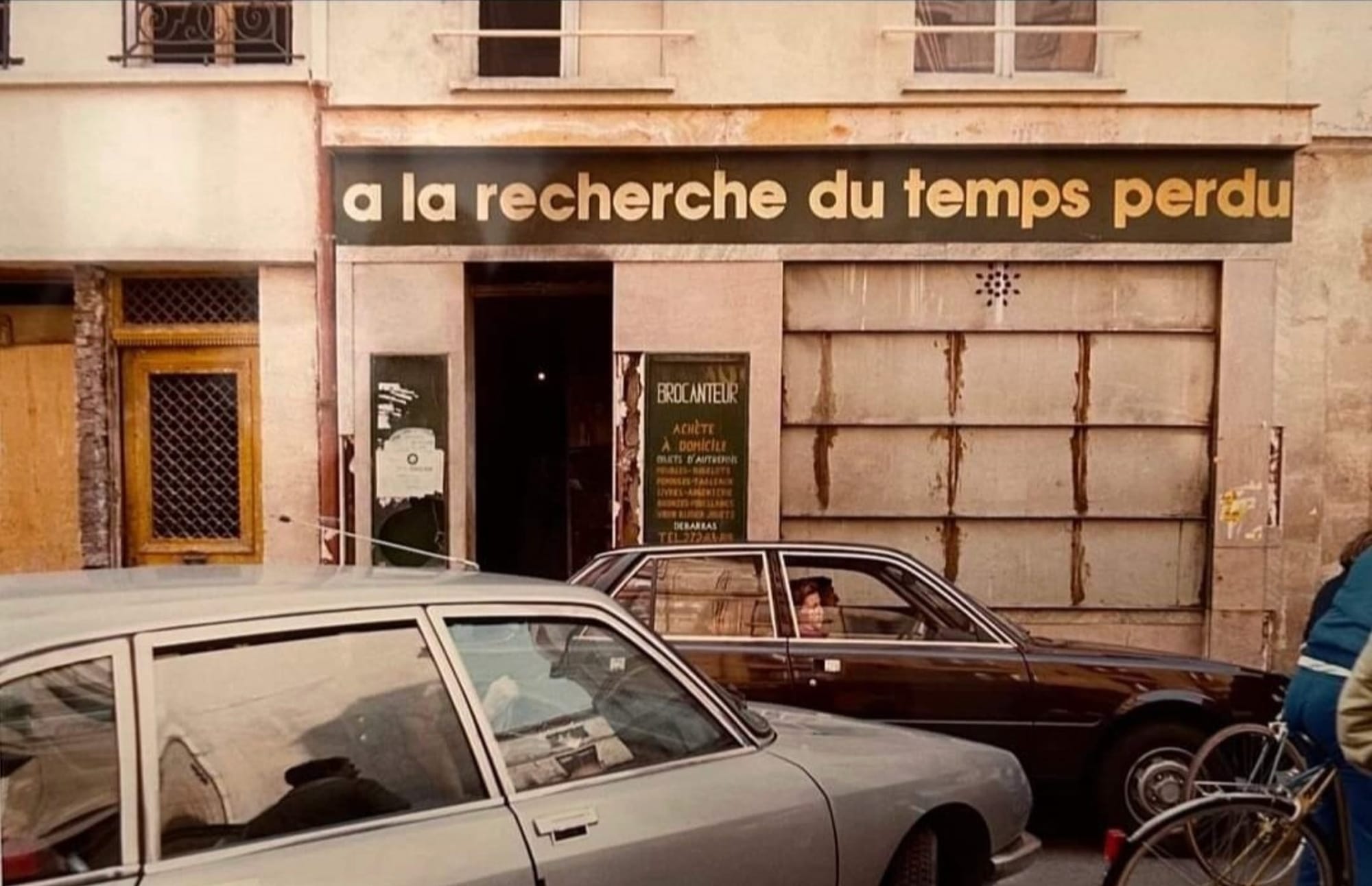
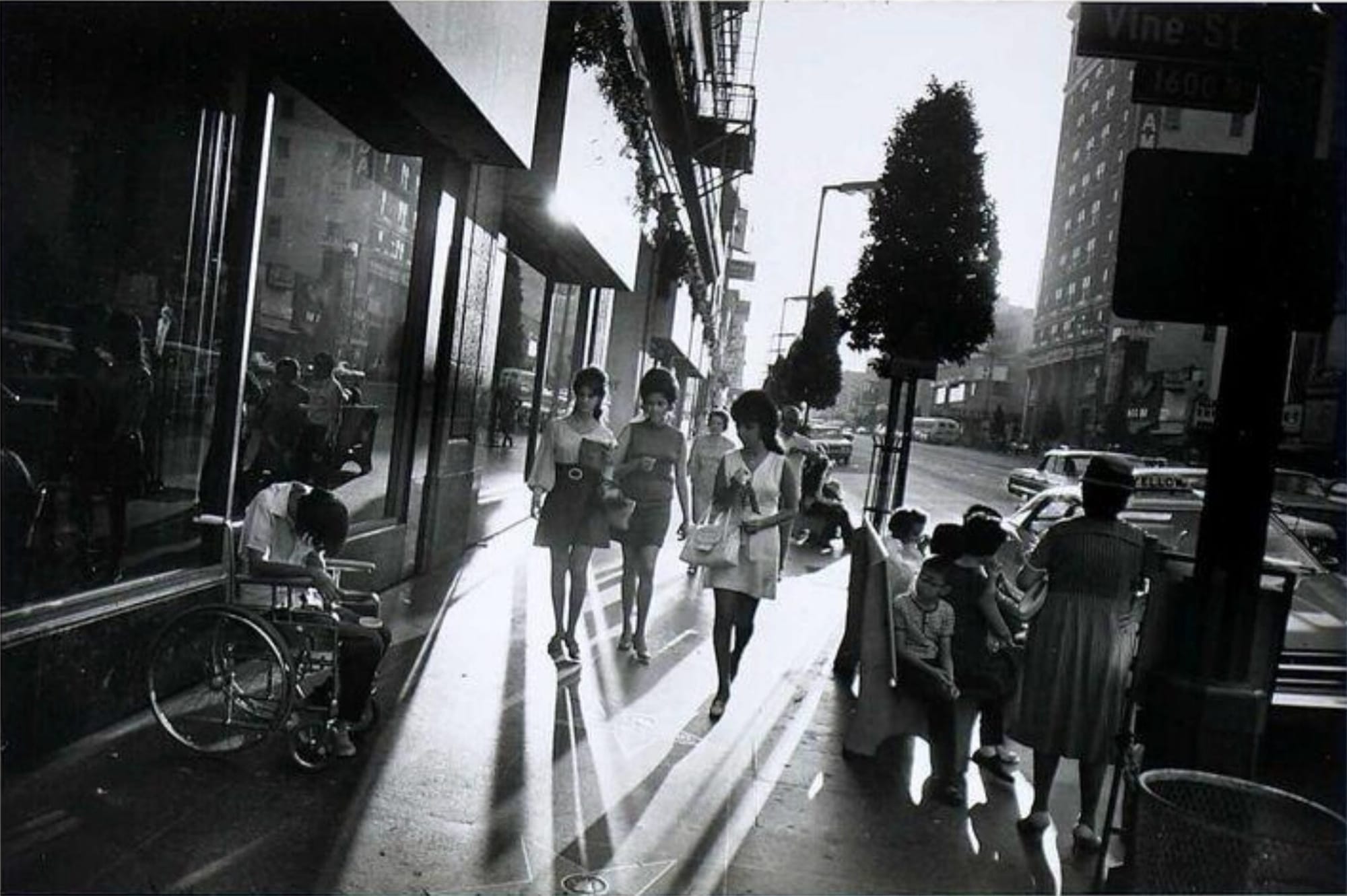
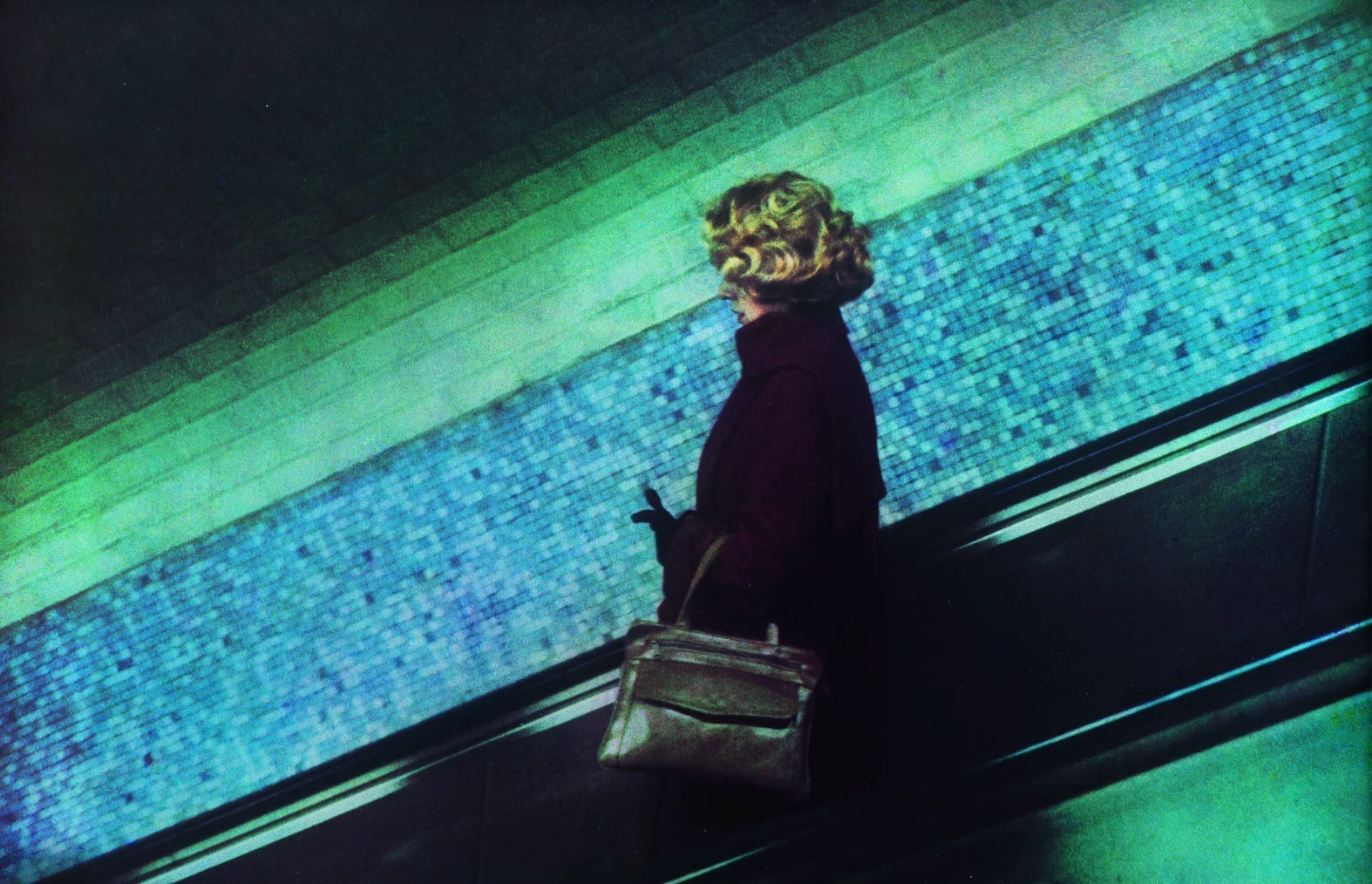
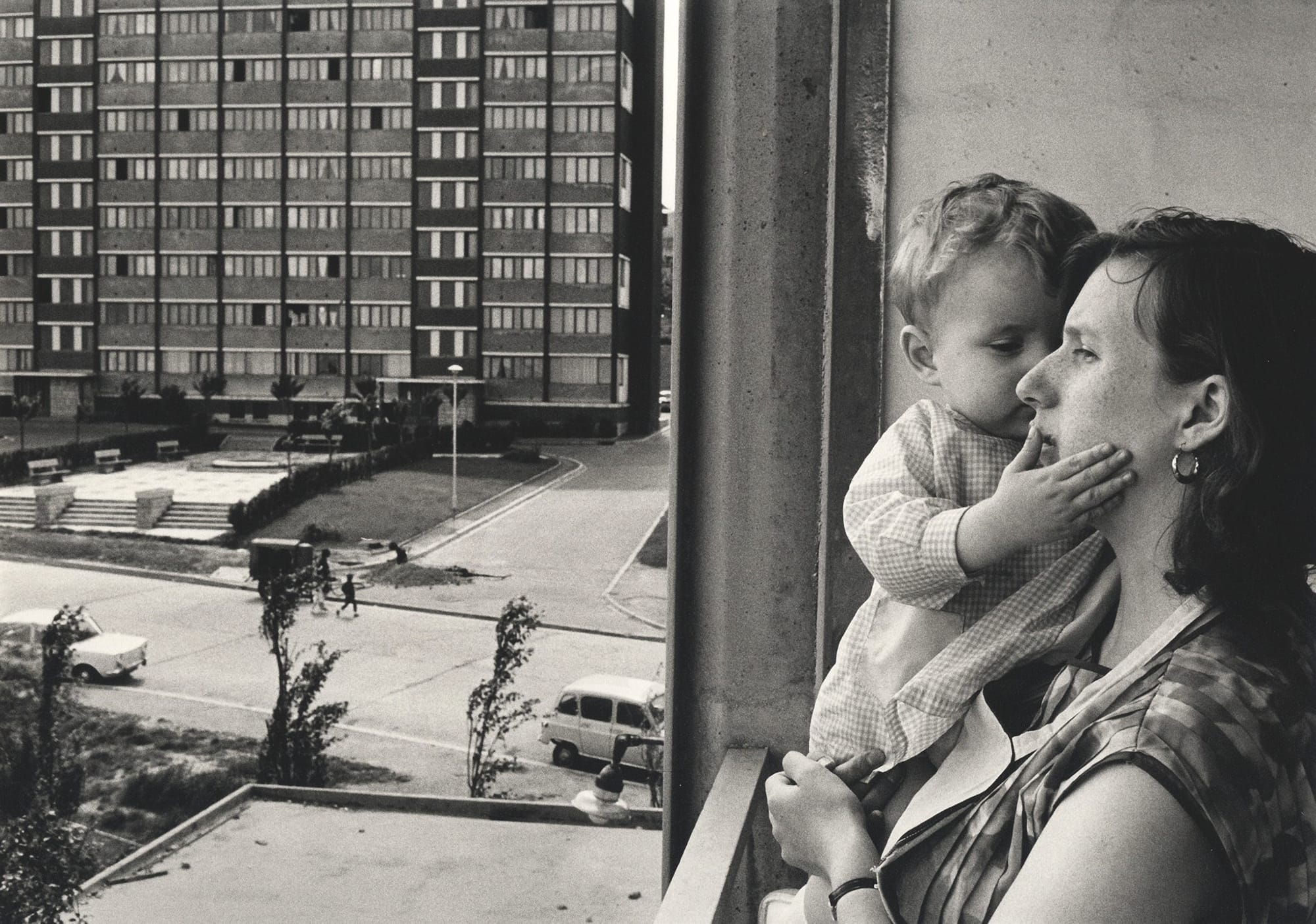
Ghirri, Winogrand, Marat and Niépce
Surfaces
Ernaux writes about the overlooked because she believes that our “true selves” are discovered through others, through the texture of shared public life. The catalogue opens with a quotation from Jean-Jacques Rousseau: “Our real self is not entirely inside of us.”
She attends to surfaces: walls, signs, inscriptions. Graffiti in a lecture hall at Nanterre:
On the walls of a lecture hall where a professor is explaining Proust, at Nanterre University:
Unrestricted pleasure Free sexuality Free love Student you’re sleeping You’re wasting your life We must achieve economic equality
And a chalk circle in the Métro:
The lights and clammy atmosphere of the Charles-de-Gaulle-Étoile station. Women were buying jewellery at the foot of the twin escalators. In one corridor, on the ground, in an area marked out by chalk, someone had scribbled: ‘To buy food. I have no family.’ But the man or woman who had written that had gone, the chalk circle was empty. People avoided walking across it.
The absent person, the empty circle, the avoidance of those who pass. This is photography’s territory too. The trace of something that was there. The that-has-been. Issei Suda’s Nabari, Mie (1977) and Harry Callahan’s Aix-en-Provence (1957–58) work in this register. Images that seem to hold absence as much as presence, stillness charged with what has passed through.
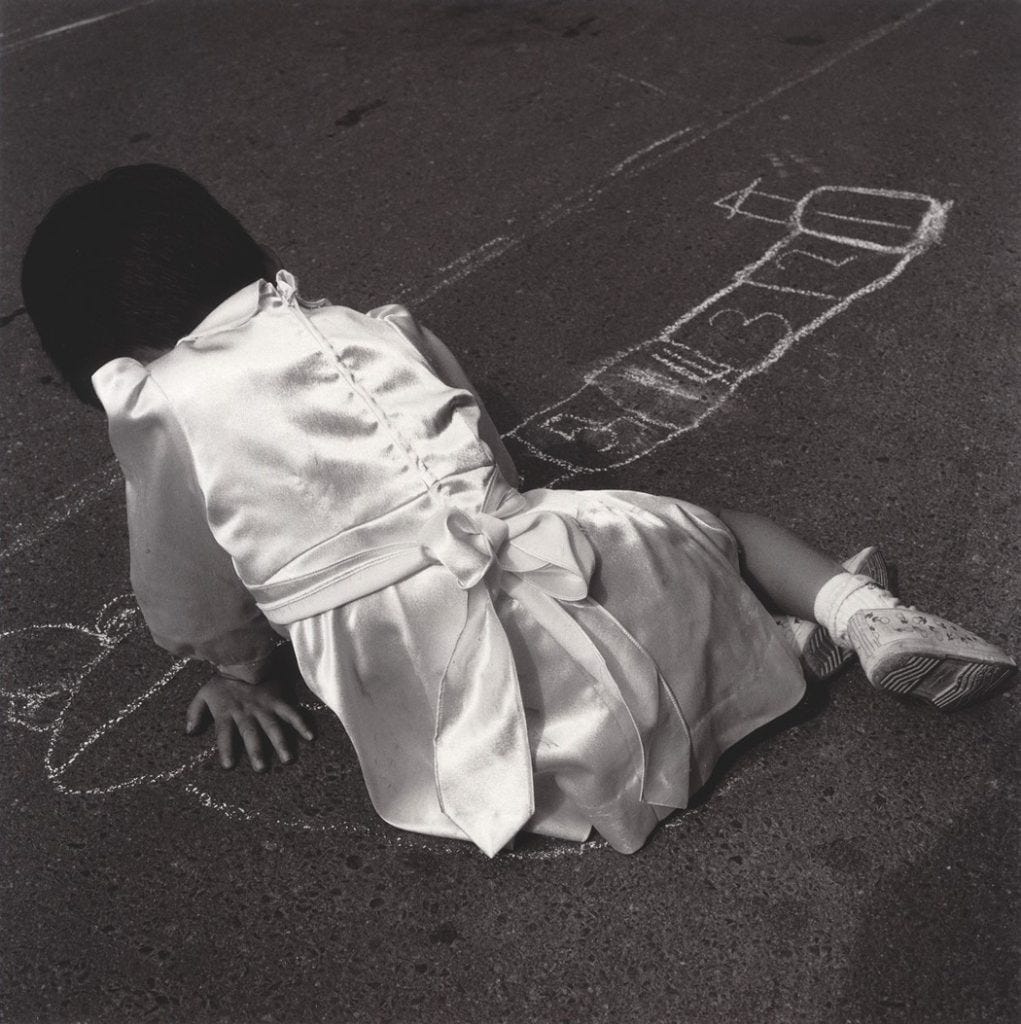
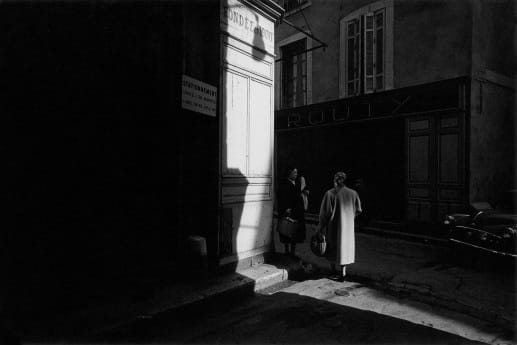
Suda and Callahan
Looking and privilege
Stoppard reminds us that to move relatively freely through the world, to observe, to linger, to record, implies inclination, ability, and time. These are not equally available to everyone. Ernaux is alert to questions of class and privilege: who gets to look, and at whom? Quoting Bourdieu, Stoppard explores the idea that behind images there are always more images, a “surplus of meaning” that exceeds what any single frame can contain.
Photographs are about something that would not exist without the photograph.
— Henry Wessel
This is a reminder that all photographs are fictions, not untrue necessarily, but constructed. The photograph is not synonymous with its subject. It creates something new: a fixed image of a moment that was, in lived experience, fluid and continuous.
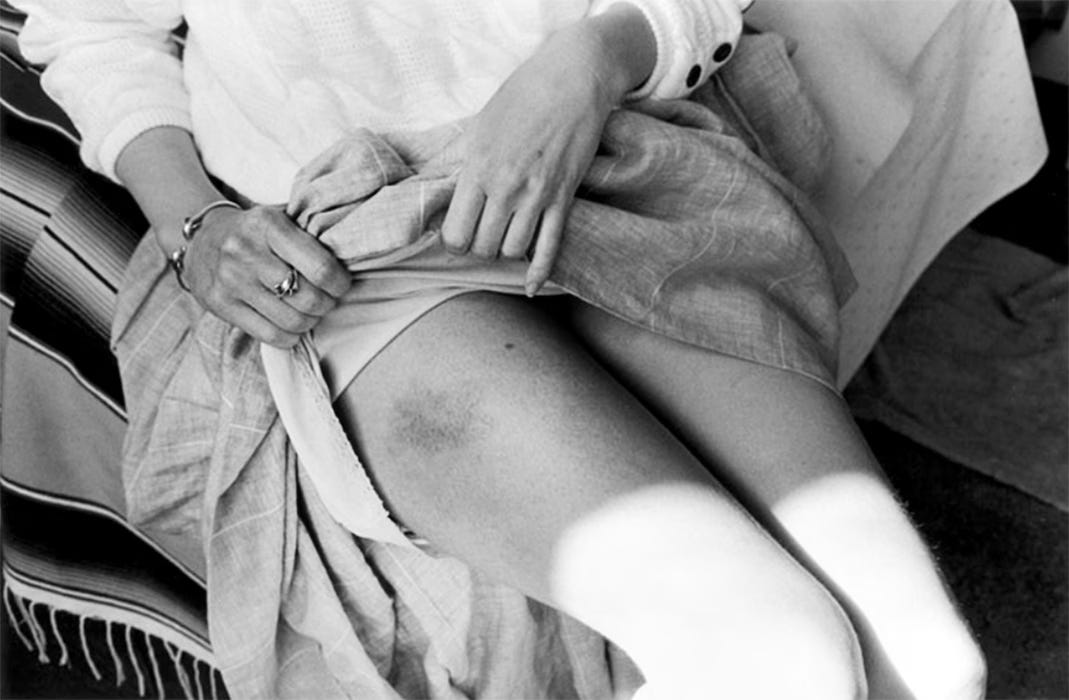
The same could be said of Ernaux’s writing. Her sentences feel like evidence, but they are shaped, selected, framed. The camera and the pen are both tools for making, not just recording.
Reality
Stoppard’s essay ends with the viewer, the reader of the book or visitor to the exhibition. We cannot encounter these images or texts neutrally. We bring ourselves to them: our histories, our blind spots and desires. “We cannot remove ourselves from the reality we see,” Stoppard writes. “We see it both despite and because of ourselves.” Ernaux puts it differently: “I am sure that you can learn more about yourself by embracing the outside world than by taking refuge in the intimacy of a journal.” And Stoppard’s final sentence: “To become photographs, her words must be confronted—seen, and tackled, with the ideals and indifferences that we all bring to our encounters.”
Words & Pictures
I’ve been thinking about this book in relation to the questions we ask students about photography. We teach them to analyse images, to identify formal qualities and contextual factors. But we less often ask them to think about the relationship between photography and other ways of recording the world. What can photographs do that writing can’t? What can writing do that photographs can’t? Where do they overlap, and where do they diverge?
Ernaux’s work suggests that the boundary is more porous than we might assume. Her writing has the qualities we associate with photographs: attention to surface, commitment to the ordinary and a certain withholding of interpretation. And the photographs Stoppard has chosen have qualities we associate with writing: narrative implication, psychological depth and the sense of a consciousness shaping what we see.
Exteriors holds these thoughts open. It’s a prompt for looking and thinking differently.
Thanks for reading PhotoPedagogy! Subscribe for free to receive new posts.
These posts will always be free but, if you enjoy reading them, you can support my analogue photography habit, and that of my students, by contributing to the film fund. Thanks to those of you who have already done so. All donations of whatever size are very gratefully received.
* Ernaux had been awarded the Nobel Prize for Literature in 2022.