Walking with Guido #10
Conviviality.

We were in Peckham recently and my wife needed the loo. The nearest one was in the bar next to the Copeland Gallery. I sat down to wait for her and change a roll of film. Then I noticed the gallery door was open.
The show was called human : being, put on by a collective called dg03, eleven recent MA graduates from the London College of Communication and a few guests, friends who had decided to keep their practice alive together after the course was over. I had a chat with Tzion, one of the exhibitors. He told me, cheerfully, that he had spent about £3000 on production. All the contributors had printed and framed their own work. The room had cost them £1000 to hire. A special deal apparently. One of the group was doing a PhD and I imagine all of them had jobs that were probably not in photography.
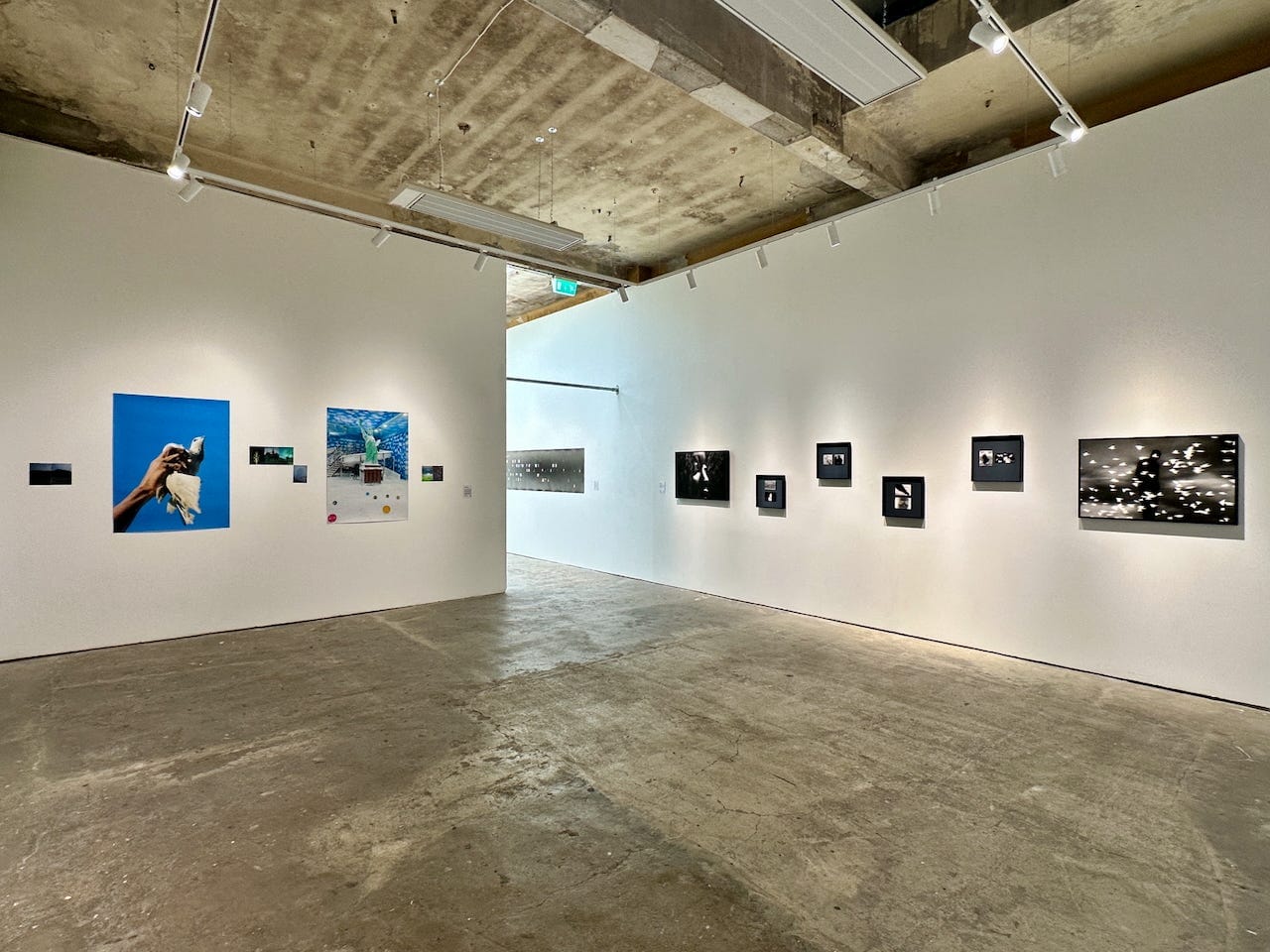
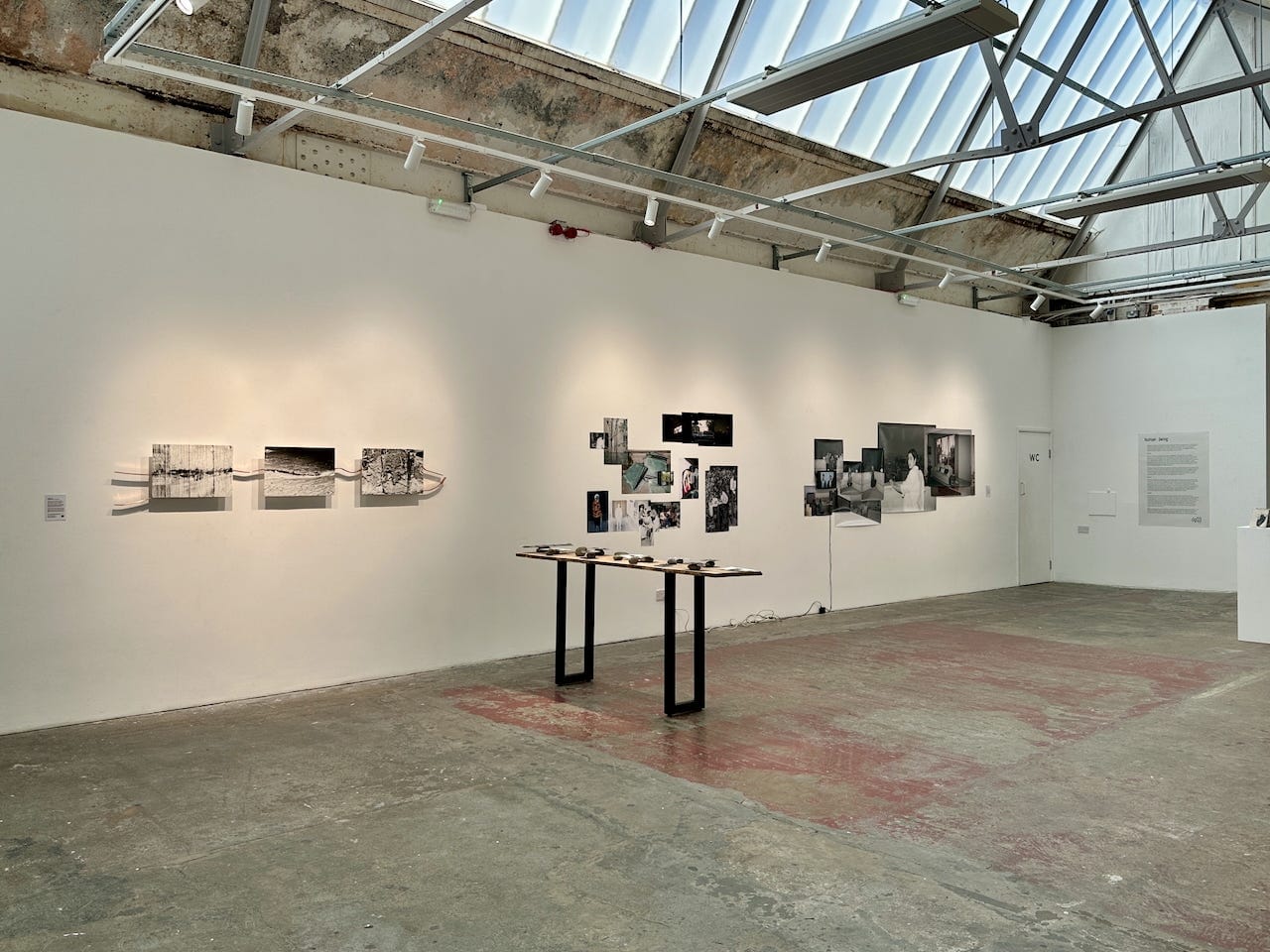
human : being by DG03 Collective at Copeland Gallery, Peckham
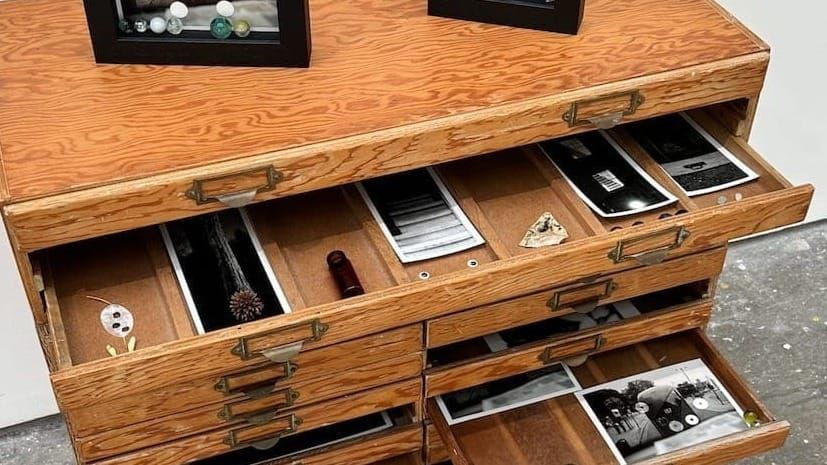
The work was impressive. Confident, imaginative, experimental and beautifully curated. There was a wooden filing cabinet filled with prints and objects. Marbles. A pebble. A seed pod. A small brown medicine bottle. An oyster shell resting on a black and white print of a staircase seen from below. On the top of the cabinet stood two little black shadow boxes and in those the marbles had climbed up off the shelf and into the picture, settling along the bottom edge of a photograph of a 137 bus. Its photogram partner sat in a drawer below.
I stood in front of it for a while. An open archive. A photograph shelved next to a stone and a marble. It might have been titled ‘Conviviality’.
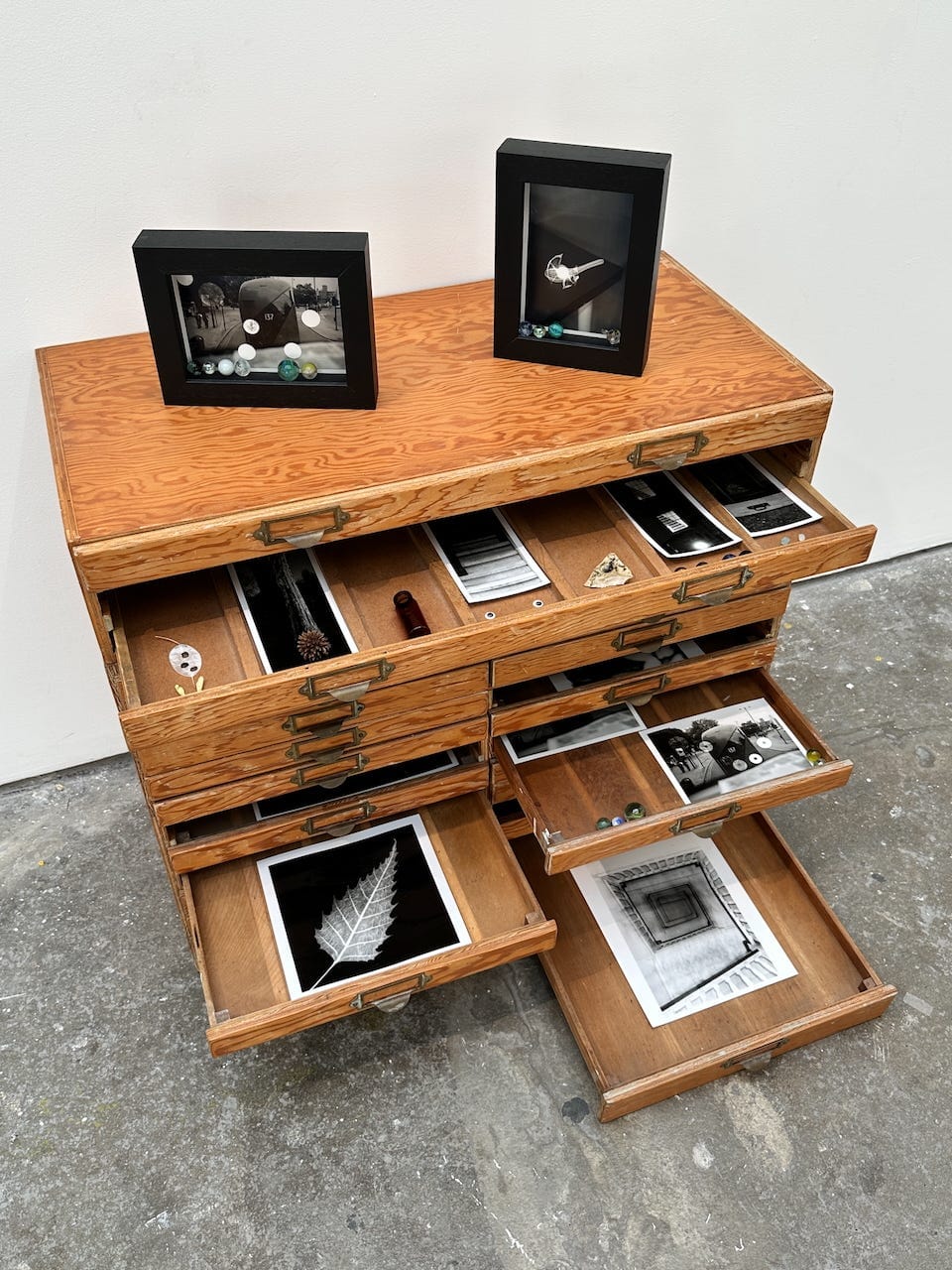
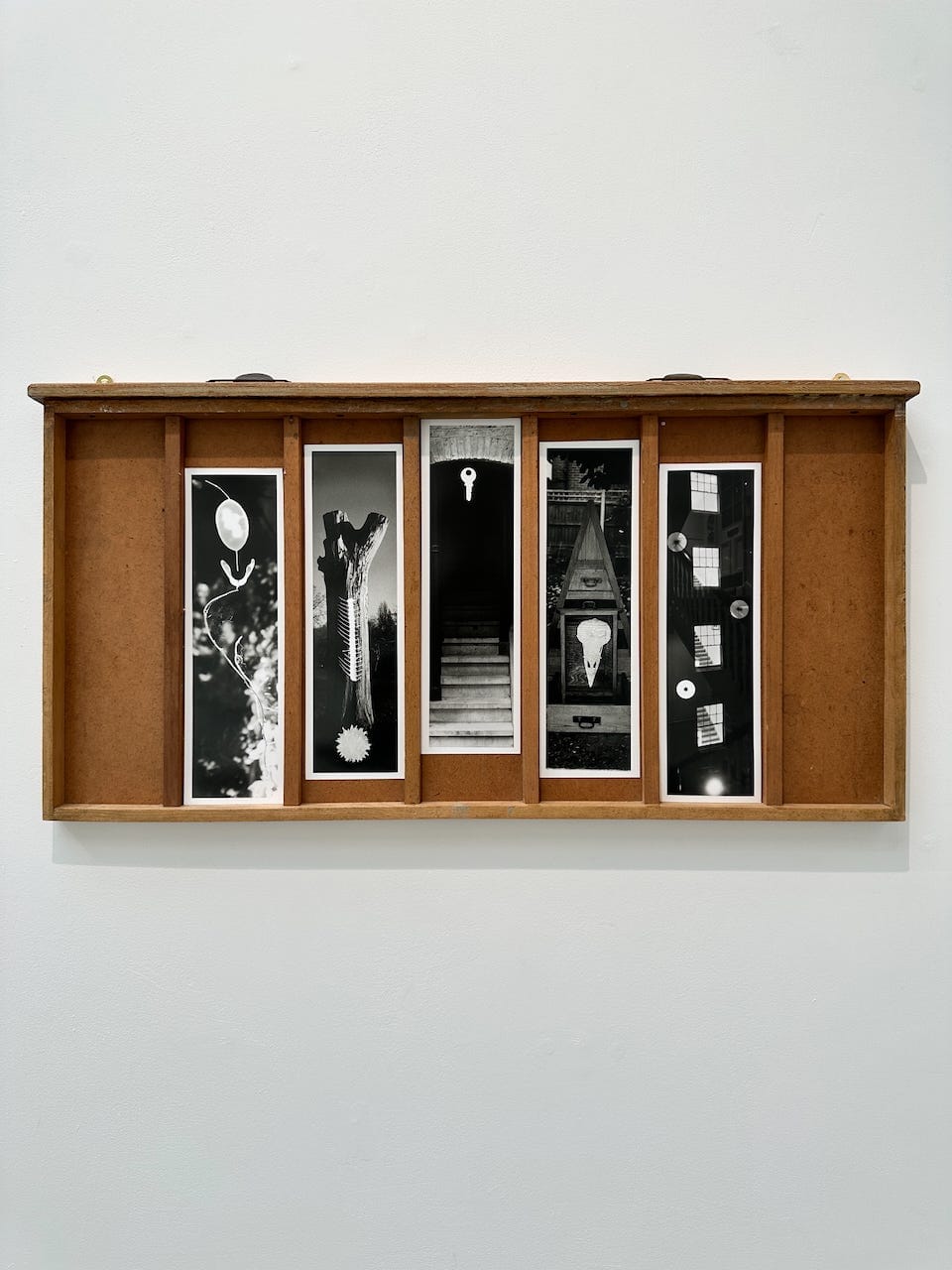
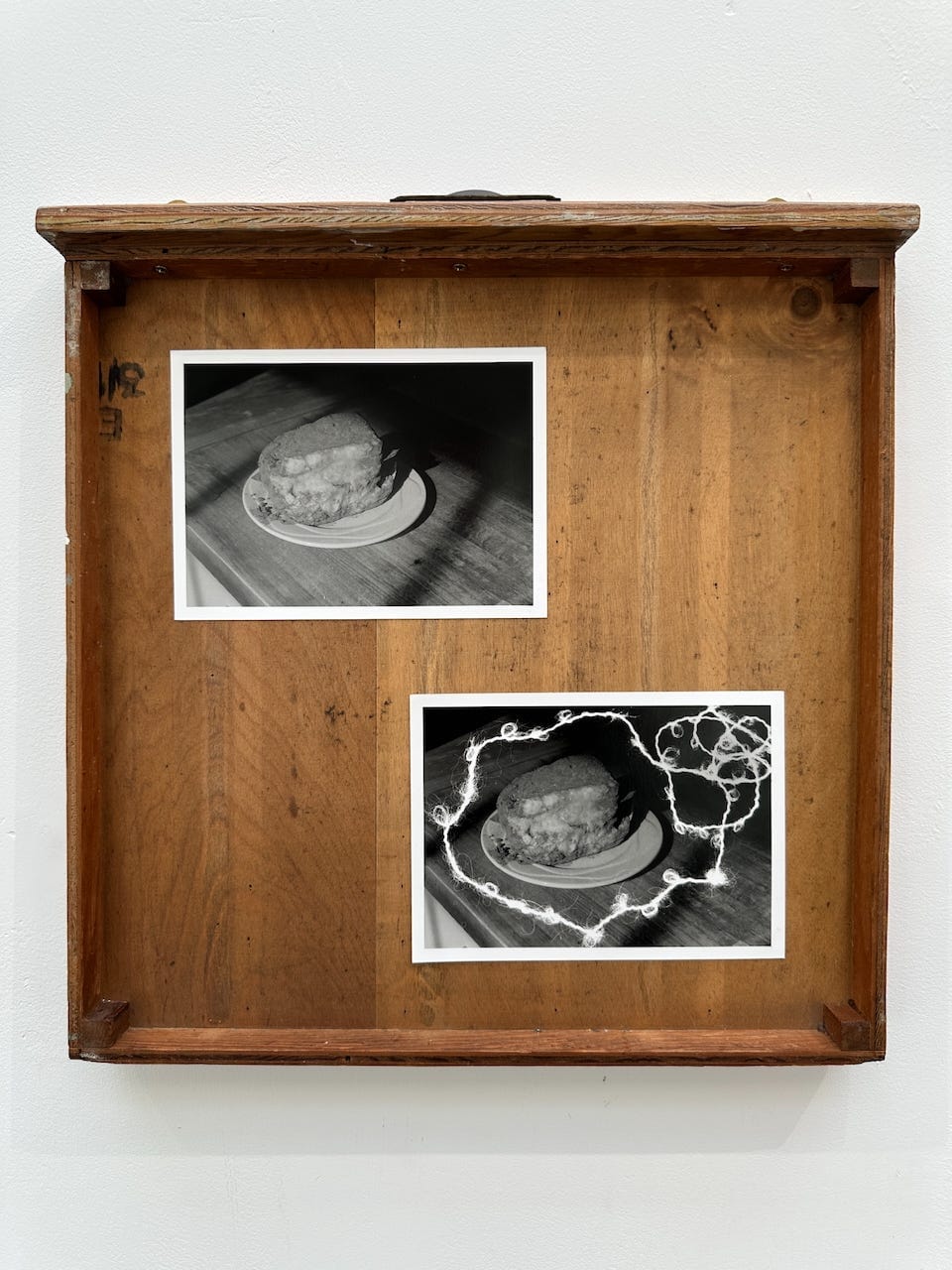
Xinyue Tao - Unfold, 2025-present
The day before I had met with photographer Alejandra Carles-Tolra. The cancellation of the APHE July conference in Birmingham meant we didn’t get an opportunity to test PhotoPlay in its various forms: web app, zine and in-person workshop. We met to have a think about what to collaborate on next. What if we could design some tactics for looking at photographs? How could we treat a pile of photographs as a common good and encourage playful, collaborative looking activities that resisted attempts to interpret or analyse the images. Tactics that honoured the indeterminacy of the photographic image. When I got home, Guido reminded me of Ivan Illich’s Tools for Conviviality.1 We had a long, slightly rambling conversation about Illich and radical pedagogy. When I shared Xinyue Tao’s cabinet of curiosities, thoughts of black boxes floated to the surface: the camera obscura, darkrooms, photographs born in the dark twice over.
We treat photography, most of the time, as a facsimile, a clean window onto what was there. It’s nothing of the sort. It’s a trace, a deposit left by light, nearer to a footprint or a death mask than to a drawing. Nothing was copied. Something was touched. And the odd thing is that this trace is at once completely real and completely open. In our last walk it was the burned girl outside Saigon. A real child, real fire, light that really marked the film. Facts. And yet the meaning of this image remains wide open, assembled afterwards in the cropping, the caption and the choice of which frame was allowed to survive. A photograph welds an unarguable reality to a bottomless indeterminacy. It is a relic and an inkblot in the same rectangle.
The show kept staging this. Along one wall ran a long black panel with small photographs let into it, lit like windows in a night building, or a contact sheet turned inside out so the frame goes dark and only a few cells glow. They were Crispin Day’s slides, an enigmatic gift from a well-travelled uncle. Appropriated. The dark matter again, the mass you can’t see holding up the little you can. In another room, near the gallery entrance, pinned to a wall with the plaster peeling off it, was a sheet of tracing paper, a veil with a faint pink shape underneath, like a ghost that had not finished arriving. This was Hanieh Yavari’s Still Here. To one side, a gentle invitation to lift the paper and reveal the image beneath, but also the suggestion that you might choose to let it be.
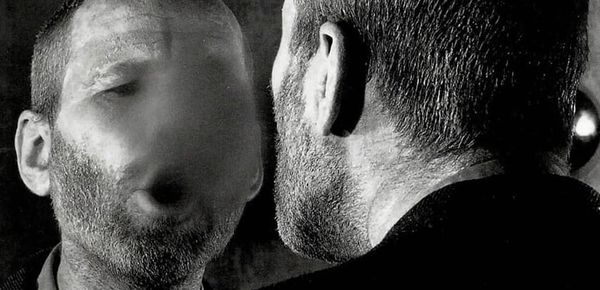
The rest of the room insisted that a photograph is a made thing rather than a window. Prints balanced across pebbles like little see-saws. A print creased and draped over a stone so the paper buckled. An interior printed onto a sheer curtain and hung from a homemade timber frame, the light coming through it, a picture you saw through in the plainest sense. A face and a worn spoon clipped side by side and left to talk to each other. A figure blurred until it had no face at all, dissolving inside its own frame.
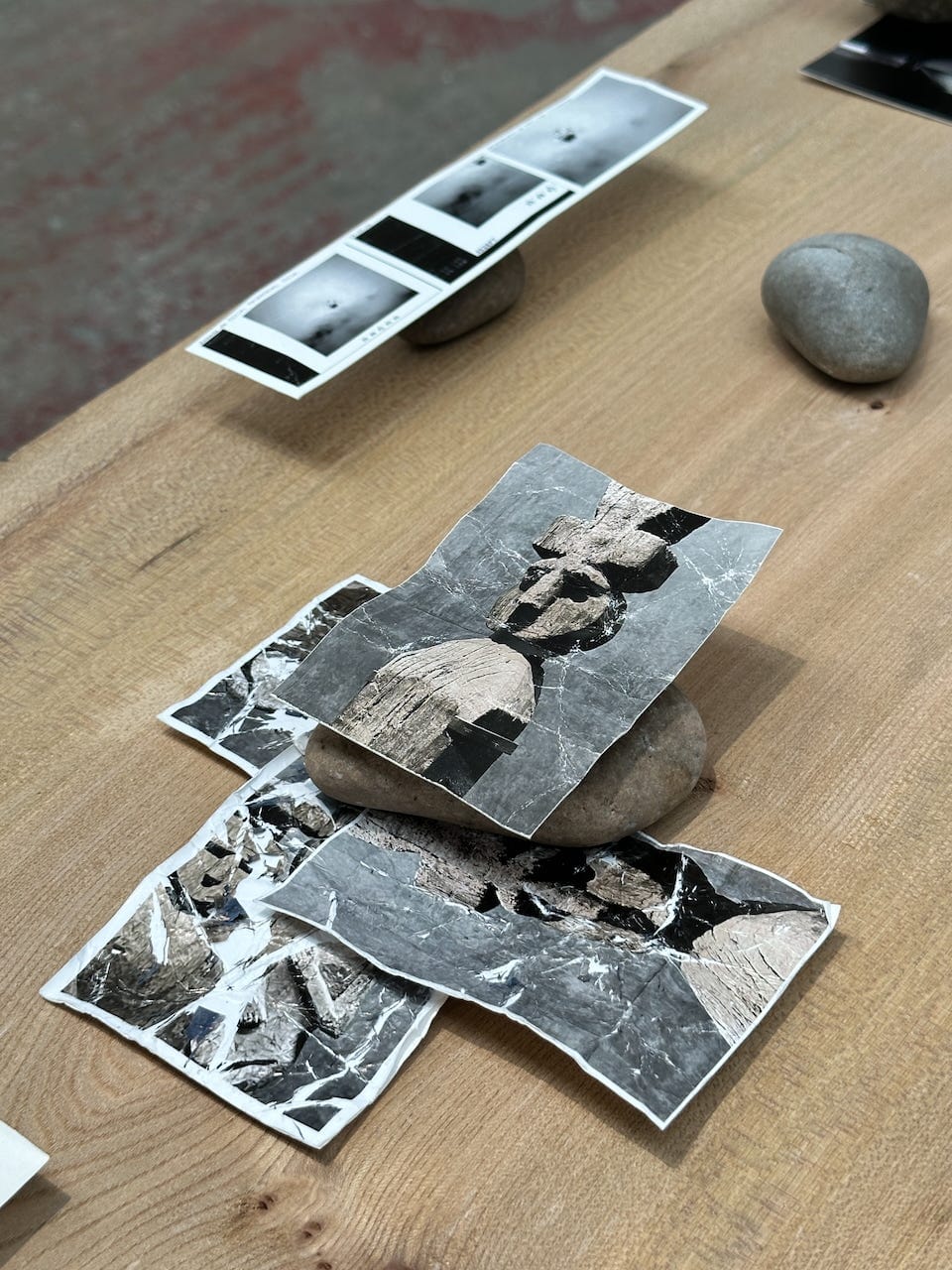
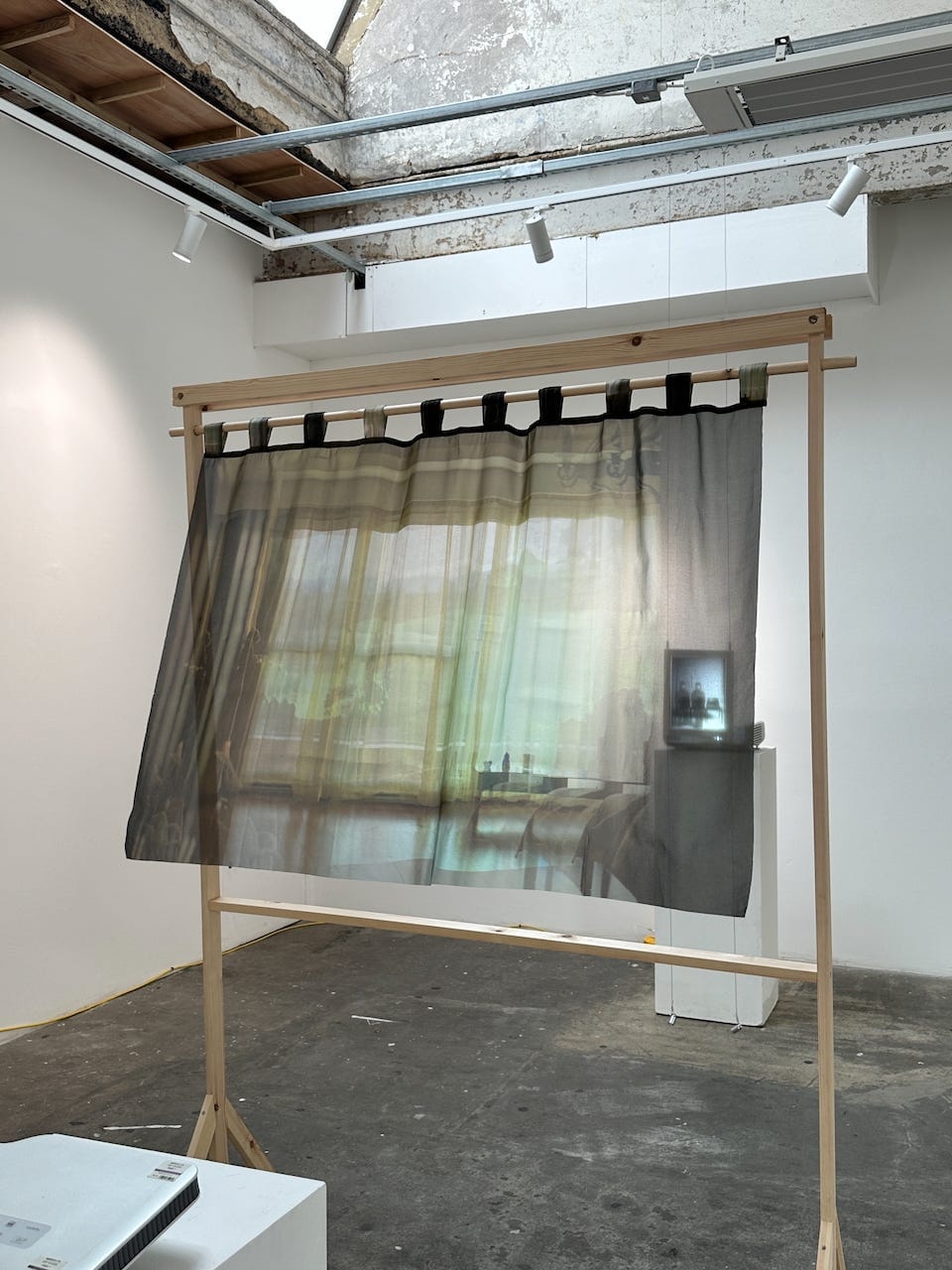
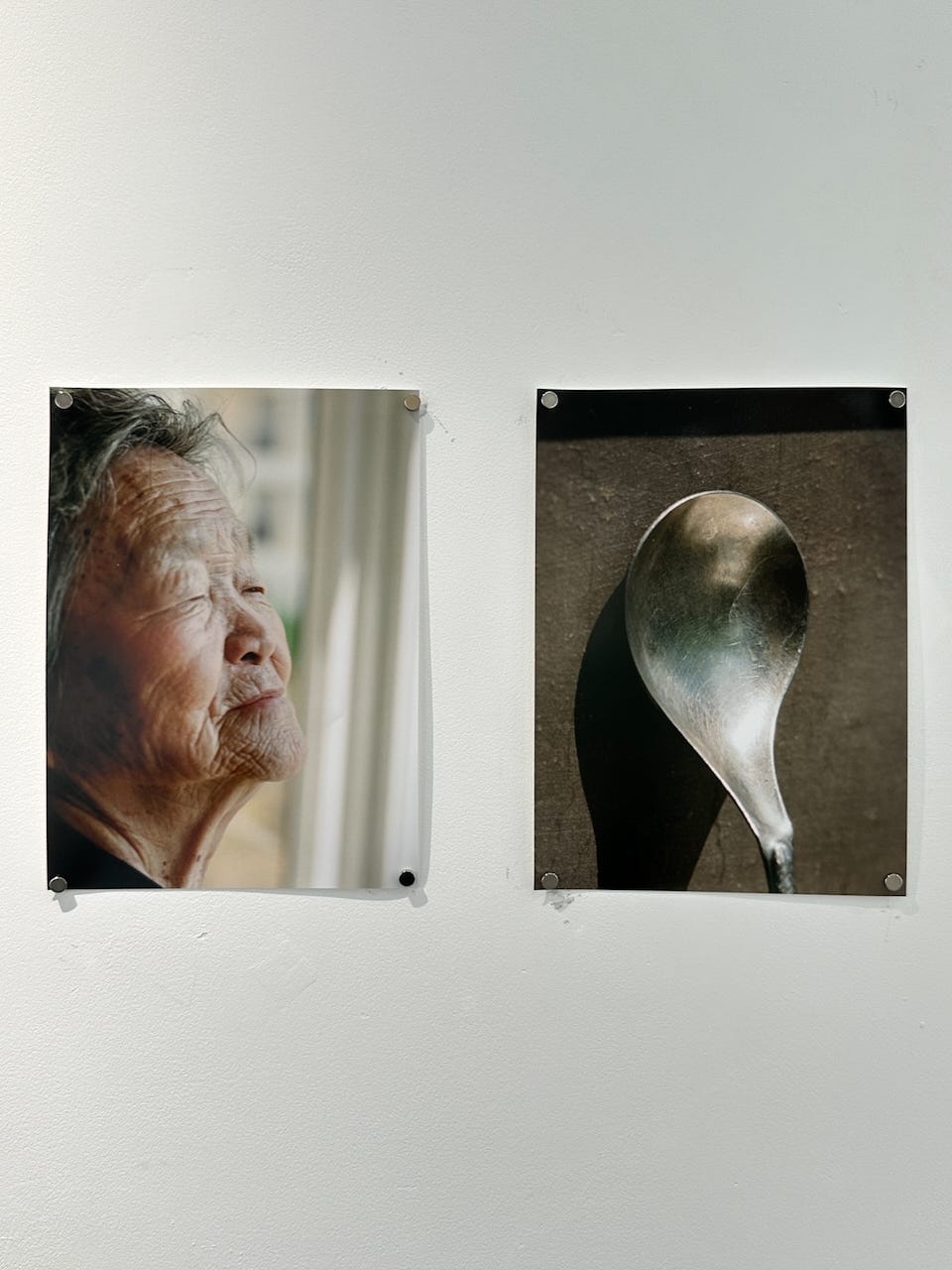
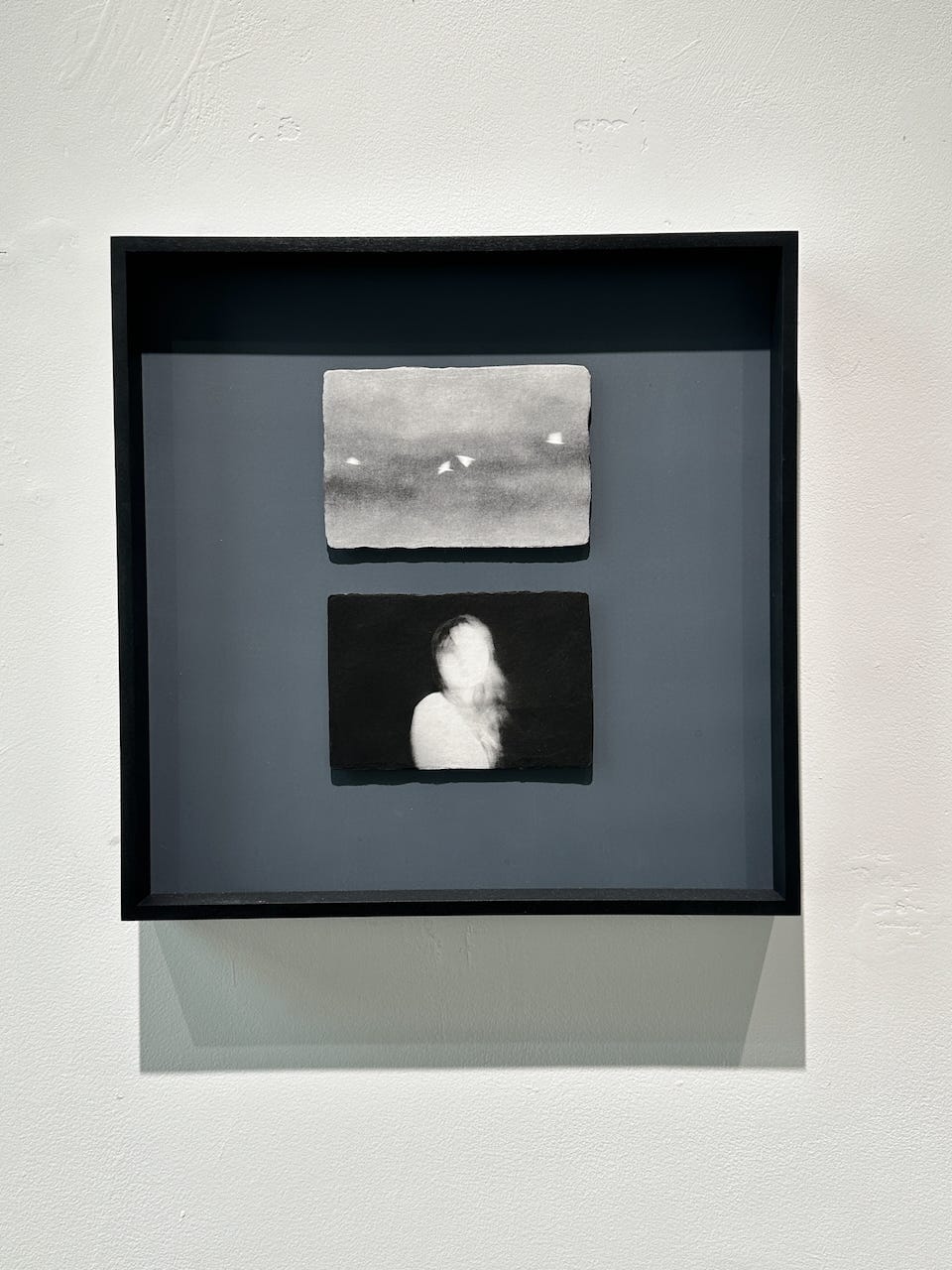
Work by Georgios Chatzakis, Gigi Zhang and Tzion Essel
Eventually, my walk with Guido turned towards teaching, the way these things do. Because if a photograph really is this wild, then teaching it as a code to be cracked, rule of thirds, guess what the photographer meant, is not merely dull. It’s false to the object. And that reminded me of another black box from my early days of teaching.
In 1998, two researchers, Paul Black and Dylan Wiliam, published a thin and hugely influential pamphlet called Inside the Black Box. Their black box was the classroom. Policy, they said, treated it as a sealed unit, pouring in targets and pressure at one end and reading results off the other, paying no attention to the life going on inside. Their answer was to prise the box open, to make the learning within it visible so it could be measured and raised. Their intentions were decent. They warned, in that same pamphlet, against a culture of marks and gold stars that teaches children to chase the score instead of the understanding.
But the logic outlived the intention. Make the inside visible, raise standards on the evidence and you have handed the next thirty years of schooling its grammar. The classroom became a place to be floodlit and metered, every minute accountable, the shadow treated as a fault to be corrected.
Ivan Illich had seen the way things were heading a quarter of a century earlier. He drew a line between the convivial tool, the one a person can pick up and use for their own ends without a licence or an expert to work it for them and the manipulative tool, which programmes its user and leaves them leaning on a professional class. A classroom prised all the way open is the manipulative tool in its purest form.2
Conviviality is the argument for keeping a shadow in it on purpose.
The root of school is the Greek word scholé, which meant leisure, free and unhurried time. Illich, borrowing from Aquinas, tied his conviviality to austerity, though not the bitter, belt-tightening thing the word has since become. For Aquinas austerity was the disciplined pruning of whatever gets in the way of friendship and play, a cutting-back that guards joy rather than punishing it. Guido led me to Masschelein and Simons, who wrote a book defending the school as protected time, held apart from the economy of outputs. I recognised this idea from my reading of Biesta’s brilliant World-Centred Education.
So here’s what a convivial photography classroom might be. A room that attends, carefully and intelligently, to material that looks transparent and is in fact deeply strange. Nobody in it can own what a photograph means, so we look and think alongside one another. The teacher is a more experienced looker, and a pointer, the one who says, to someone specific, “Look at this” and then steps back. There is real knowledge to pass on and not much of it survives a memory test, because what’s learned there can’t be easily recited. It surfaces later, slowly, maybe elsewhere. To try to measure it in the moment is like opening a skull to count what someone knows.
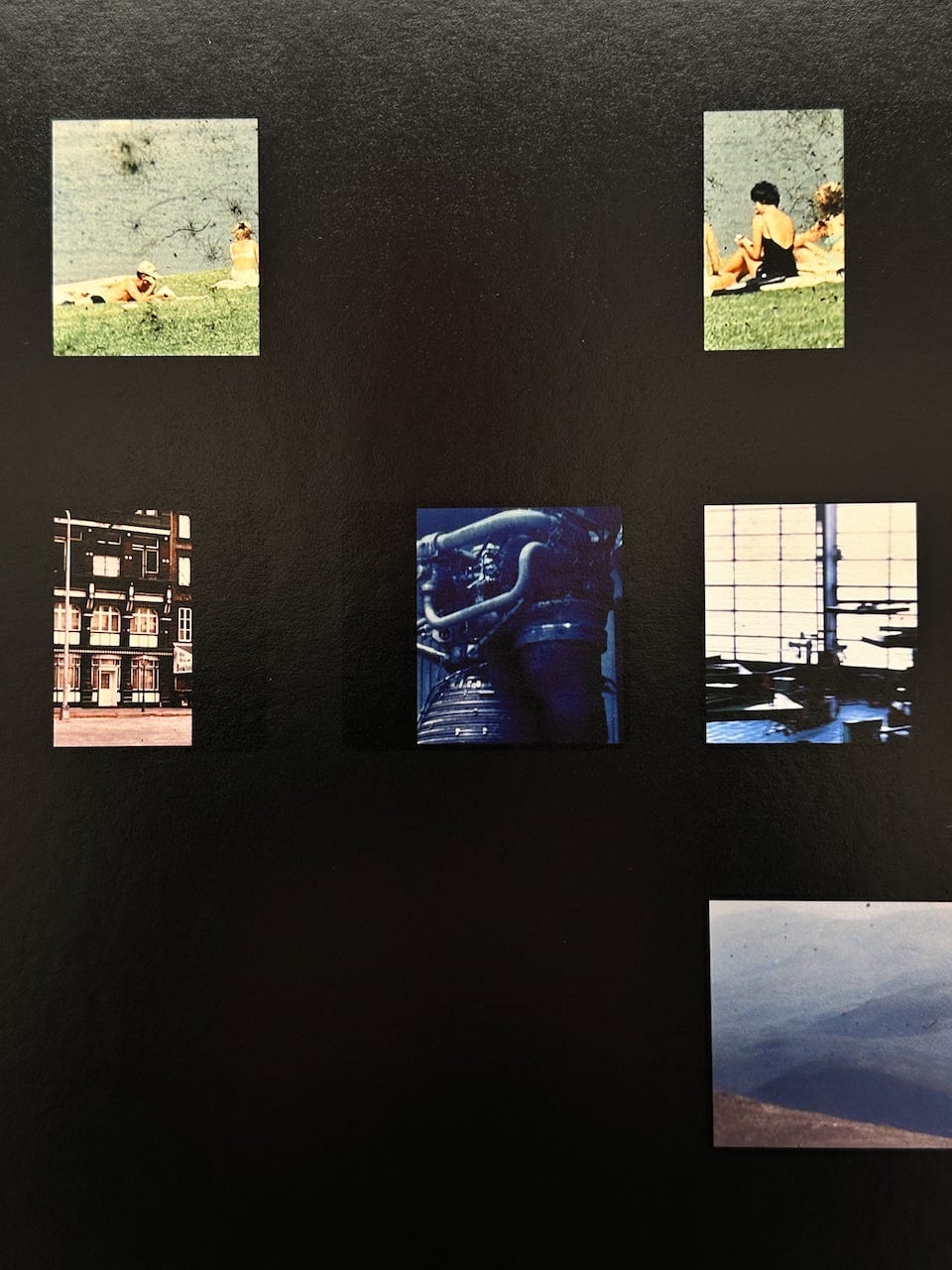
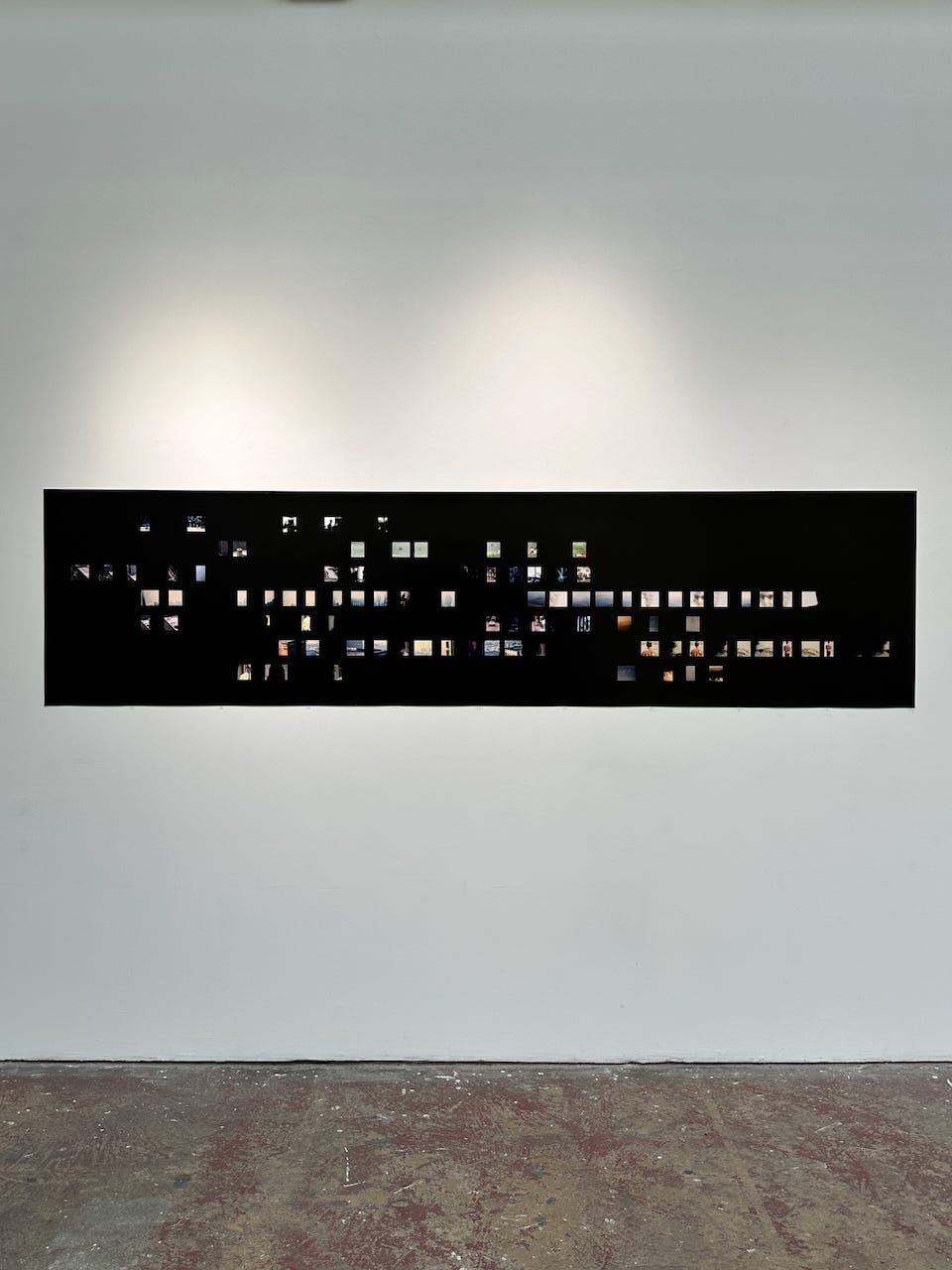
Crispin Day's 'Tales of Unseen Selves'
It’s not soft. The photograph will not pose for you. The archive will not sort itself cleanly. That refusal is the whole point; a meeting with a piece of the world that does not bend to your wishes. Which is where a young person begins to become someone who can look at it, question it and refuse it. Somewhere underneath all of it, quieter than Illich, is Levinas, the suspicion that we are answerable to one another before we are ever free.
What is a photography education for? School teachers are relatively insulated from educational investment but we do encourage many of our students to consider higher education. Why would anyone spend fifty thousand pounds plus on a photography degree? Given the current graduate employment situation, I’ve begun to wonder about the wisdom of promoting arts degree courses. The collective in Peckham gave me a possible answer and also a refusal. Here was a photography education doing precisely the thing I want to defend, a group of people compelled to keep making and showing with no outcome in view. It was being paid for privately, in money and unpaid evenings, by people the system has stopped funding. Three thousand pounds a head. A thousand for the room. Day jobs underneath. The degree course presumably bought them the time and the company to become the kind of people who would later hire a room in Peckham to keep going. Whether that’s worth the money they invested I can’t decide for them, since they’re the ones still paying for it.
Their wall text ended with friendship. A collective drawn from Albania, China, Greece, India, Iran and the UK, saying plainly that they stood for making things together and against whatever divides and isolates people. A statement of conviviality.
I went home thinking about boxes. The open drawers in Peckham, everyone’s to look into. Wiliam’s black box, the one the system keeps trying to flood with light. And then the box I’d been searching for since the last walk. At the end of #9 I didn’t know whether my mother still had it. The wooden box a German POW made, the shot-down pilot who spent his weekends helping my grandparents in their garden. The man who had come to kill us and left a container for our archive.
I have it. It was, somewhat ironically, hiding inside another storage box. It’s on my shelf now, an arm’s length from where I’m writing.
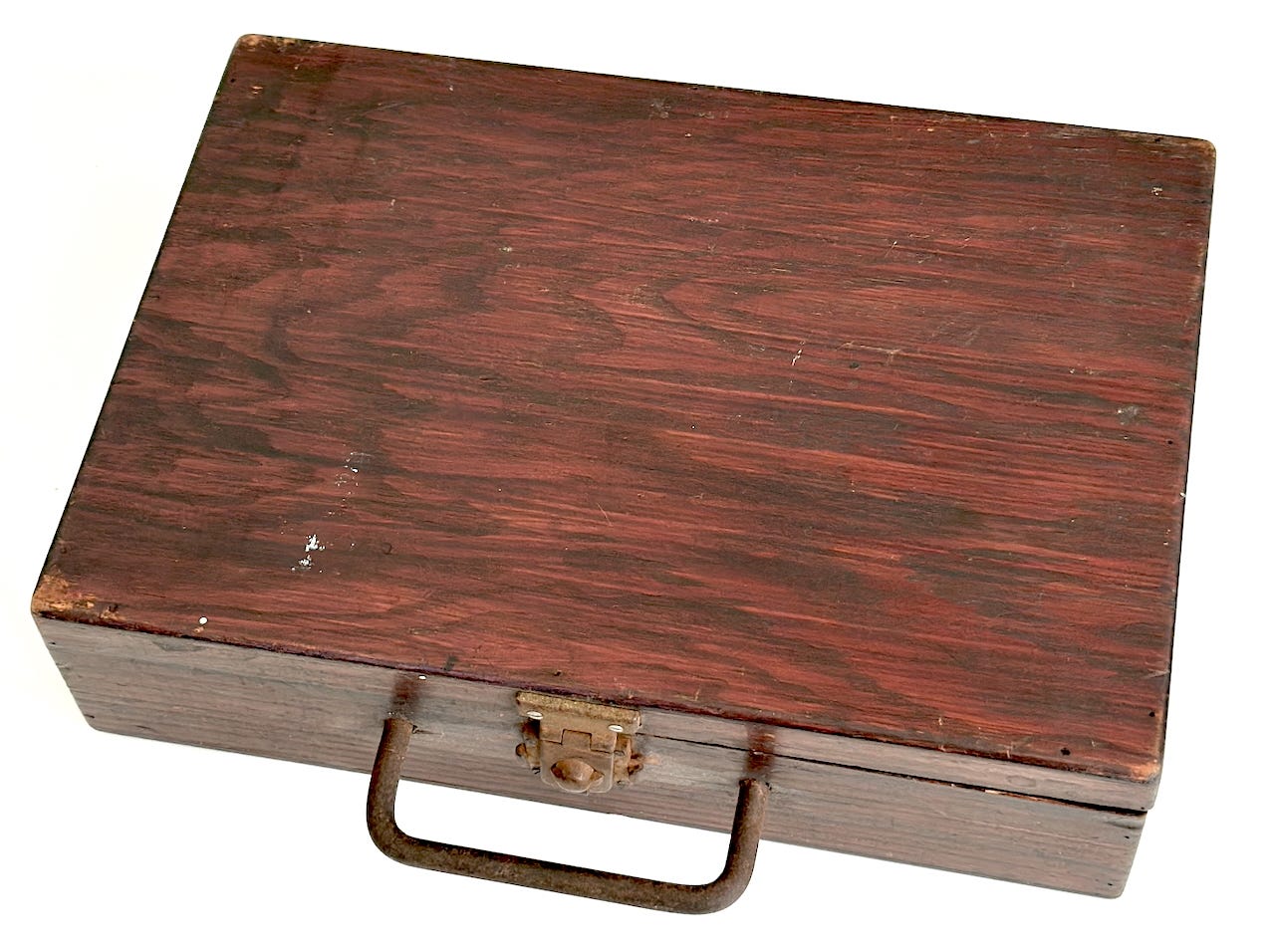
The chest in Peckham stood open. This one stays shut, for now. All that argument about keeping a shadow in the box, about the part of a thing that should not be dragged into the light and counted and here it is on the shelf, a small dark chamber with my family inside it, the lid still clasped shut.
I’ll open it. Just not tonight.
Thanks for reading PhotoPedagogy! Subscribe for free to receive new posts.
These posts will always be free but, if you enjoy reading them, you can support my analogue photography habit, and that of my students, by contributing to the film fund. Thanks to those of you who have already done so. All donations of whatever size are very gratefully received.
* For new readers, Guido is my AI photography guide. You may wish to retrace our various dérives here.
† Ivan Illich was no fan of compulsory schooling:
In a convivial society compulsory and open-ended schooling would have to be excluded for the sake of justice. Age-specific, compulsory competition on an unending ladder for lifelong privileges cannot increase equality but must favour those who start earlier, or who are healthier, or who are better equipped outside the classroom. Inevitably, it organises society into many layers of failure, with each layer inhabited by dropouts schooled to believe that those who have consumed more education deserve more privilege because they are more valuable assets to society as a whole. A society constructed so that education by means of schools is a necessity for its functioning cannot be a just society.
— Ivan Illich, Tools for Conviviality