36 Words
Another book in the works.

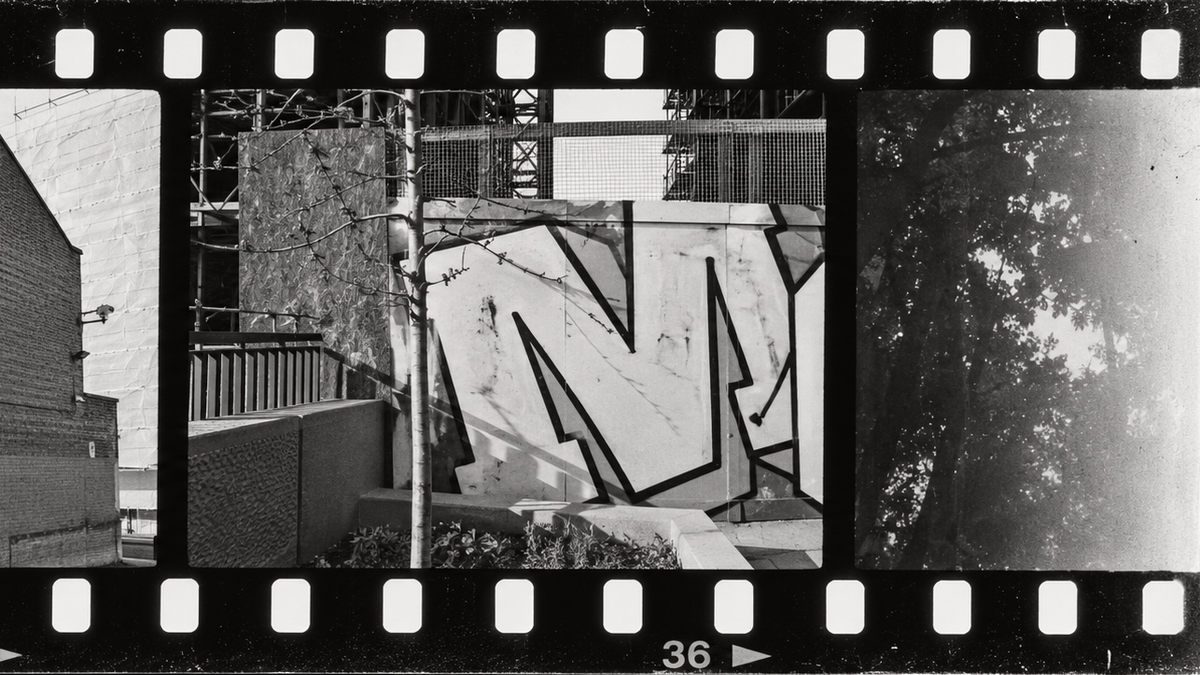
Late in the editing of PhotoPedagogy, I removed a section called Sustenance from the manuscript. I'd imagined it as a gift at the end, the books, films, websites and other resources that had kept me going, offered on Lewis Hyde's principle that a gift has to keep moving. It never sat comfortably. The rest of the book was talking to teachers, and Sustenance kept turning to face somebody else.
My next book unwraps a few parcels. It’s a small lexicon for students of photography, which is to say anyone still learning to look with and without a camera. Thirty-six words, one for each frame on a roll of film. It's a slightly anachronistic number, photographically. It also happens to be the number of years I've been teaching. Draw your own conclusions.
The gift I received was Milan Kundera's 89 Words, a charity shop find. It arrived just as I was thinking about what to do with Sustenance. It's a personal dictionary he wrote in the mid-1980s, partly out of exasperation with a translator who had, as he saw it, rewritten one of his novels. It appeared in English for the first time last year. Kundera's entries are often sharp. Mine wander more, though a few of them, I hope, have something readers can chew over. Some are longer and some are barely a sentence. You can open it anywhere.
Here are couple of examples.
Bokeh
You may have heard the word on YouTube, where someone is reviewing a lens. Bokeh, they say, the quality of the blur, the creamy out-of-focus background and the precise shape of bokeh-balls. They say, “This lens has lovely bokeh”. It also costs a small fortune. It’s a look you can buy. But the surface conceals a fascinating history.
Bokeh is Japanese, originally spelled boke, meaning blur or haze. Follow it back and boke turns out to be half of an older word, pinboke, out of focus. The pin part isn't Japanese at all. It came from Dutch, brandpunt, burning-point, the Dutch word for a lens's focal point. And behind that sits the Latin word focus, which originally meant a hearth, a fireplace. So the word for focus travelled from a Roman fire, through Dutch traders, into Japanese, and only then got joined to the local word for blur. And boke itself, further back, is bokeru, a verb which, eight hundred years ago, meant to grow befuddled, to lose one's wits with age. By 1603, when Jesuit missionaries in Nagasaki compiled the first Japanese–Portuguese dictionary, it had also come to mean colours fading, an image going hazy. Written down, there's a different Japanese character for the haze of an image and the haze of an ageing mind. Spoken, they're the same. To blur and to grow forgetful are, at root, one action.
So if you ask what a word like bokeh means you can find four languages and eight hundred years. That’s what happens when you bother to look under the surface.
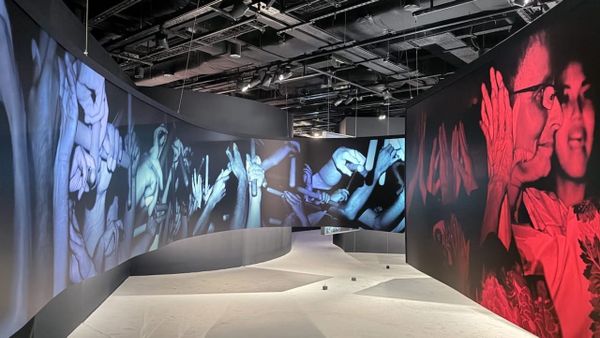
Keep going, because the blur has a history in the pictures too. The early art photographers used blur on purpose, to make their photographs look like paintings or charcoal sketches, to be taken seriously by the art establishment. Then the modernists did the exact opposite. They felt that sharpness was the honest, truly photographic thing and blur looked old-fashioned. Then, in Tokyo in the late sixties, a group of photographers returned to blurriness and made it mean something else entirely. Grainy, blurry, out of focus, on purpose, partly to reject the clean style that came with American power and partly because that really was how the world looked when you photographed it fast, at night, in a demo, escaping from the police. Their blur was cheap and desperate. The blur on YouTube is expensive and smooth. The same fuzzy background means "I could afford this lens" in one place and "I was running away" in another.
And blur is a preset now. You can buy the look of running from the police as a slider in an editing app. Nothing in the pixels will tell you the difference. This is what photography does. Everything can be reduced to a superficial style.
But this doesn’t mean you can't use it. By all means borrow the blur, dial in the grain if your project needs it. Everyone uses things they didn't invent. The only thing that matters is whether you bother to find out where they came from. The word for out-of-focus can be brought into focus. That's true of nearly every photography word. Snapshot. Portrait. Documentary. Sharpen your view.
Ineffable
Looking carefully tells you that nothing is still. Nothing stays the same. After a while, after you’ve lugged your camera around and looked through it, noticing the way things shift, you’ll find yourself looking at something and you’ll reach for your camera but it won’t be there. For a second you’ll feel the pang of regret. Then you’ll get on with your day. You saw the way the light touched the bench and you don’t have a photograph to prove it. The loss is bearable.
You get the idea.
The book is written for students first, whether they're in a sixth form, a university or an evening class. I'd also like it to be the kind of book a teacher hands either to one particular student at the right moment, which is how a lot of the books that mattered to me arrived, or to the whole class. A sugary cup of tea, after a bit of a shock, or a set of packed lunches, to keep the group going on a long trip. It contains a couple of surprises.
Cameron Leadbetter, who designed PhotoPedagogy, is working on it now. We've talked about all sorts of options, from unusual bindings to graphic elements and print-on-demand. We haven't yet settled on the best solution.
How it reaches people is also still open. Given where it came from, I'd like a good number of copies to be given away and passed on. If you teach and would like copies for a group, let me know. It might influence the printing and distribution strategy.
I'll let you know when we've made some decisions about how it will be published. Hopefully, it'll be ready for Christmas stockings.
Thanks for reading PhotoPedagogy! Subscribe for free to receive new posts.
These posts will always be free but, if you enjoy reading them, you can support my analogue photography habit, and that of my students, by contributing to the film fund. Thanks to those of you who have already done so. All donations of whatever size are very gratefully received.