Two Lenses and a Frame
Kawada Kikuji and Iwane Ai at Japan House London.
I went back to Japan House again last weekend to see the Kawada and Iwane show. I took my Plaubel Makina 67 with its vivid orange 3D printed lens cap I bought on eBay. A camera with its own setting sun.
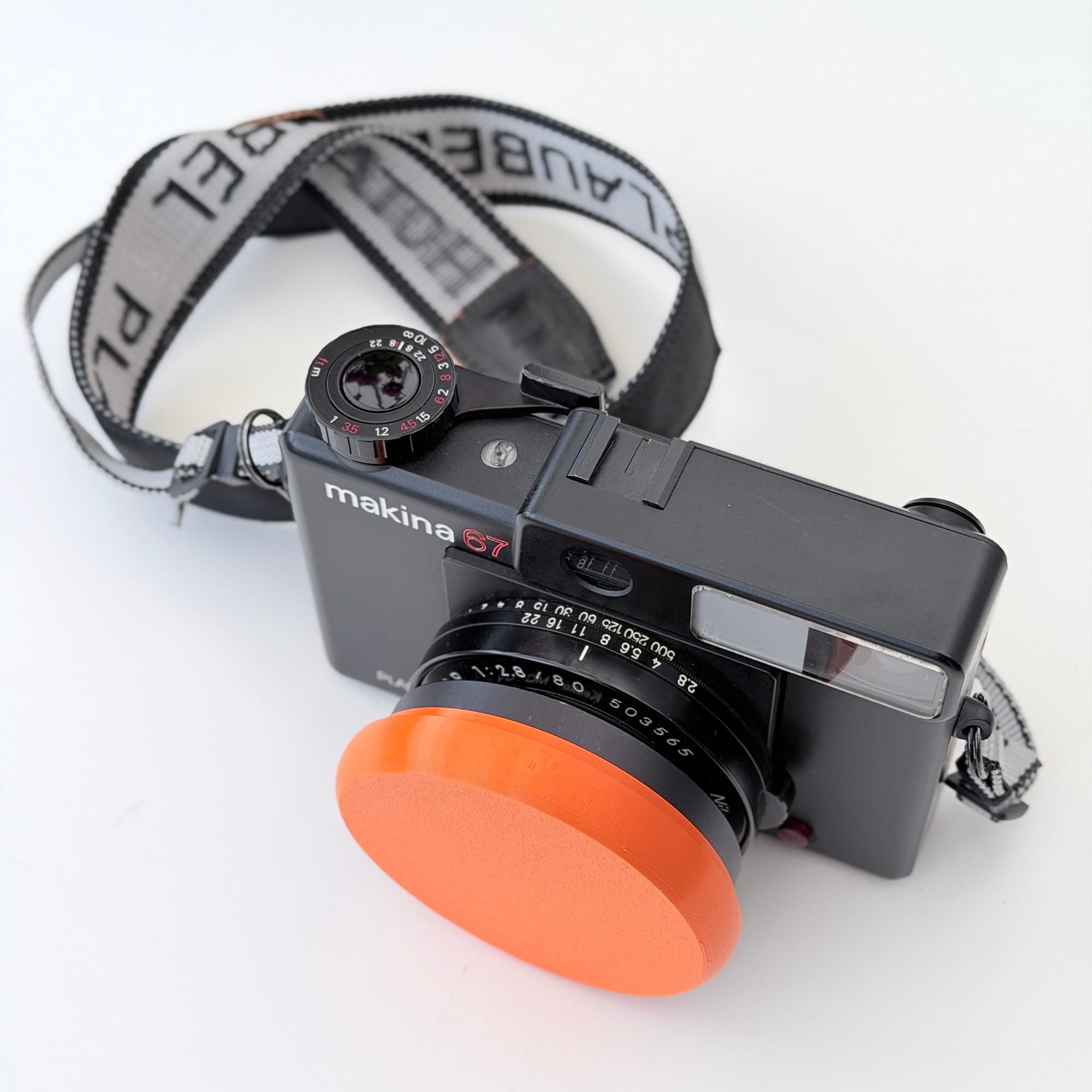
Before I reached the stairs two young British gallery assistants stopped me to ask about it, specifically the huge lens. I explained that the lens wasn’t as big as it looked and found myself unscrewing the hood and unfolding the bellows for them on the shop floor, among the ceramics and indigo cloth, demonstrating how the mechanism works. Plaubel is a German name. The Frankfurt firm's old folding design was revived in the late seventies by the Japanese company that bought it and fitted with a Nikkor lens. I hadn't thought until that moment of what it might mean to carry a piece of borrowed and remade national identity into a building whose whole purpose is the presentation of national identity to foreigners. Japan House, at street level, is a shop for beautiful Japanese things. The gallery is downstairs.
Going back to an exhibition changes things. The first time I visited the show, I was overwhelmed by the intensity of the images. This time, I saw things differently.
The frame
Kyotographie: Kawada Kikuji x Iwane Ai is the first photography exhibition at Japan House, and it comes with a pedigree. Kyotographie is the Kyoto festival modelled on Arles. Kawada's contribution was first made for the festival in 2024, curated by Sayaka Takahashi of his Tokyo gallery, PGI, with a lens manufacturer as sponsor. It went on to Arles in 2025, reframed for the 80th anniversary of Hiroshima and Nagasaki, and has now arrived in Kensington. Iwane showed at Kyotographie in 2022, in a survey of women photographers supported by Kering. Kering, as it happens, also supported the Japanese women photographers show at The Photographers' Gallery that's just ended.
I'm not certain how much coordination went into all this. Japanese foundations, a French festival, a luxury group and a foreign ministry might simply find it convenient to face the same way. The bet, I suppose, is that serious work reflects well on the culture that produced it and that a country able to host art this troubled about itself looks confident. Complexity is part of what's being exported. So I went downstairs to see what the work does inside the frame.
The first lens: Kawada
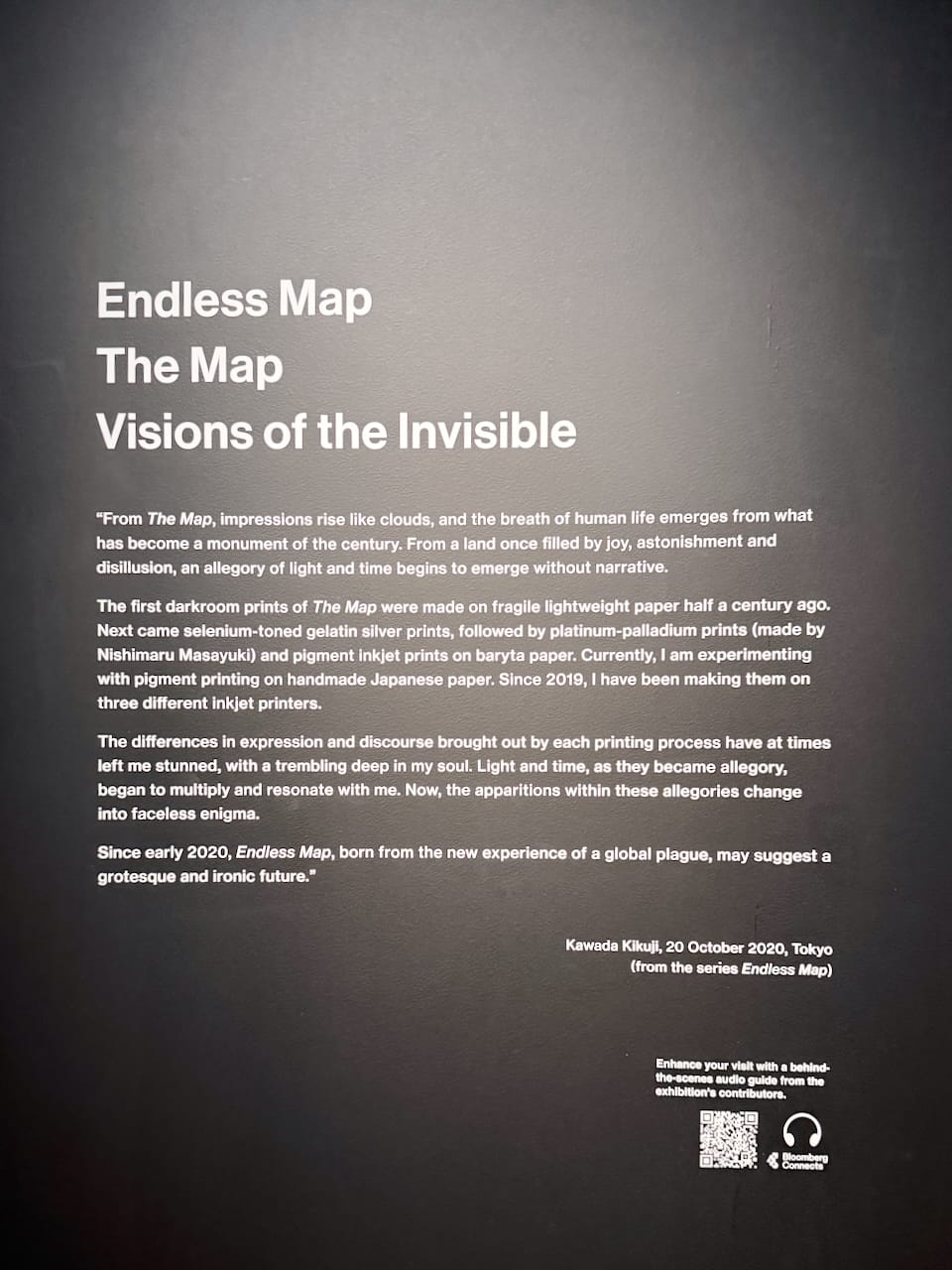
You enter through a dark corridor of pictures from Chizu (The Map, 1965). The first image is a Lucky Strike packet, blistered and printed with the words "for use outside U.S." It's an extraordinary opening. Japan appears here as the outside of someone else's market, the place American goods are sent. Then Coca-Cola bottles, the Atomic Bomb Dome reflected in the Ōta river, a sequence of the dome's scorched ceilings with scraps of metal, a diptych of stains. A recent print, Black Rain (2016), hangs nearby, one of the many re-printings of this material Kawada has made over half a century. His wall text lists them: fragile darkroom paper, selenium-toned silver, platinum-palladium, inkjet on washi, three different printers since 2019. The archive is re-exposed repeatedly and each process, he says, leaves him stunned.
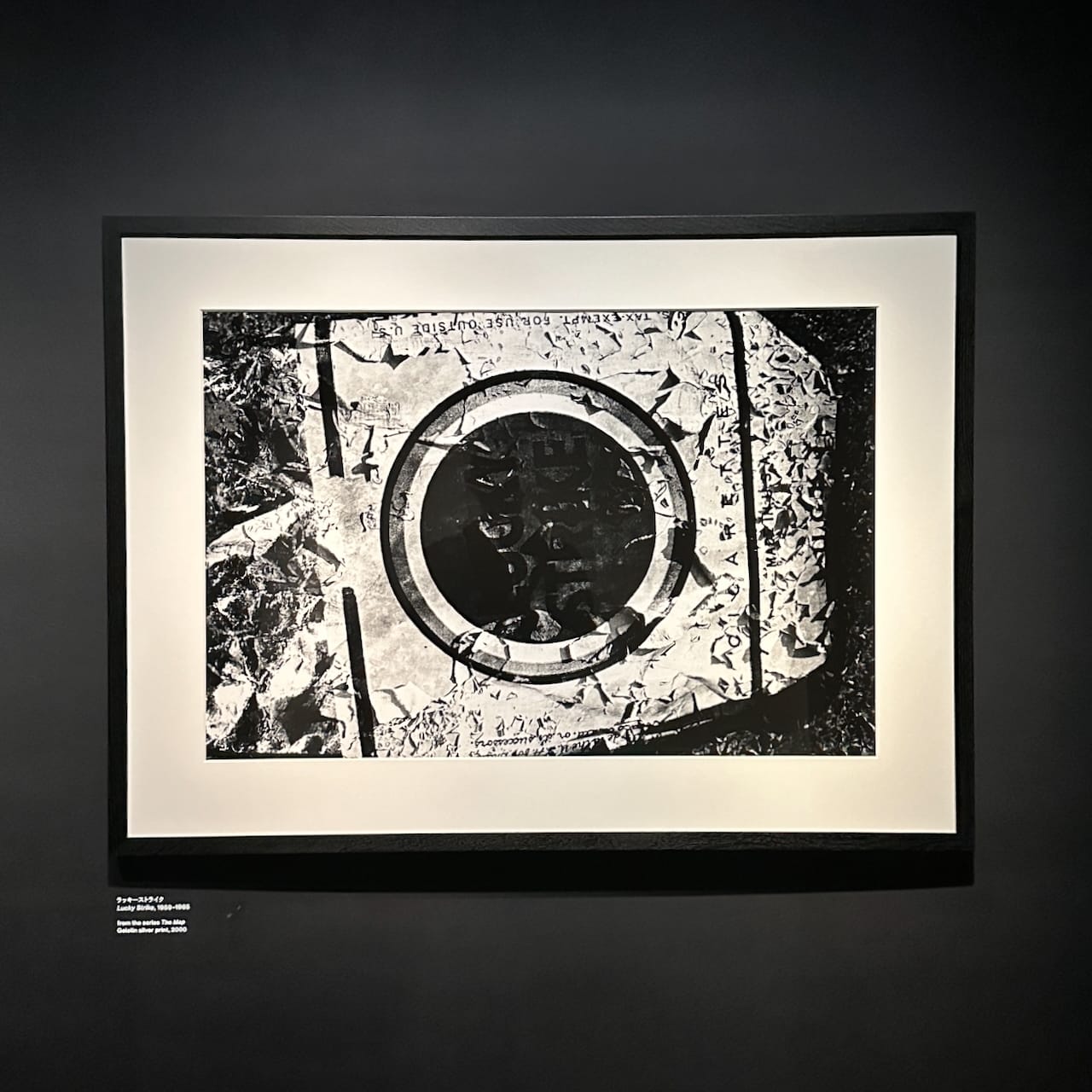
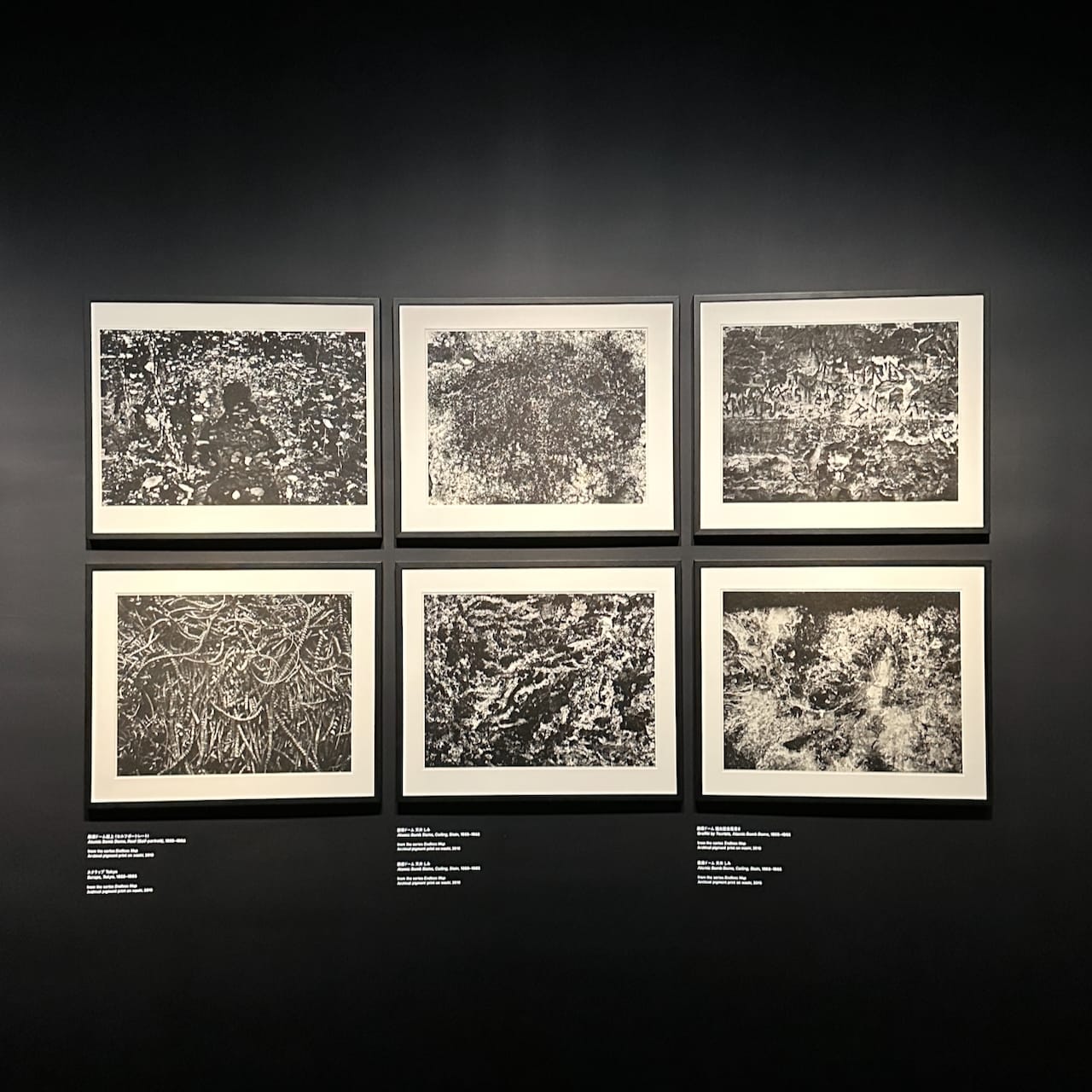
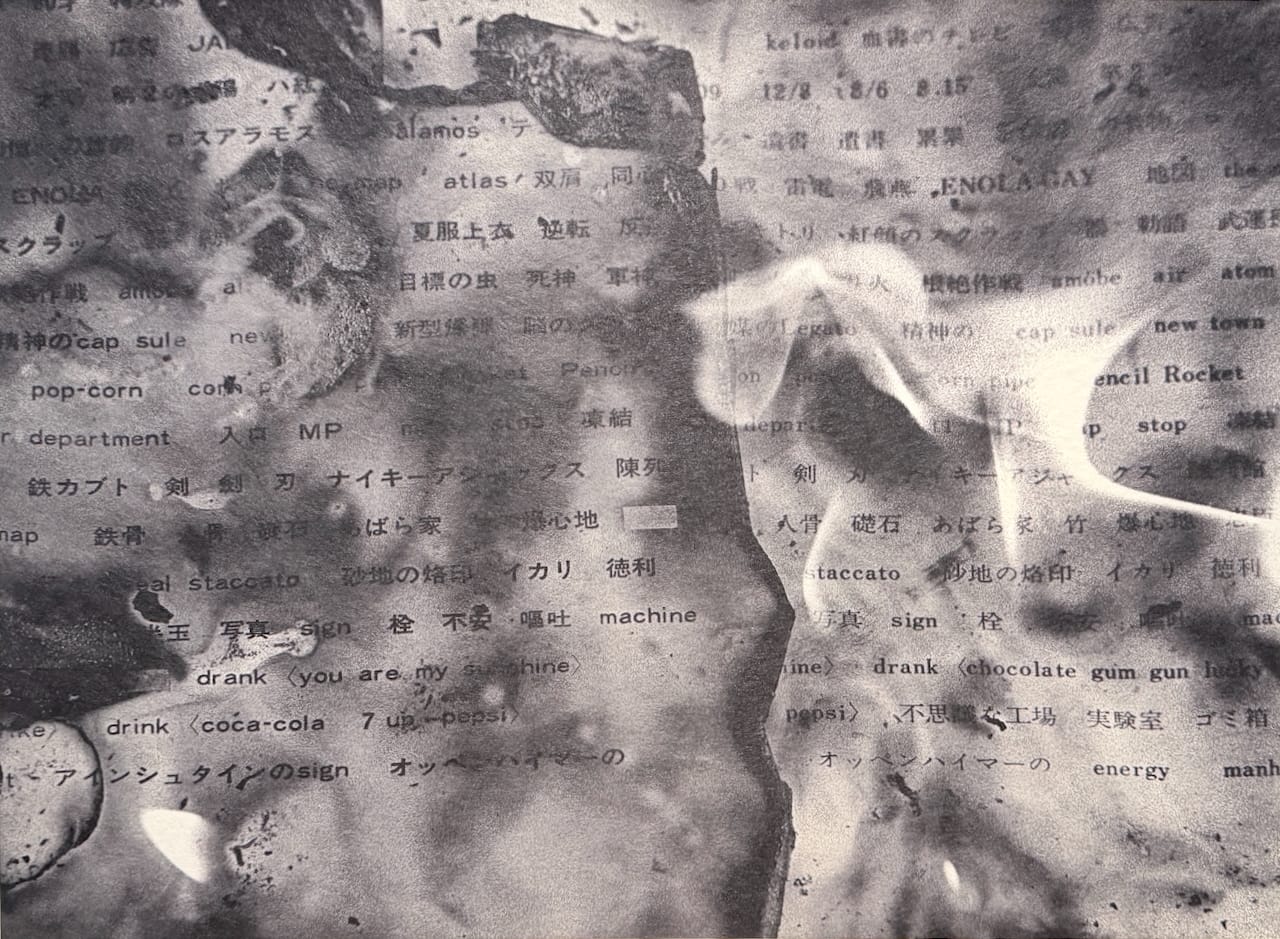
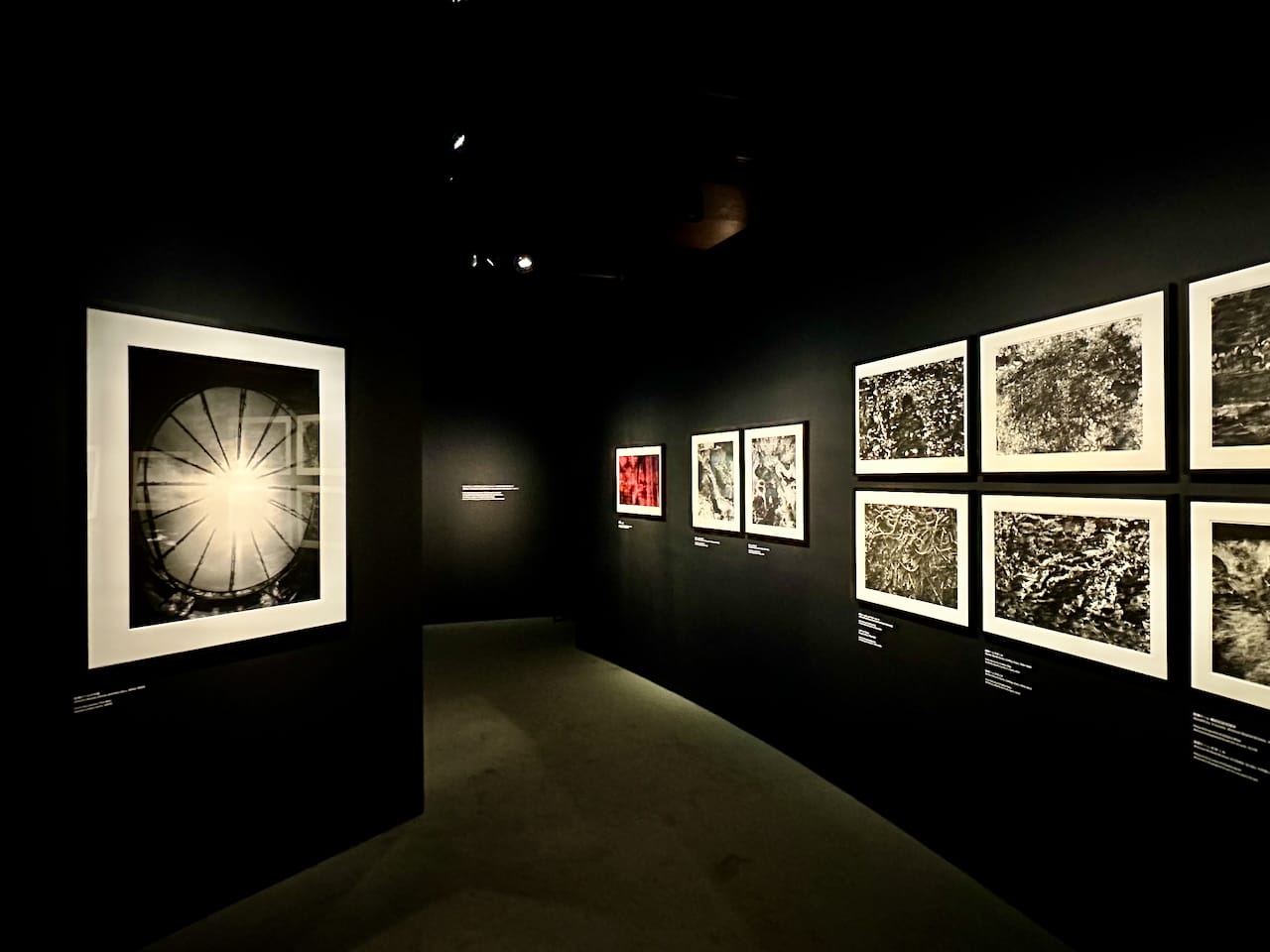
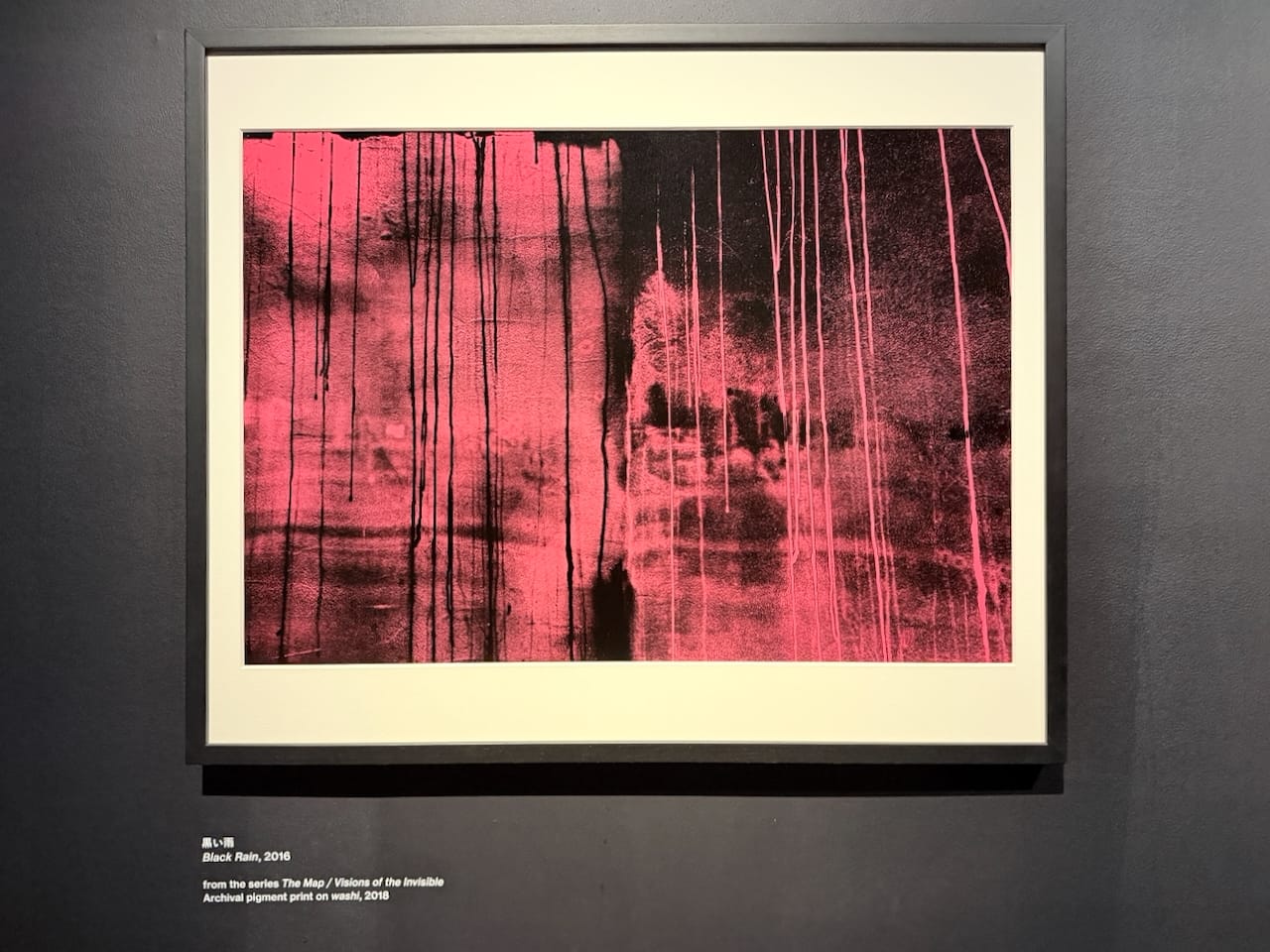
Jon Nicholls - The Kawada Kikuji installation at Japan House
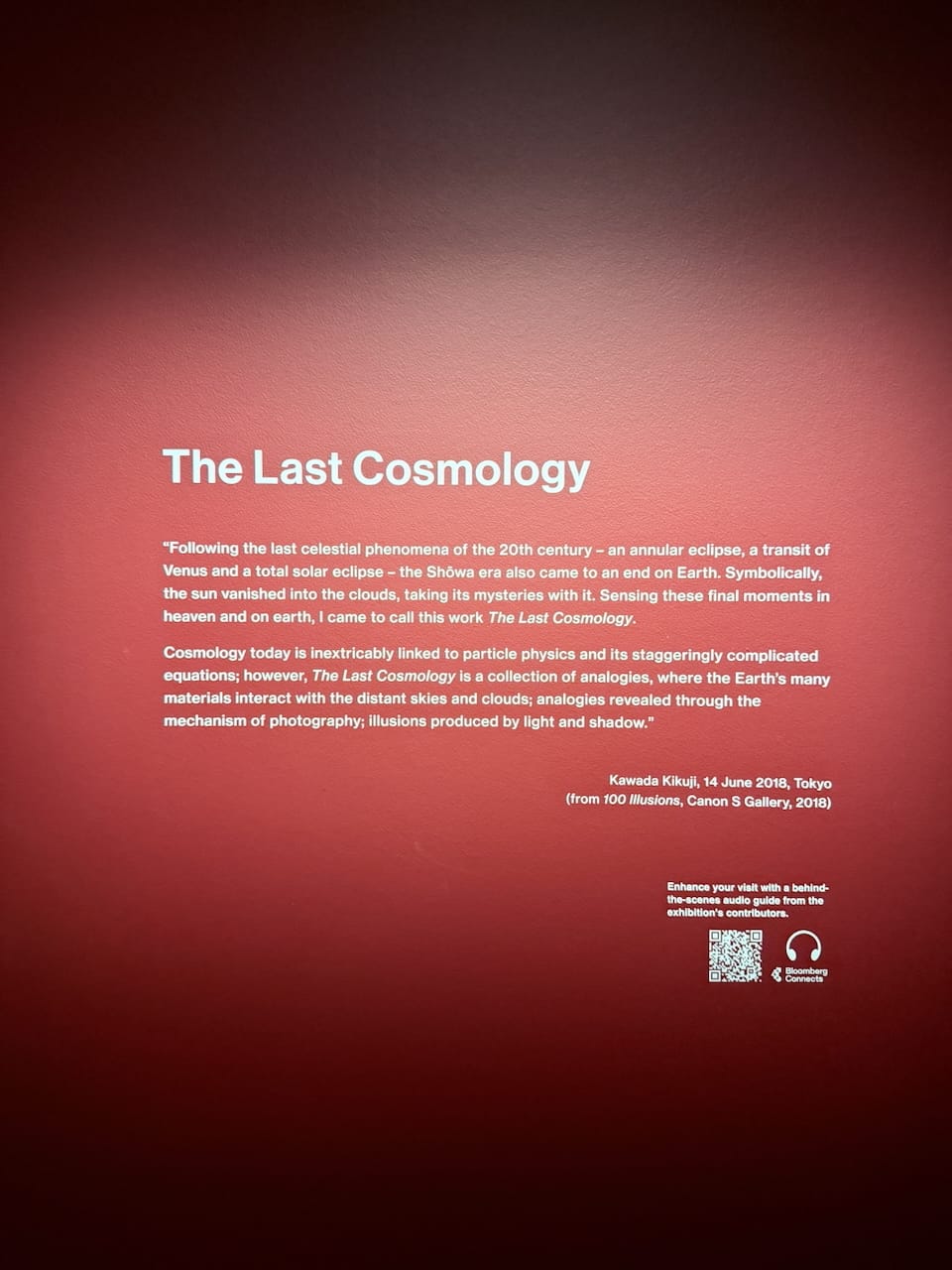
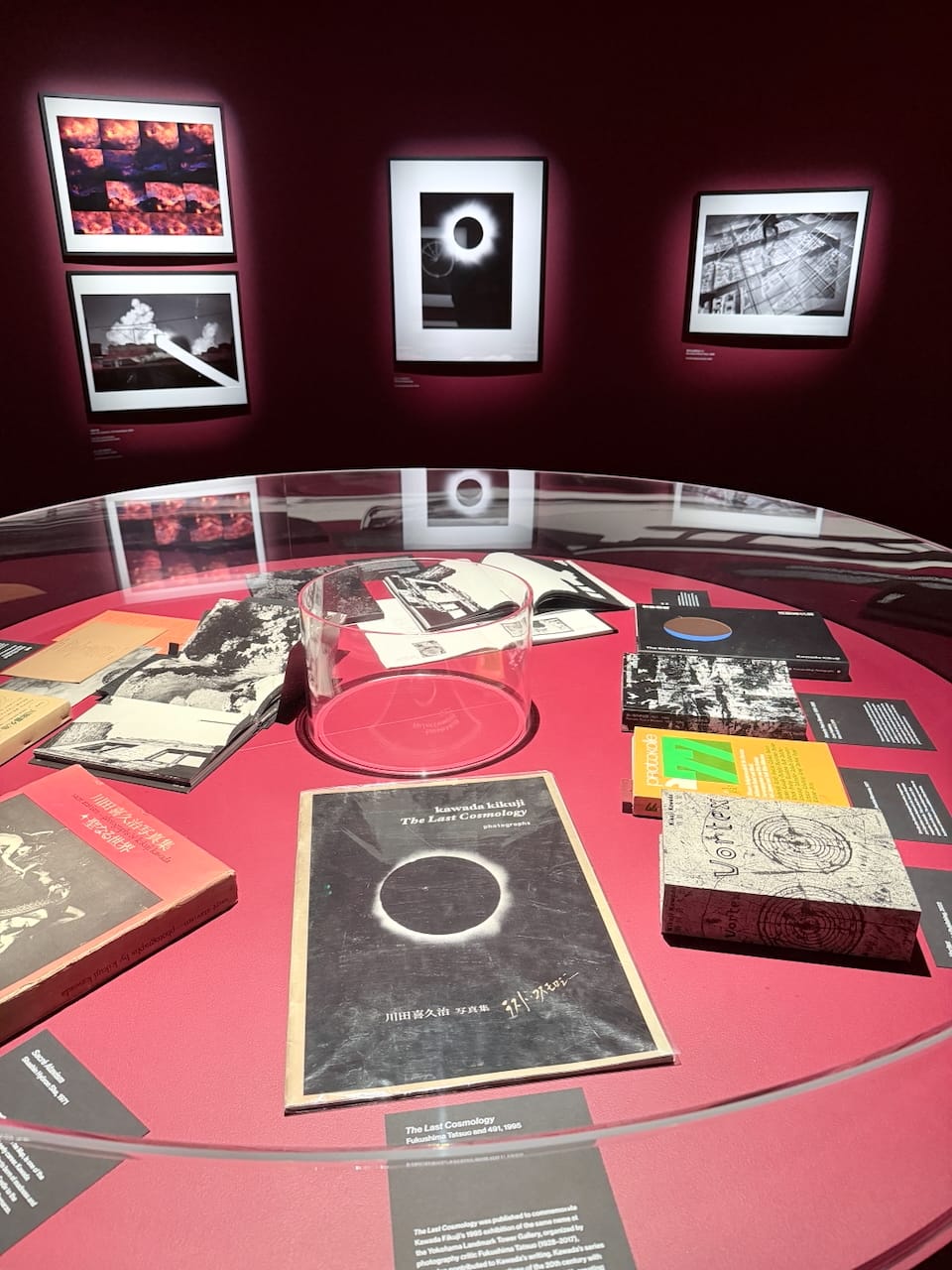
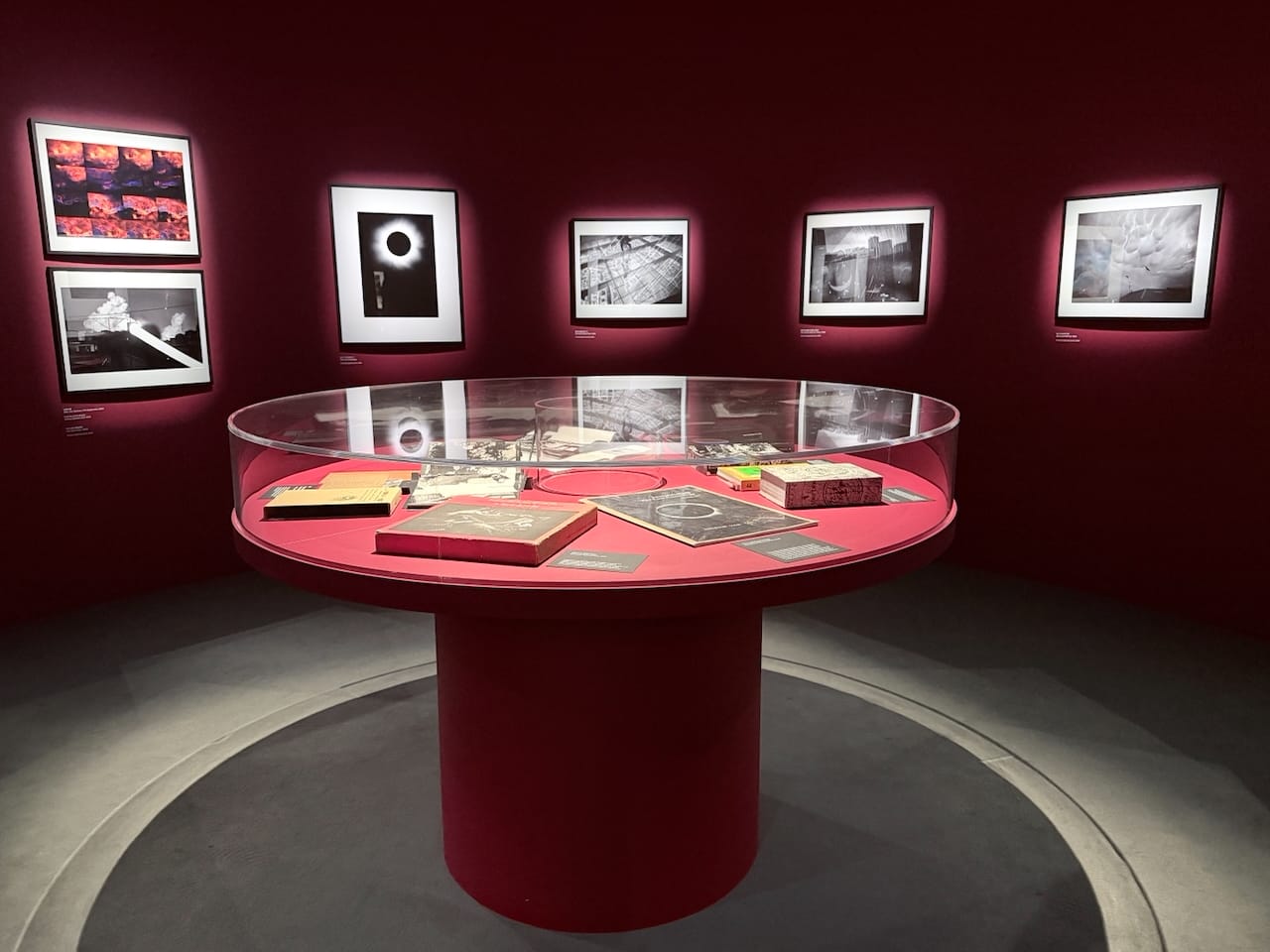
The next room is circular and painted red, with a round vitrine of photobooks at its centre. It felt like a bunker, and also, oddly, like a womb. The walls hold The Last Cosmology, eclipses and suns and circles and Kawada's text reads the end of the Shōwa era in the sky like a court astrologer. He writes:
Symbolically, the sun vanished into the clouds, taking its mysteries with it.
Then the shock of the projection room. Images appear and disappear at considerable speed across three screens, too fast to understand. These are Kawada's recent pictures, which he posts on Instagram, woven here into Los Caprichos, the title he borrowed from Goya in 1972. Rain on windscreens, a casino facade tiled into a grid, excavators, cables, a man on a balcony. Some are lovely. Some look like the work of a sixteen-year-old who has just discovered Photoshop blending modes.
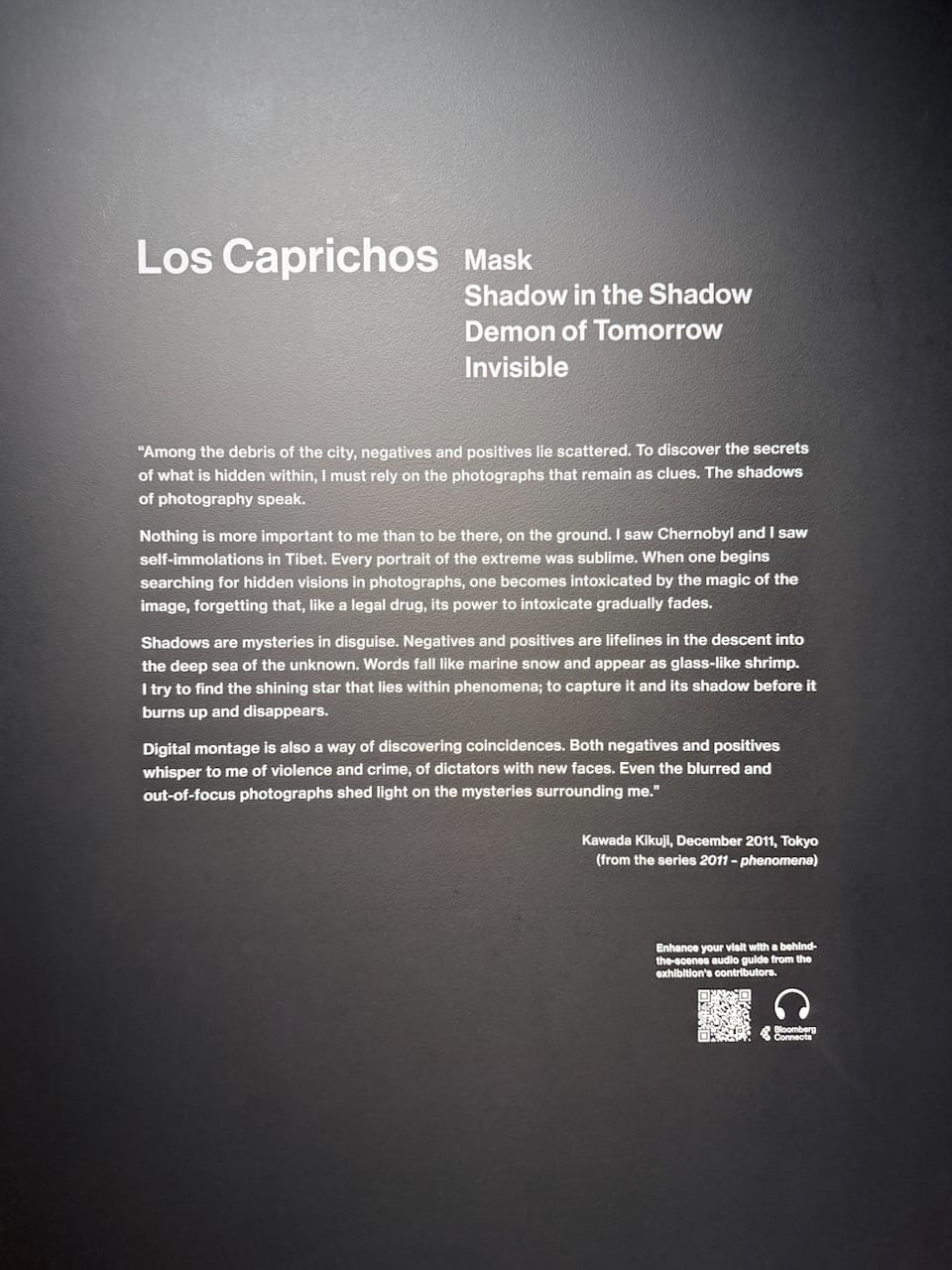
Kawada anticipates the critique. "Digital montage is also a way of discovering coincidences," the wall says. "Even the blurred and out-of-focus photographs shed light on the mysteries surrounding me." In a related filmed interview he says, simply, "I don't think we've lost anything, really," and that photography is the practice of "taking photos every day". He’s ninety-three. The same wall text compares the image to a legal drug whose power to intoxicate gradually fades. As each picture's charge wears off you need the next fix quickly.
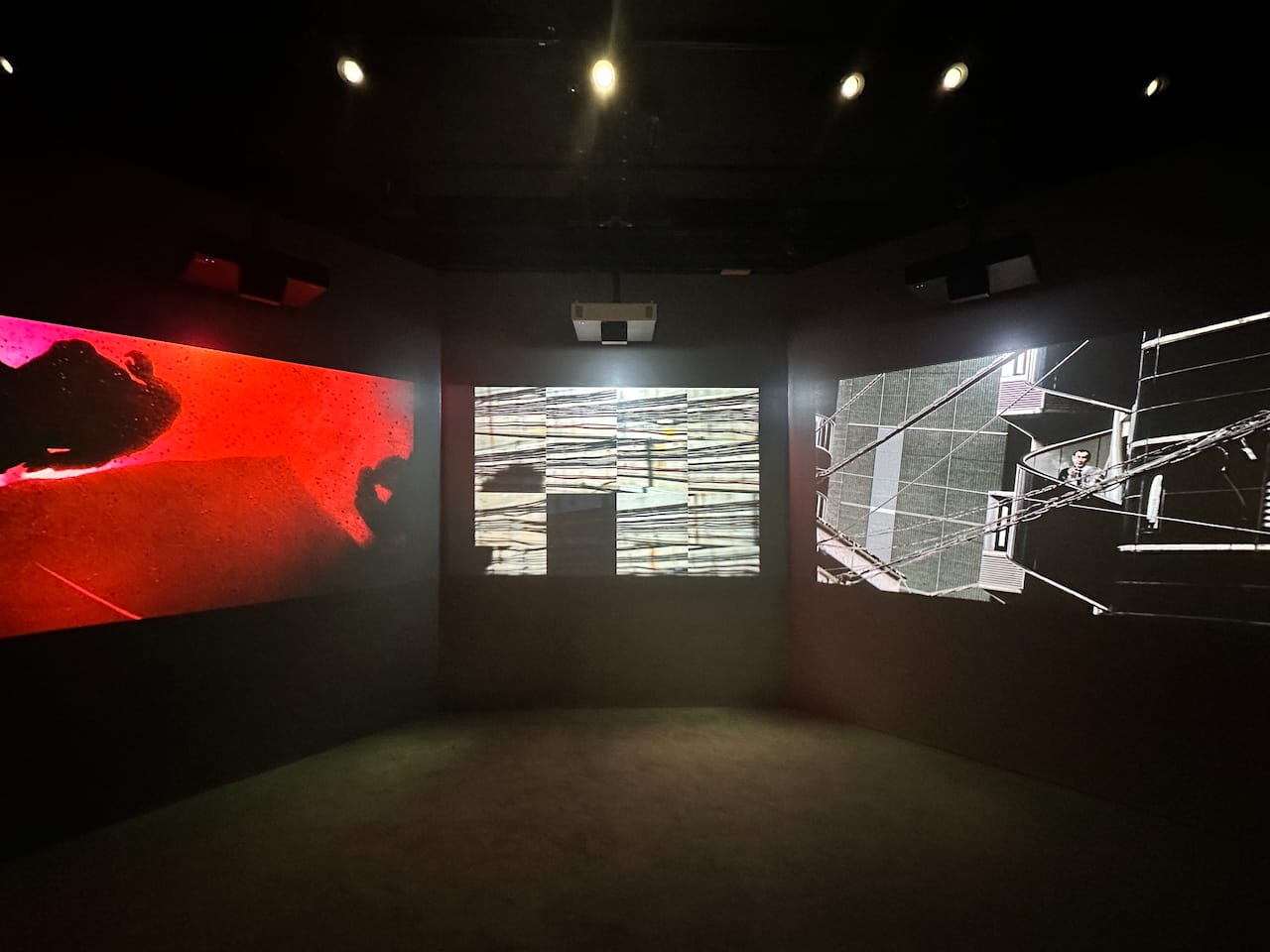
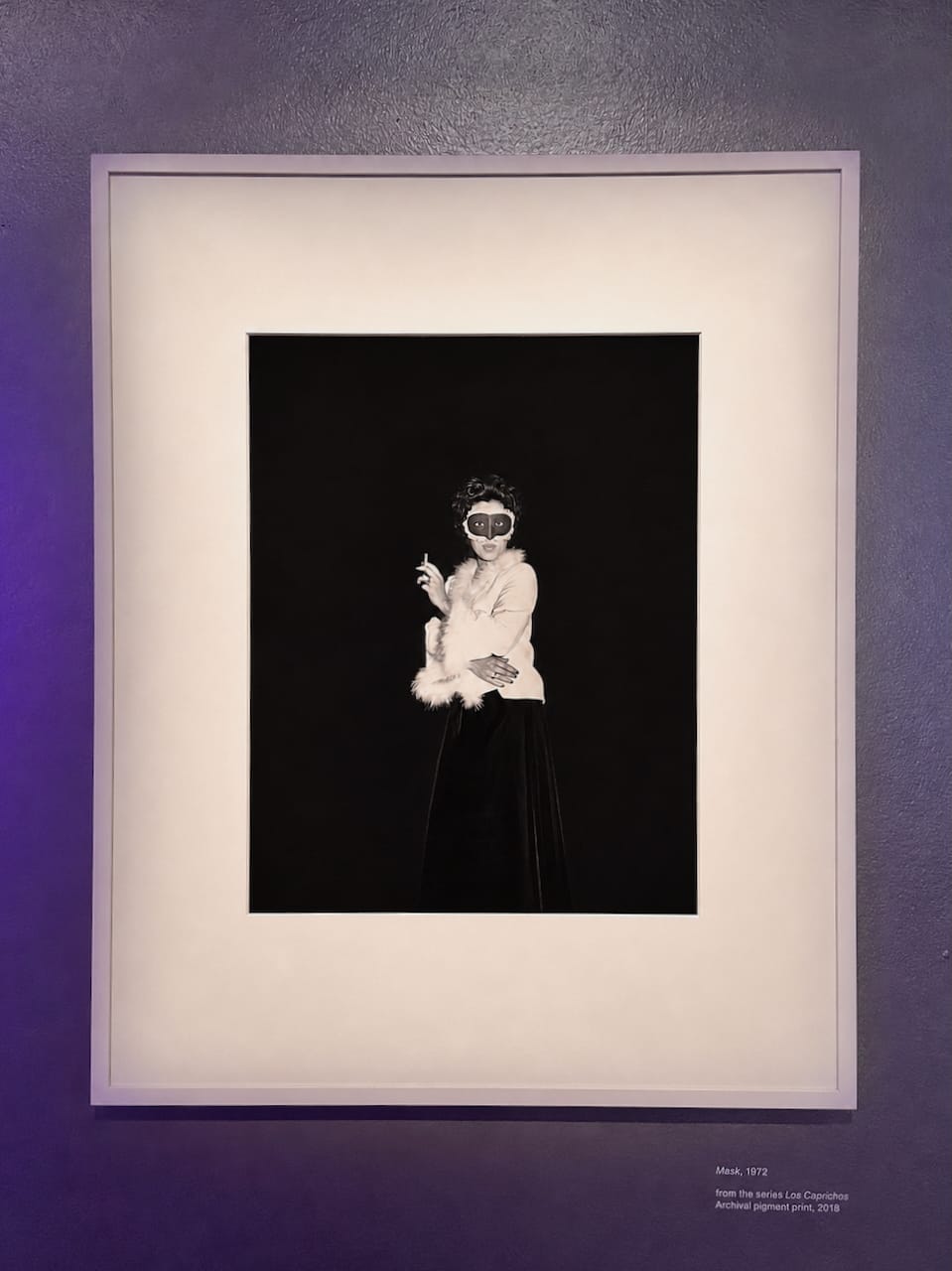
Jon Nicholls - The Kawada Kikuji installation at Japan House
This sits a bit uneasily with the advice we usually give to students: look hard, slow down, wait patiently, respect your subject. Kawada's respect seems to be mostly for photography itself, its capacity to find omens in debris. He uses the word ‘allegory’ and I remembered Benjamin's line that allegories are in the realm of thought what ruins are in the realm of things. Kawada rarely photographs people. At one point his text says the apparitions "change into faceless enigma".
The second lens: Iwane
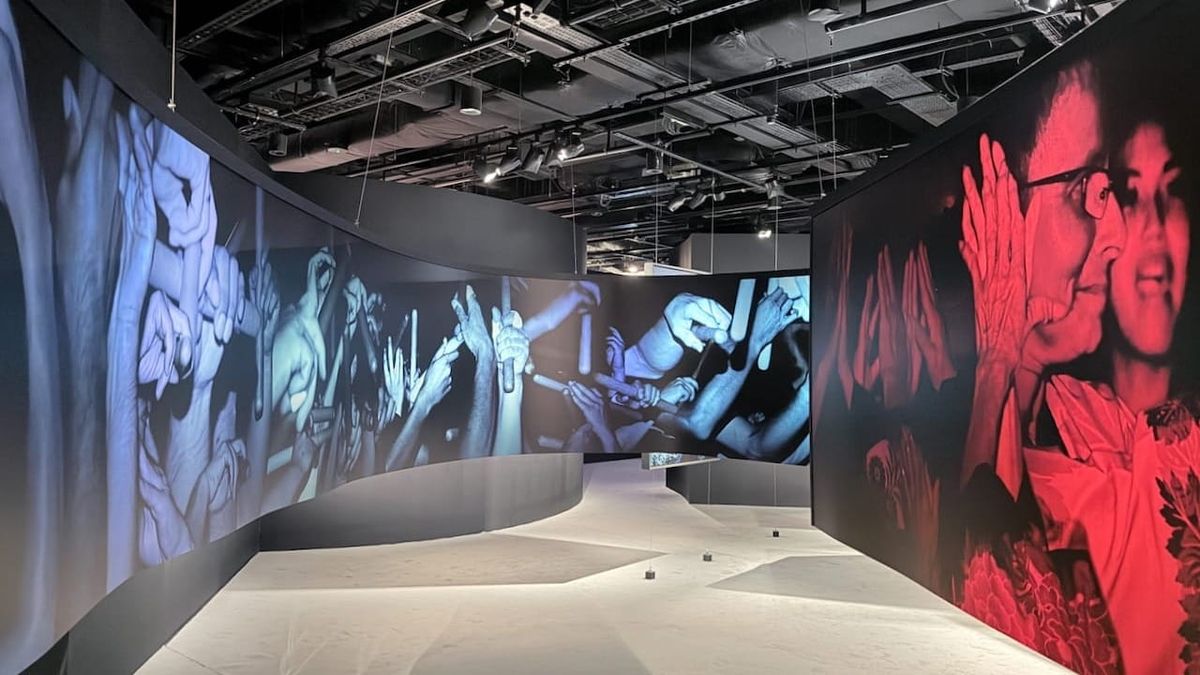
You leave through a doorway into a different climate. Iwane Ai's installation begins with long, curved, semi-transparent panoramas hanging from the ceiling. You move between them rather than past them. I thought at first of a birth canal. Below the images you see other visitors' legs. It also feels a bit like being drawn into a winding dance, which is appropriate, because many of the pictures are of one.
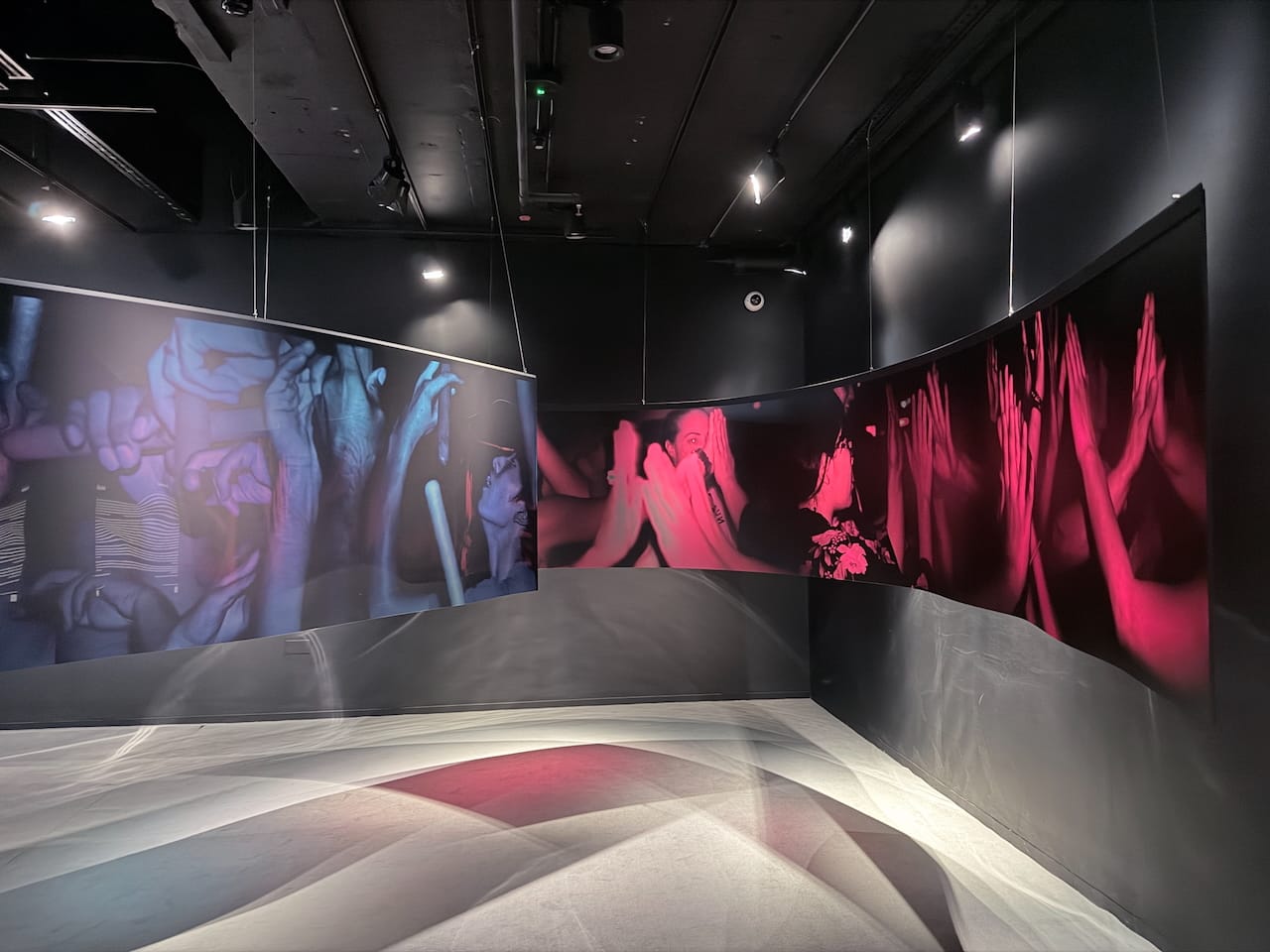
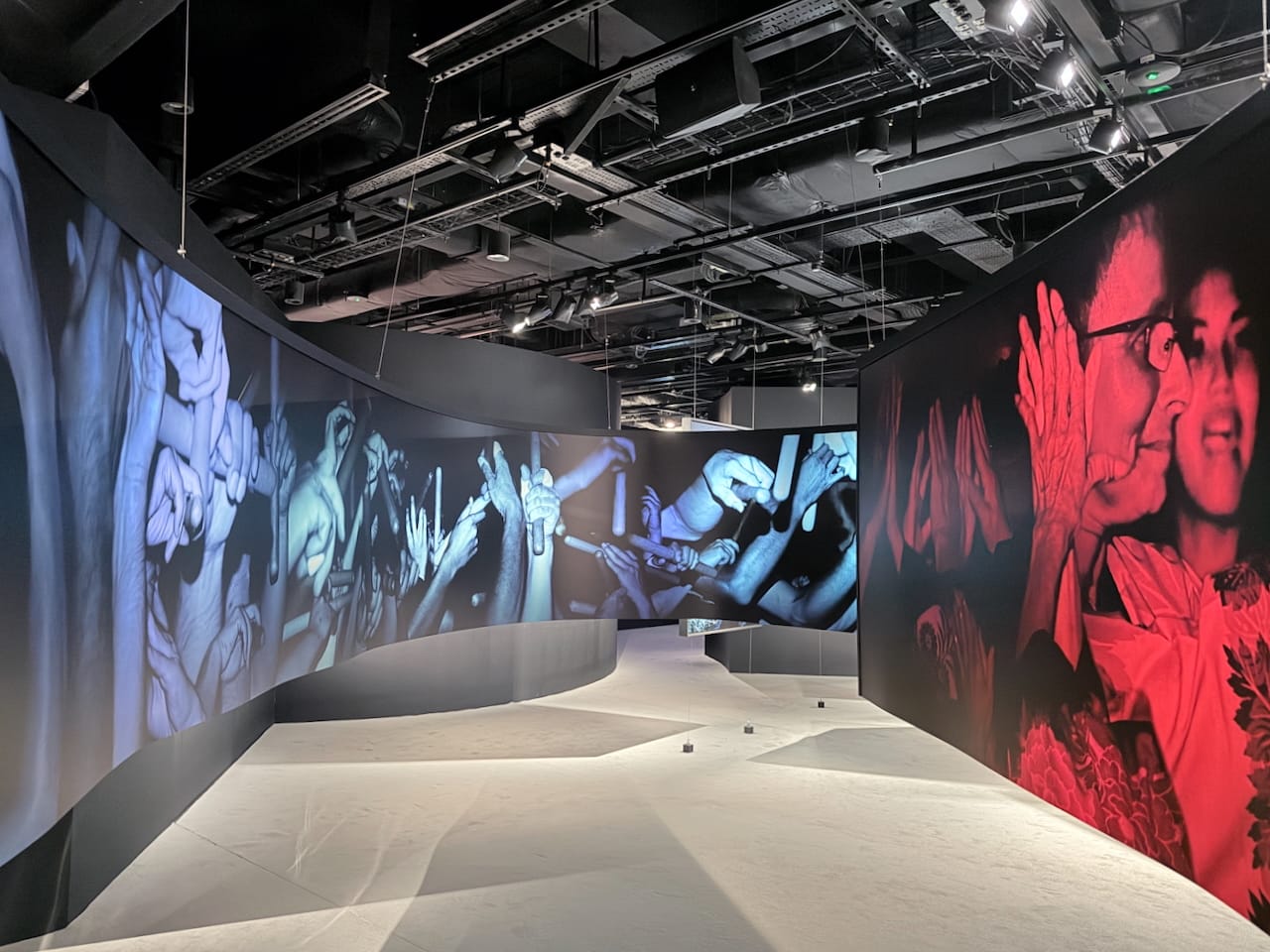
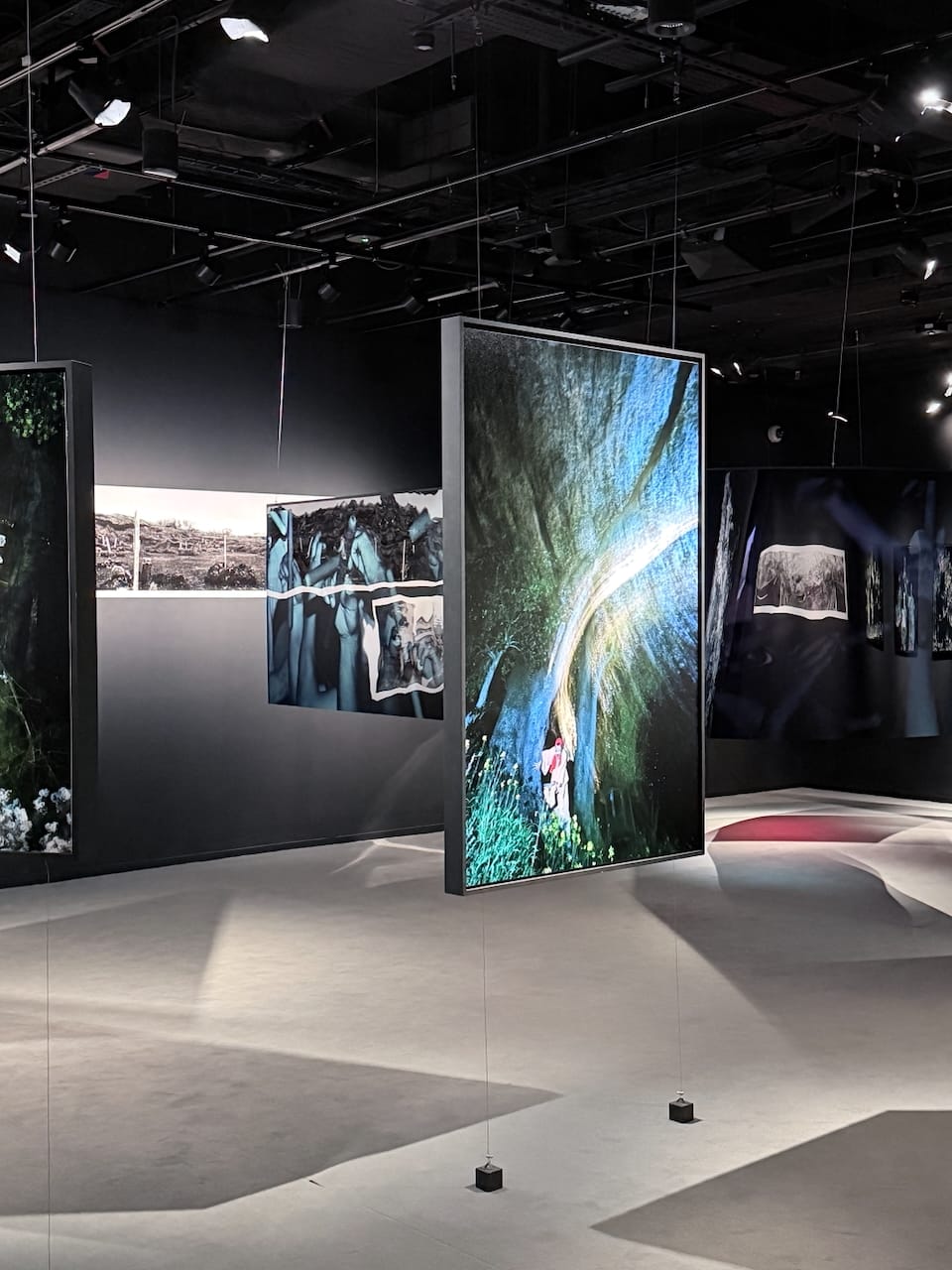
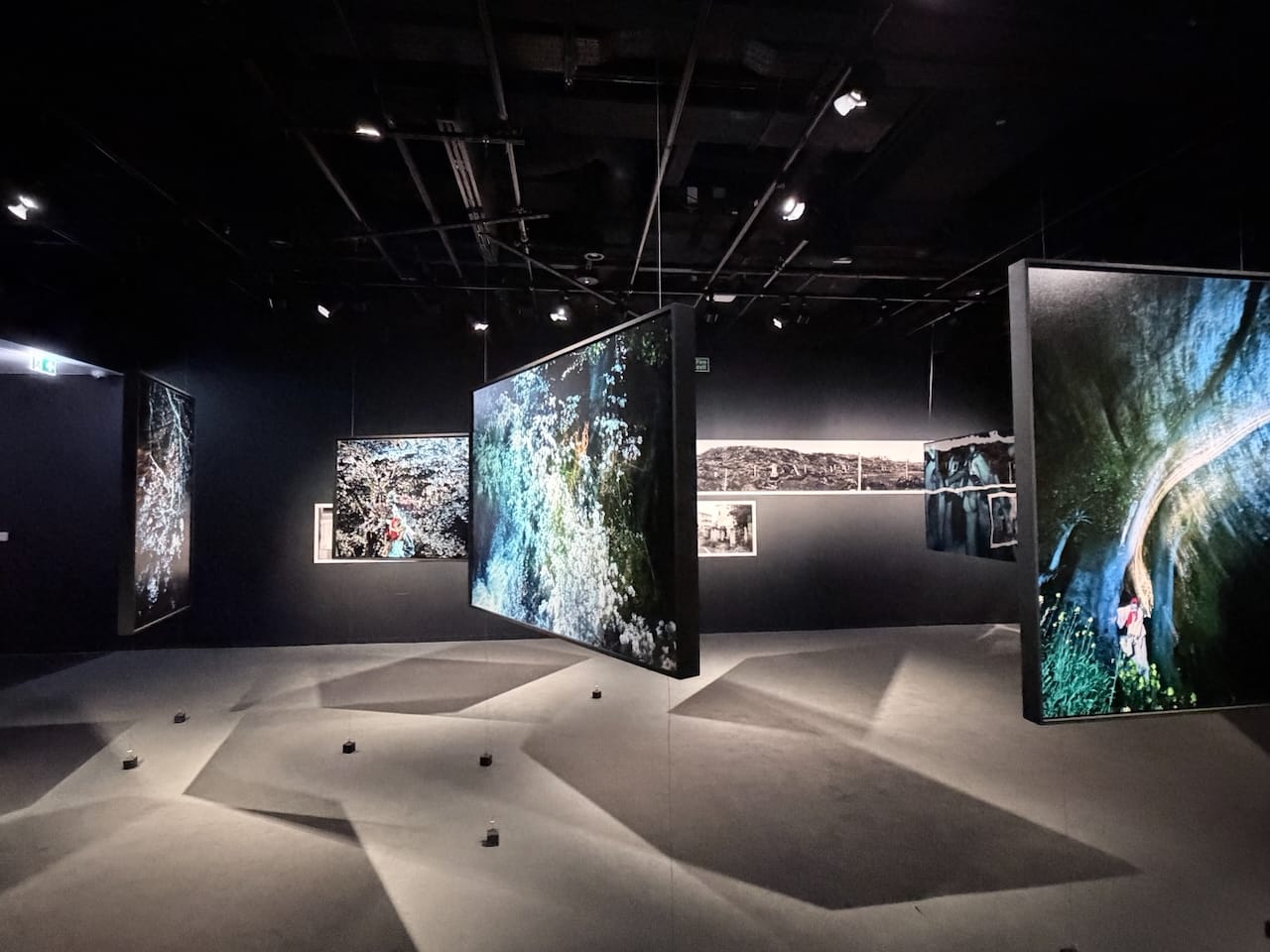
Jon Nicholls - The Iwane Ai installation at Japan House
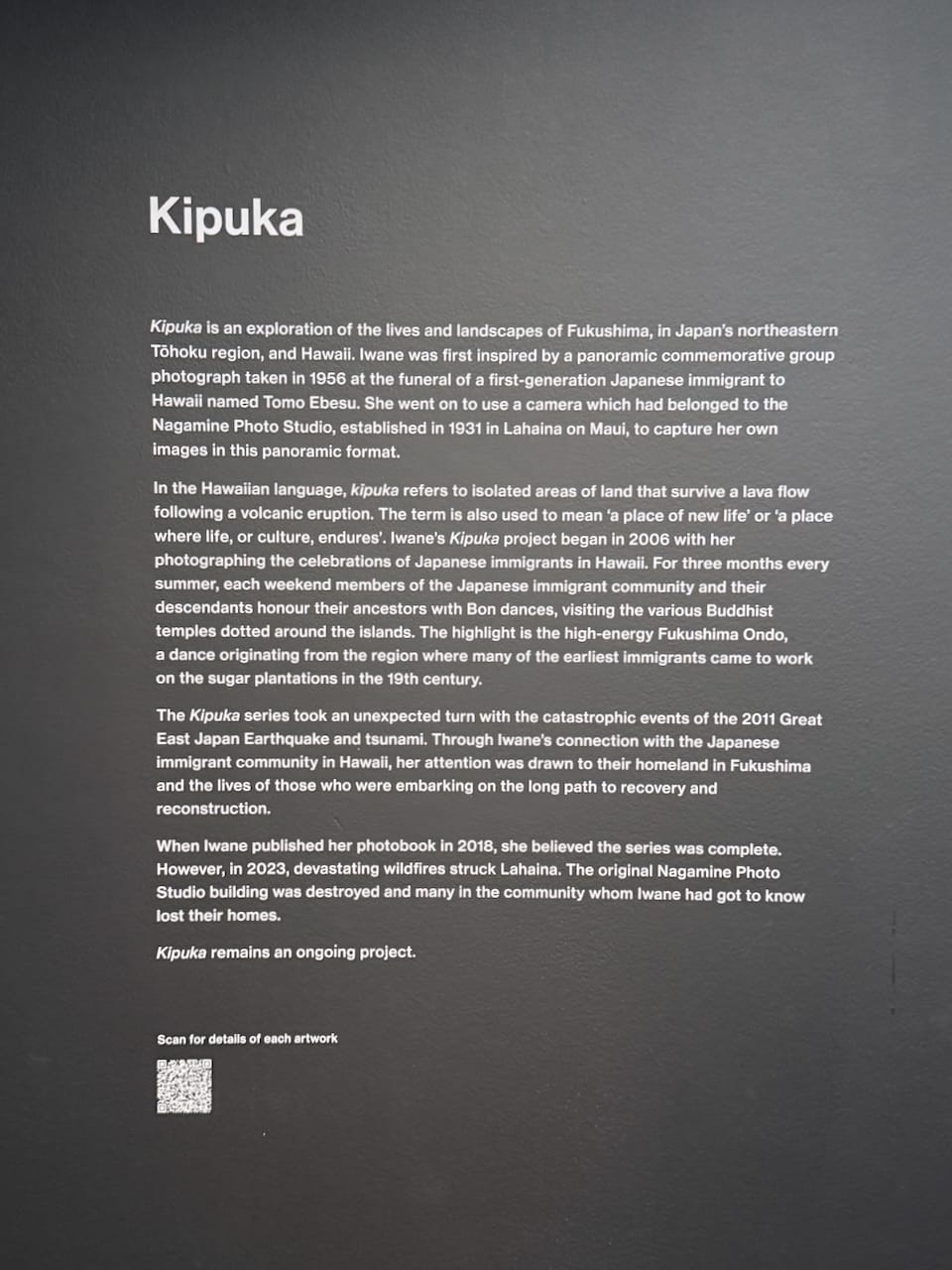
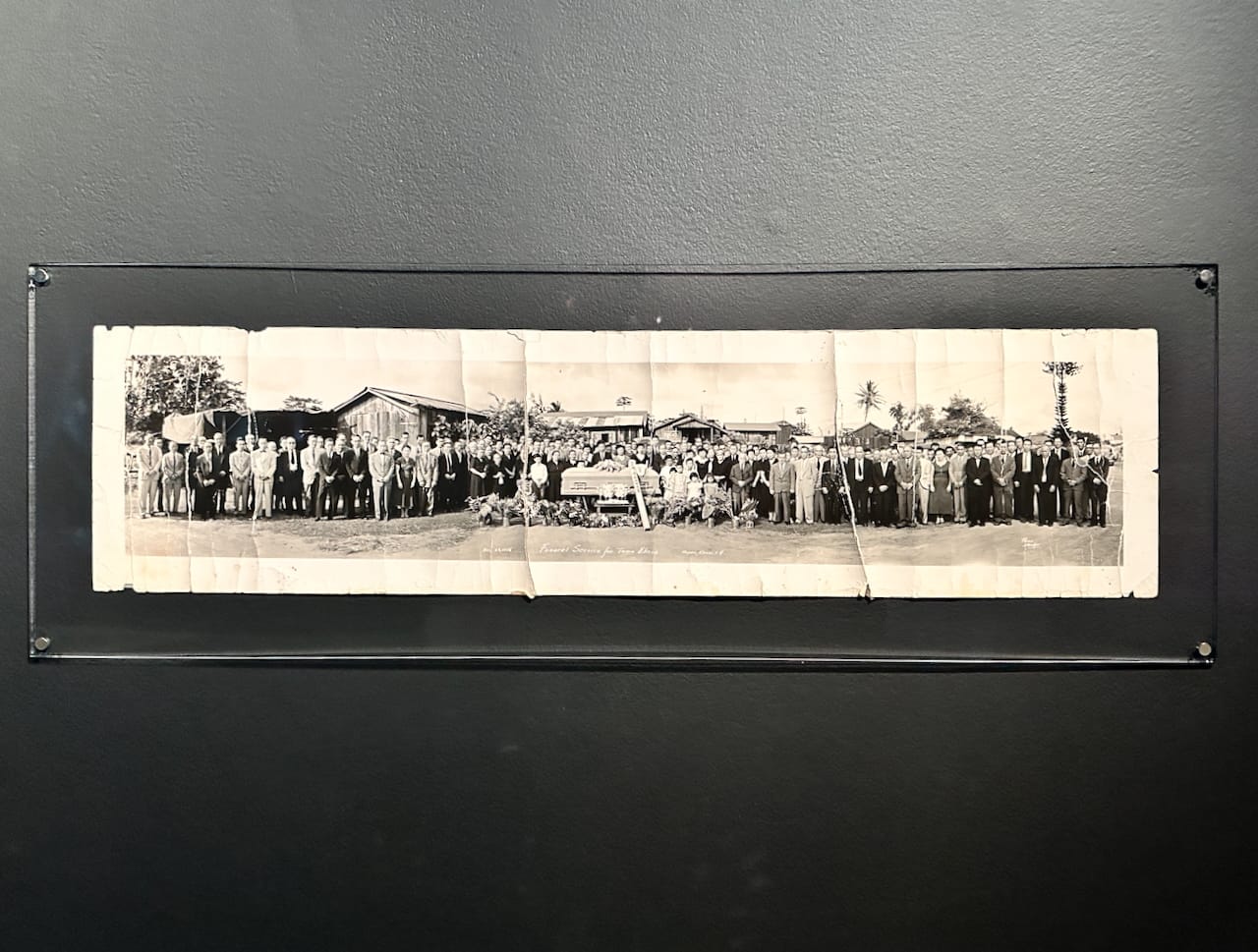
Kipuka began in 2006 with the Bon dances of Japanese communities in Hawaii, whose ancestors came from Fukushima to work on the sugar plantations. Obon is the festival when the dead return and the dance is for them. Iwane began with a panoramic photograph of a 1956 funeral and went on to use a camera that had belonged to the Nagamine Photo Studio in Lahaina, founded in 1931. After 2011 the work turned towards Fukushima itself. She thought it was finished when the book came out in 2018. Then, in 2023, fire destroyed Lahaina, the Nagamine building with it. Lots of the people she had photographed lost their homes. The wall text reminds us that Kipuka remains an ongoing project.
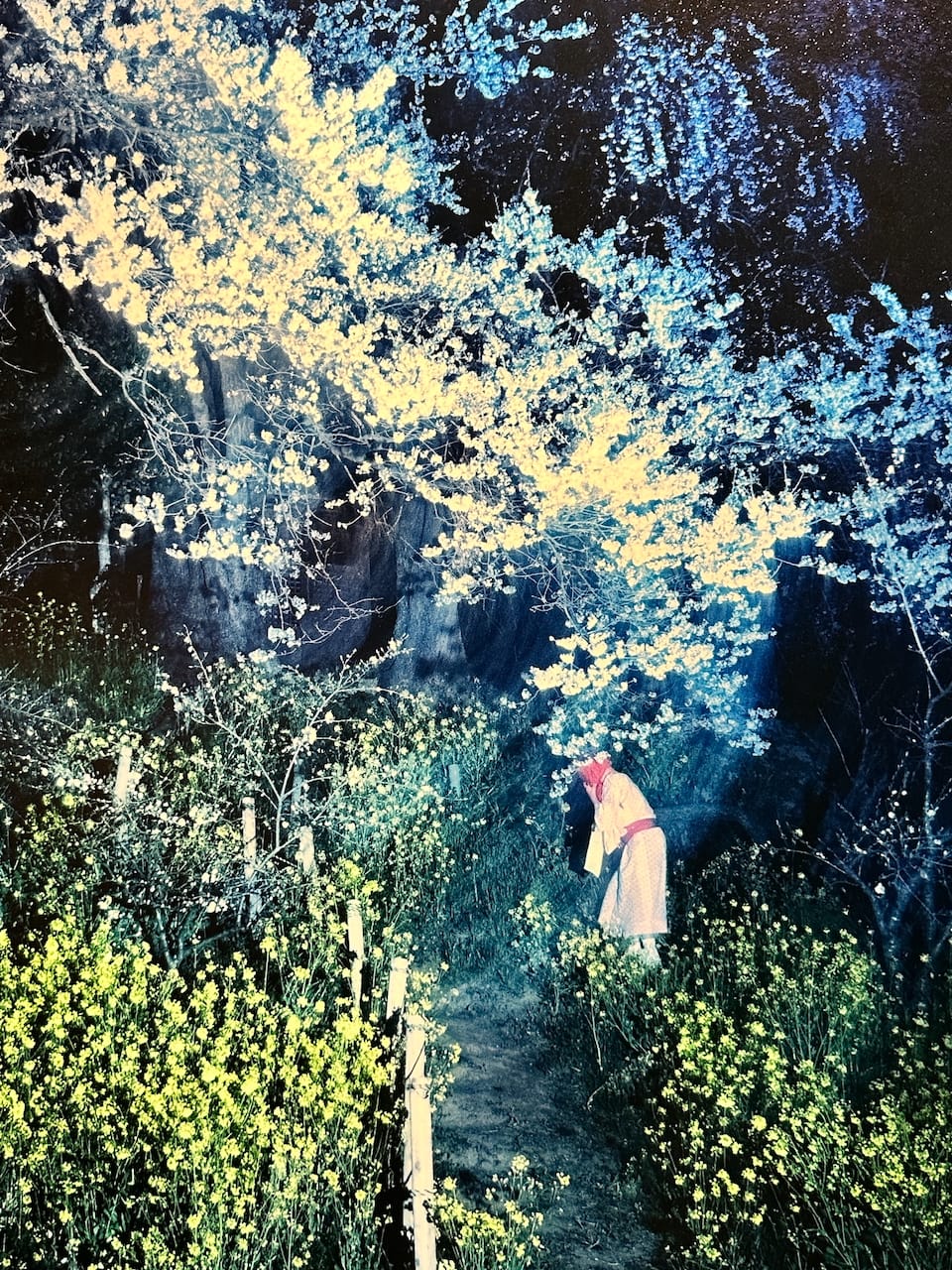
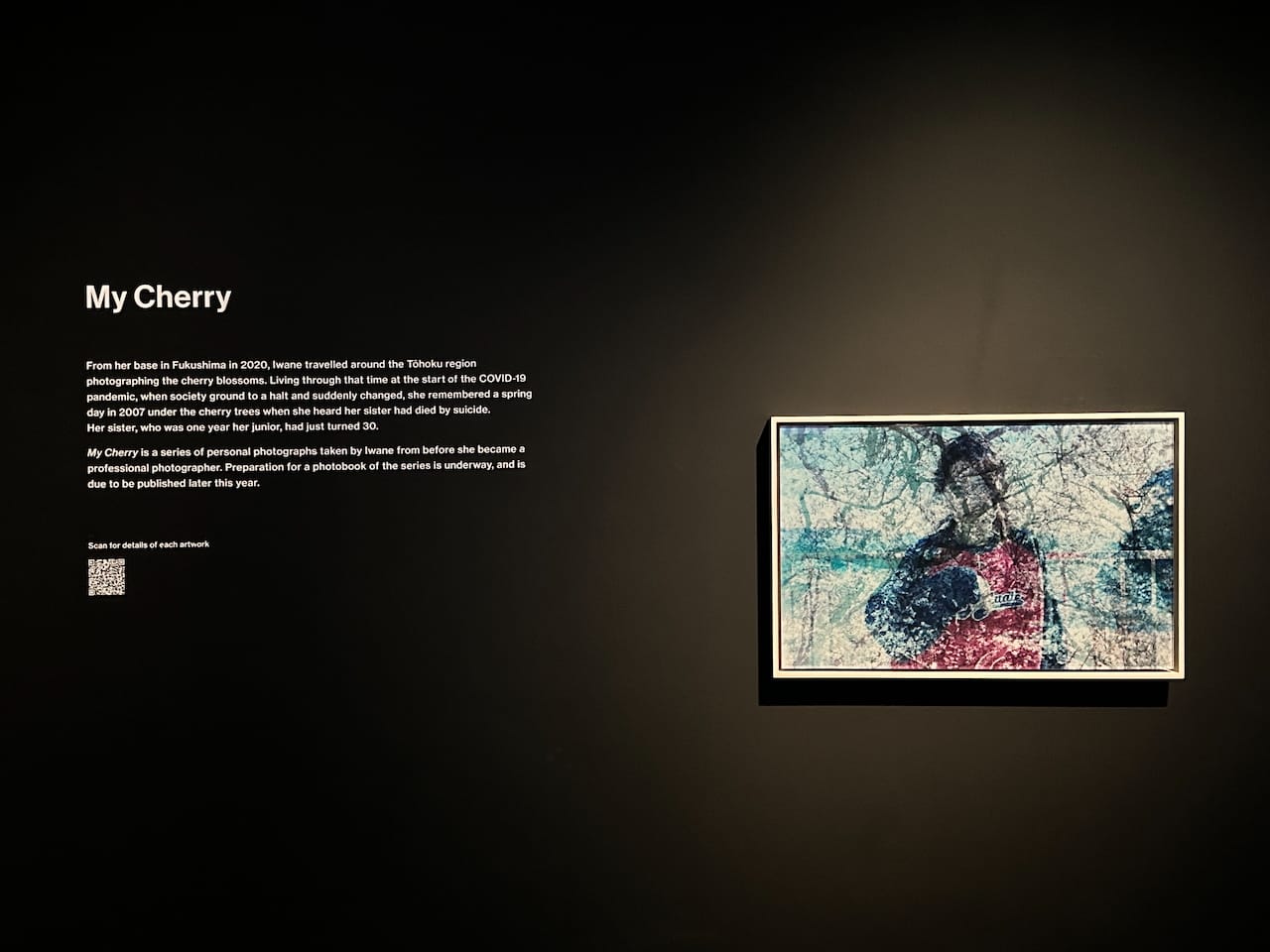
The newer series, A New River, made in Tōhoku during the pandemic, sets night-lit cherry blossoms in cold, electric colour beside folkloric figures. My Cherry is a corner projection in which the blossoms are overlaid on older photographs of Iwane's younger sister, who died by suicide in 2007. Iwane heard the news under the cherry trees. Like Kawada, she goes back to her archive and re-presents it, but the effect is quite different. What changes across the two rooms is whether we know what the blending is for, and who the person inside the image was. Iwane's pictures are no less feverish than Kawada's, but considerably more intimate.
The Kawada and Iwane projections
Japan outside Japan
Seen together, the two lenses could be looking at the same relationship from opposite sides. Kawada's Japan is America inside Japan: the cigarettes for use outside the US, the Coca-Cola beside the dome. Iwane's is Japan outside Japan: a photographer who began making images at her Californian high school, making pictures of a Fukushima dance kept alive for a century in Hawaii, by people whose homeland was then struck by a disaster they could only watch from across the ocean. Neither is quite at home.
And then the frame, which is a third version of the same condition. Japan in Kensington, arranged for foreigners in a building that works as an embassy with a till. I don't mean that cynically. The work survives its setting and I'm glad to have seen it here, twice. But I wondered what, if anything, this building might decline to show.
Walking out, past the shop, I thought of my camera again. The assistants had liked the folding mechanism best, the way the whole thing collapses flat and hides its insides.
Kyotographie: Kawada Kikuji and Iwane Ai at Japan House closes on 18 October 2026.
Thanks for reading PhotoPedagogy! Subscribe for free to receive new posts.
These posts will always be free but, if you enjoy reading them, you can support my analogue photography habit, and that of my students, by contributing to the film fund. Thanks to those of you who have already done so. All donations of whatever size are very gratefully received.