From the Bookshelf
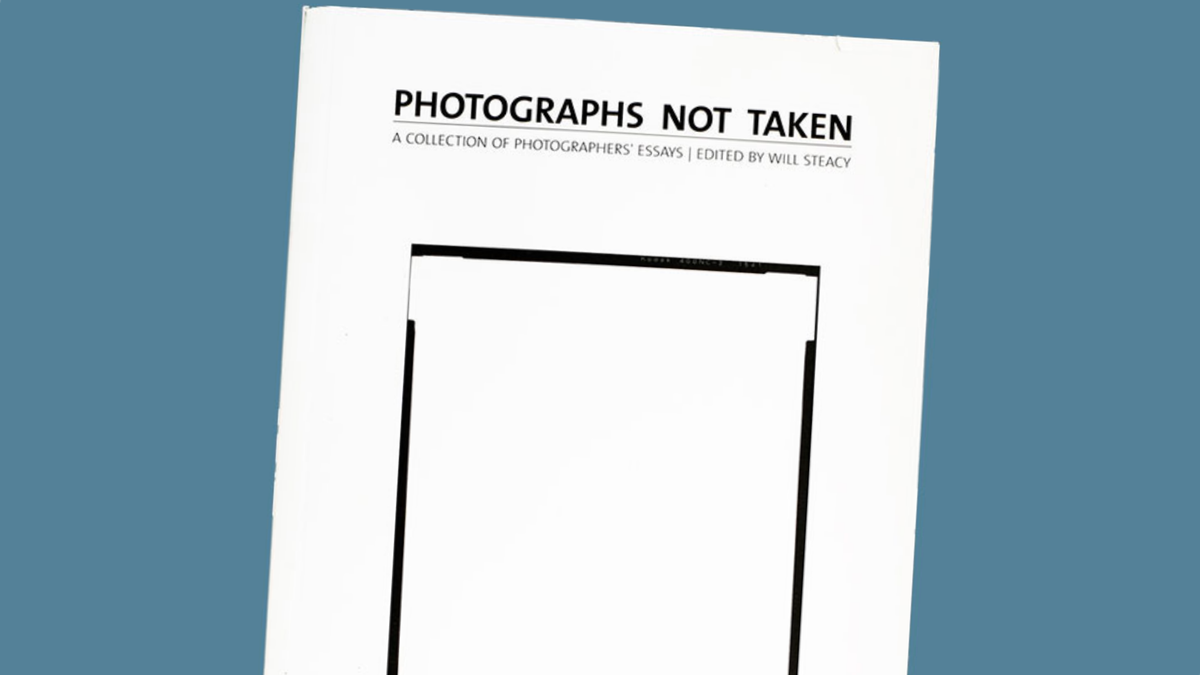
Will Steacy — Photographs Not Taken
This series of posts explores the books (and films) that have helped shape my PhotoPedagogy. They don’t really offer ready-made lesson plans or definitive answers, but they continue to nag away at my thinking. Often, they sit uncomfortably (and productively) alongside the habits and expectations of the classroom.
Will Steacy’s Photographs Not Taken is one of those books.
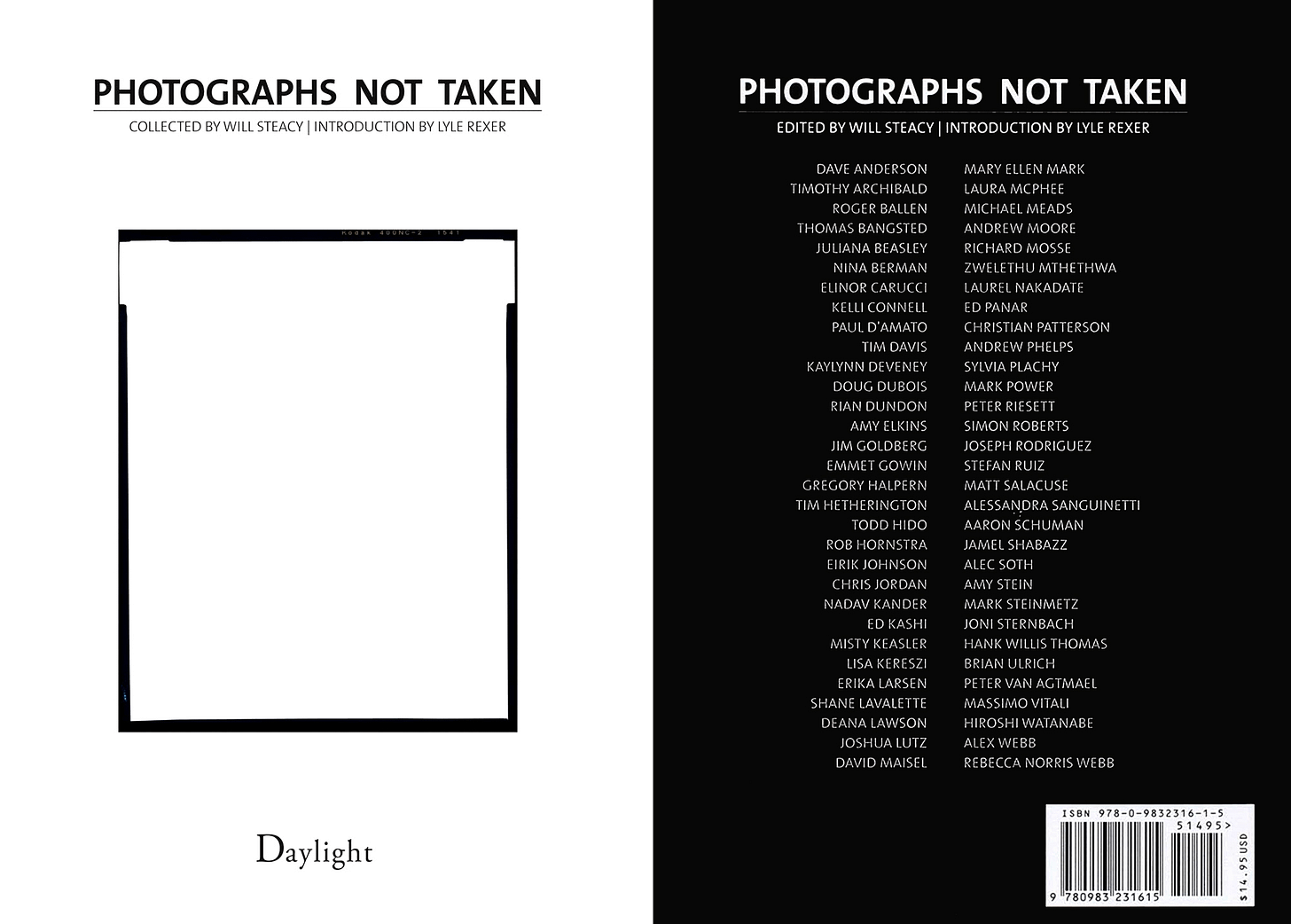
At first glance, its premise feels almost perverse. A book about photographs that were never made. No images. Only words. And yet, the more time I’ve spent with it, the more closely it seems to align with the kinds of questions I find myself returning to as a teacher. What does it really mean to look photographically? When does restraint matter more than decisiveness? And how do we help students understand that photography is not just about what is shown, but about what is withheld, questioned, or left unresolved?
Photographs Not Taken brings together short essays by photographers reflecting on moments when they chose not to press the shutter. Sometimes the decision was instinctive. Sometimes it came after hesitation. Sometimes it arrived too late to be articulated clearly at the time and only became legible in retrospect.
As photographers, one of the most fundamental decisions we make - perhaps the most fundamental decision we make - is when to actually ‘take’ what is before us and transform it into a photograph […] each one of us possesses a unique threshold that sits at the other end of this spectrum, a point at which a moment has stretched beyond the limits of our photography […] they often remain preserved, at least within our own minds […] perhaps they are photographs that have been kept, rather than taken.
— Aaron Schuman
Across the book, there is no single definition of what counts as a good reason not to photograph. What emerges instead is a sense that photographic practice is inseparable from judgement. Ethical, emotional, relational judgement. The contributors describe situations where making an image would have altered a relationship, caused harm, simplified something that felt irreducibly complex, or claimed a right to see that did not feel earned.
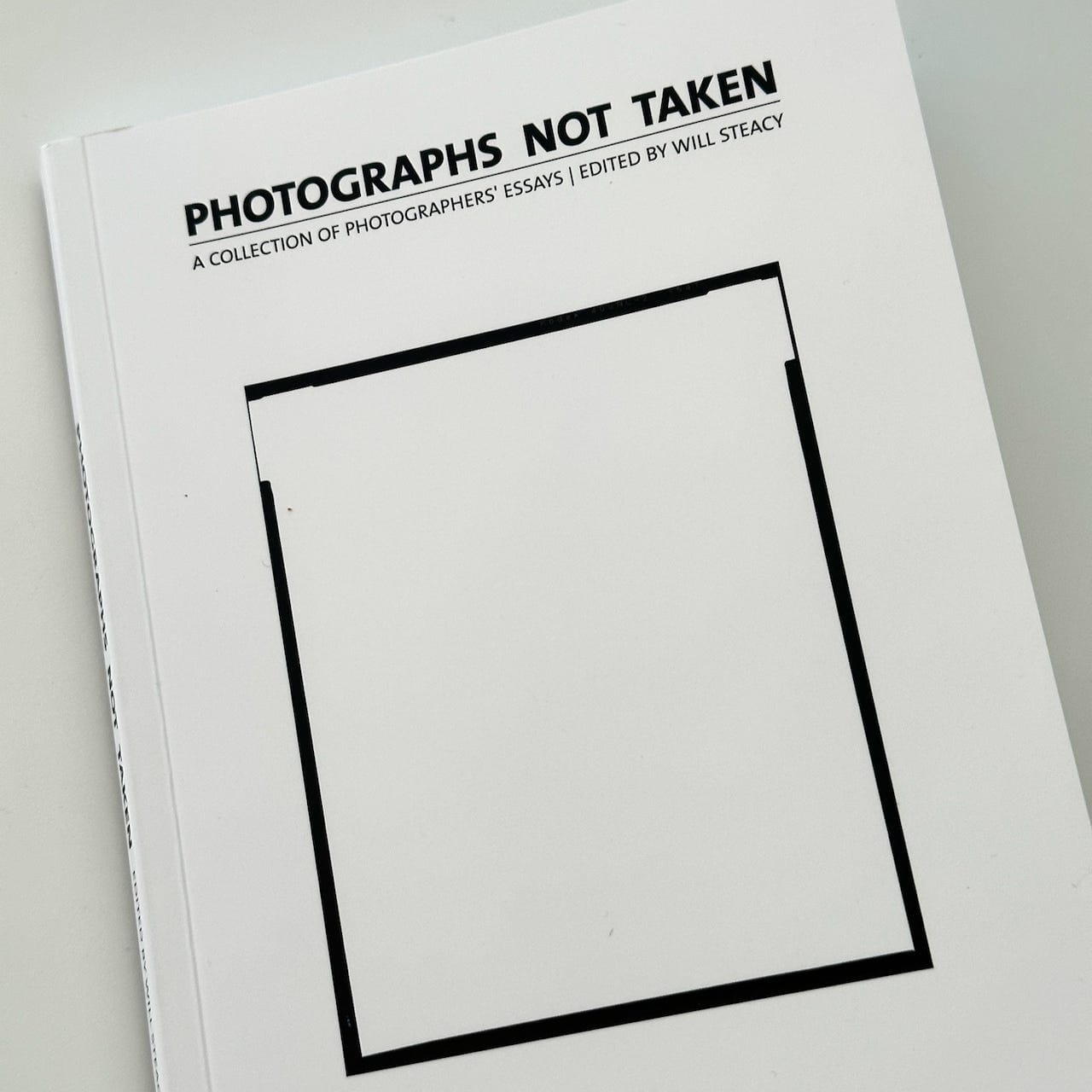
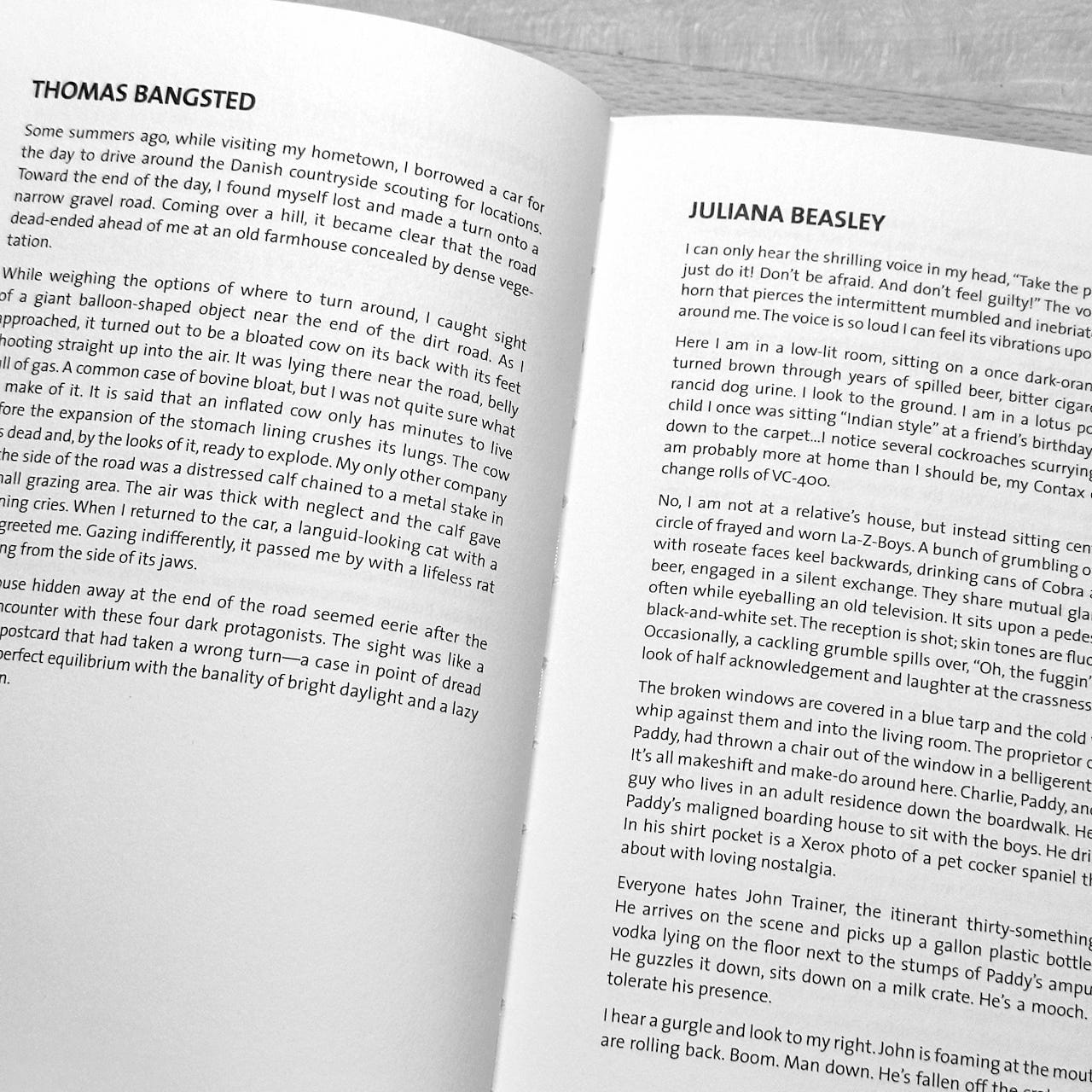
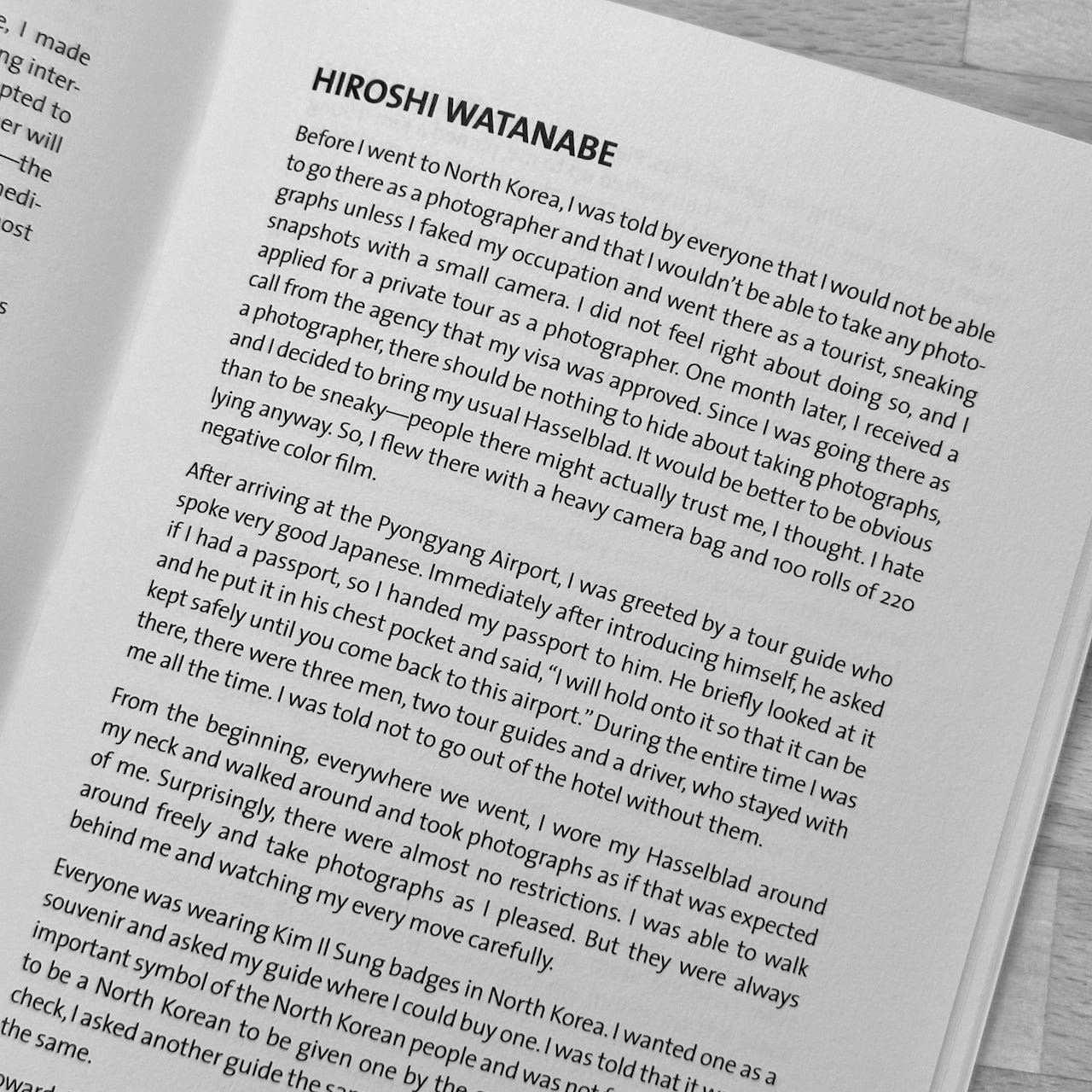
One of the ideas that stays with me is the suggestion that responsibility enters the scene long before the shutter is clicked. Carrying a camera already changes the terms of an encounter. Attention becomes charged. Presence acquires weight. The photographer is no longer simply ‘there’. They are potentially extractive. Several contributors write about realising that the camera did not protect them from the moment but intensified it. In those cases, not making the photograph was not a withdrawal from photography but a consequence of taking it seriously.
Can you make a portrait that is not a caricature? Can you reveal vulnerability and frailty without taking advantage, without cheapening the picture and insulting your subject?
— Gregory Halpern
What the book resists is the idea that photography is primarily about outcomes. It insists instead on process. On hesitation. On what remains unseen and why.

While re-reading Photographs Not Taken, I reflected on a recent lesson with an A-level photography group, where we compared two images separated by nearly two centuries. Louis Daguerre’s Boulevard du Temple and Tereza Červeňová’s disguised self-portrait photograph from the ‘Nymph’ series.
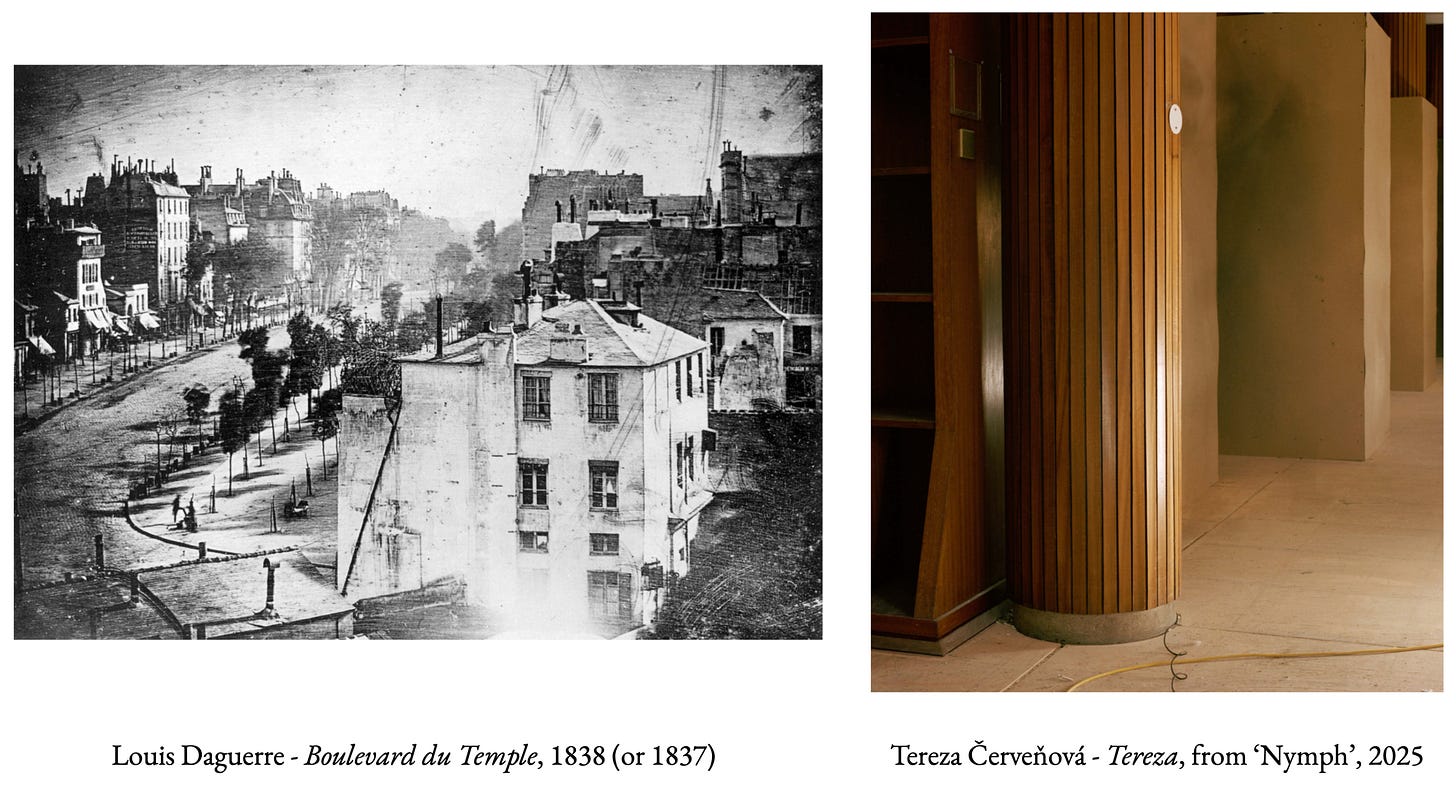
Students were first asked to describe what they could see, without research. People were, mostly, absent from Daguerre’s image. The street appeared strangely empty. Červeňová’s image felt quiet, architectural. Then we looked again, after learning more. The long exposure in Daguerre’s photograph. The shutter-release cable and blurred presence in Červeňová’s image. Bodies were there after all. Time had simply worked against visibility.
What interested me was how trust shifted. Trust in photographs that do not show us what was physically present. Trust in explanation and context. Trust in me as a teacher. And, quietly, the students’ trust in themselves. The point of the exercise was not to undermine confidence or suggest that photographs, teachers, or explanations are deceptive by default. It was to introduce a gentle instability. To suggest that seeing is rarely enough on its own. That perception needs to be tested, slowed, revisited. That authority, whether photographic, technological, or pedagogical, is always partial.
This seems closely connected to the concerns of Photographs Not Taken. The book asks what happens when photographers resist the pressure to produce evidence and instead sit with uncertainty. In the classroom, that same uncertainty can become a space where criticality develops.
photography is not like the other arts, socially, politically, or psychologically […] A photograph can act as a spur to memory, it can yield treasures […] But an image stands mute before the inexpressible delicacy, horror, humour, and associative complexity of our experience. Many of the photographers offer descriptions or lists of pictures they wish they had taken, but they seem to recognise that what attracted them to those moments in the first place were often qualities or intuitions of reality that no picture could express […] That gnawing lack is precisely what drives photographers to seek more pictures and regret lost opportunities …
— Lyle Rexer, from the Introduction to Photographs Not Taken

One of the challenges of photography education is that many of its most important skills are not immediately visible. Our PhotoPedagogy framework describes Photo Literacy as plural. Looking, making, reading, contextualising, sequencing, withholding. These are not steps in a linear process but overlapping ways of engaging with the world. Seeing, feeling, sensing, speaking, operating, moving, refusing.
Photographs Not Taken helps to foreground some of these literacies in ways that are teachable. For example:
Looking without a camera
Spending time in a space without photographing it can sharpen attention. Students often report noticing details, atmospheres, and tensions they would otherwise rush past. This kind of looking resists the idea that photography begins with equipment. It begins instead with presence.
Looking with a camera
Carrying a camera changes behaviour. Students become more aware of how they are seen by others and how their own looking carries intent. Discussing this shift explicitly helps them understand photography as a social and ethical act, not just a technical one.
Deciding not to photograph
Asking students to describe a photograph they chose not to take can be surprisingly revealing. The reasons are often ethical, emotional, or relational rather than technical. Articulating those reasons develops judgement and accountability.
Looking again
Returning to the same image after research or discussion models what Hélène Cixous describes as a second look. Perception changes. Certainty often weakens. Attention becomes more precise. This kind of looking teaches students that understanding is provisional and revisable.
Reading photographs critically
Comparing images that appear straightforward but conceal complexity helps students question photographic truth. It also opens a useful parallel with AI. Both photographs and AI systems can assert confidence. Both can obscure the conditions of their making. Learning to read them critically is an essential contemporary skill.
These activities are not designed to produce neat outcomes. Their value lies in cultivating patience, ethical awareness, and a tolerance for ambiguity.
The theme of trust runs through Photographs Not Taken. Trust in one’s own judgement. Trust in others. This is a delicate balance. Students need to trust photographs enough to take them seriously. They need to trust teachers enough to listen. But they also need to learn that trust is not the same as acceptance. That authority can be questioned without being dismissed. That intellectual independence does not require cynicism.
My A-level photographers and I are currently engaged in a cautious experiment about the trustworthiness of AI. About half the class have refused to engage with it, for a range of reasons. One student wrote me a two page letter articulating all the ways in which AI is a bad thing. I was delighted. This act of refusal is at the heart of real education. And it’s the refusal to take/make a photograph that is the cornerstone of Steacy’s book. In a previous post, I wrote about Gert Biesta’s notion of subjectification, illustrated by the Parks/Eichmann Paradox. Rosa Parks, when instructed, refused to move seats. By contrast, Adolf Eichmann attempted to absolve himself of responsibility for crimes against humanity by claiming to have just followed orders. In a crisis, Parks’ “I” turned up, whereas Eichmann’s disappeared. Biesta asks the disarmingly simple question, which of them has been better educated?
What will I do with what I have learned and how I have developed when it matters, when I am faced with the question “Hey, you there, where are you?”
Turning our attention to photography education, how might we open ourselves up to a more balanced view of the purposes of our lessons so that we can find more space for subjectification?
— Jon Nicholls, The Only Way is Ethics, Part 2
Perhaps the most valuable thing Photographs Not Taken offers educators is an opportunity to foreground this issue of subjectification. When the moment arrives, what will you do? “Hey, you there, where are you?” The book doesn’t argue against photography. It asks us to stay with it longer. To hesitate. To look again. To recognise that, sometimes, the most important photographic learning happens in moments of refusal, where no image is made, and where certainty remains just out of reach.
Thanks for reading PhotoPedagogy! Subscribe for free to receive new posts.
These posts will always be free but, if you enjoy reading them, you can support my analogue photography habit, and that of my students, by contributing to the film fund. Thanks to those of you who have already done so. All donations of whatever size are very gratefully received.