From the Bookshelf
Philip Perkis — Teaching Photography, notes assembled

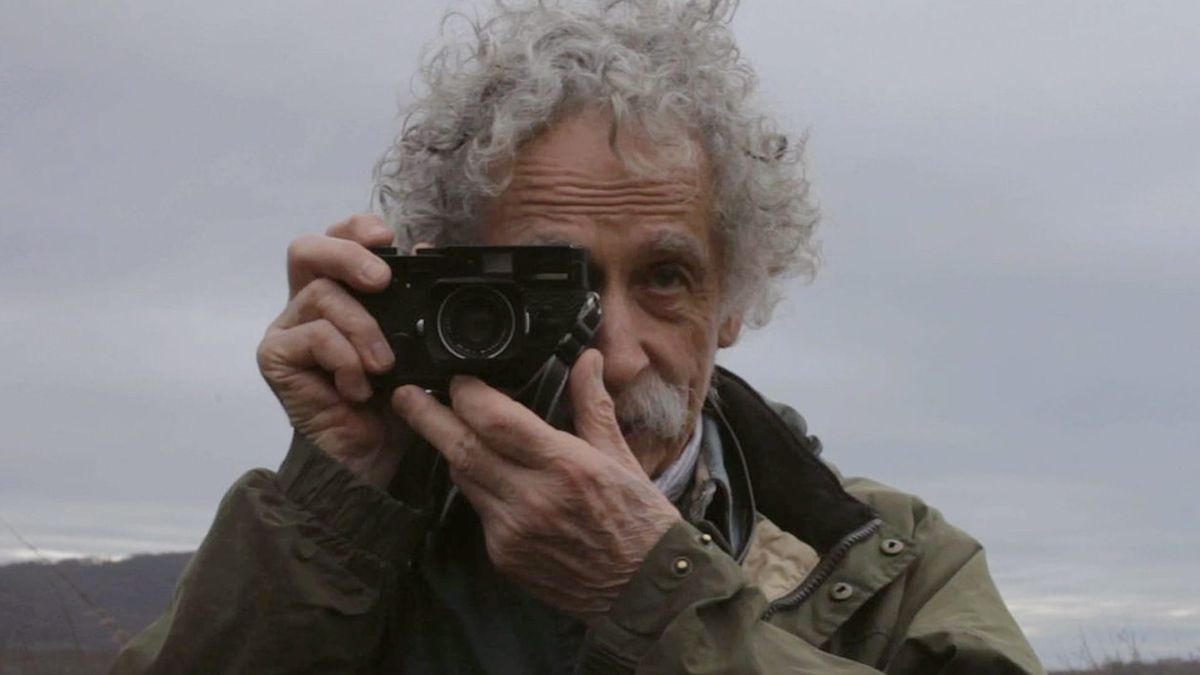
This series of posts explores the books (and films) that have helped shape my PhotoPedagogy. This one is particularly brilliant and might be an inspiring addition to any photography teacher’s bookshelf.
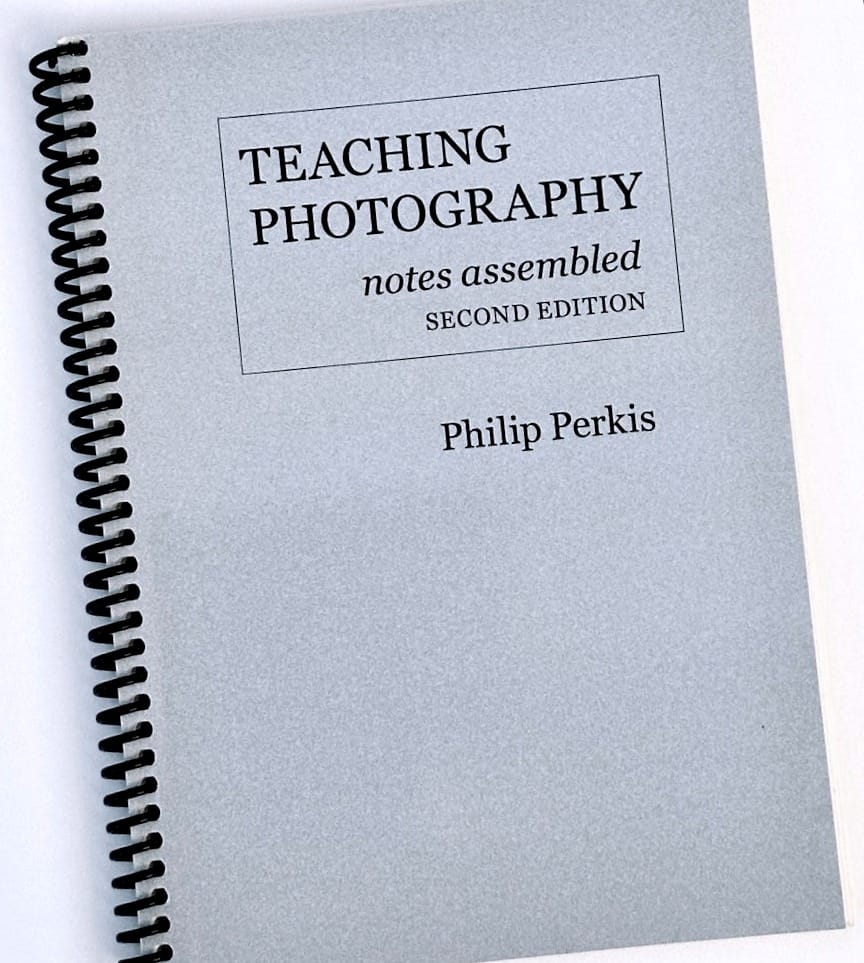
When I wrote my school’s Visual Literacy Policy I included a few quotations. One was from Philip Perkis’ brilliant book Teaching Photography.
When a very small child sees the dog, points and says, ‘dog’, the parents go nuts with enthusiasm and think the kid is a genius.
The message is clear; in our culture the purpose of vision is to name and to classify. That’s where the ‘money’ is.
What about the light that describes the dog’s fur in the sun, in the shade; at night, with ghostlike moves in the hall? What of the shape of movement of the tail when happy or frightened, the tilt of the head, the messages that can be received through the tiny body, gestures that cannot be verbalised? […] No rewards for any of this. The naming is what counts. Intelligence is measured in reading and math scores. When was the last scholarship given to someone for being receptive and observant?”
— Philip Perkis
Perkis died in November, aged 90. He will always be one of my teacher/photographer heroes. After struggling at school, not realising until his fifties that he was dyslexic, he had a stint in the US Air Force where he was introduced to photography. He studied with Ansel Adams and Dorothea Lange in San Francisco before relocating to New York. His photography and teaching careers developed side by side, one informing and enriching the other.
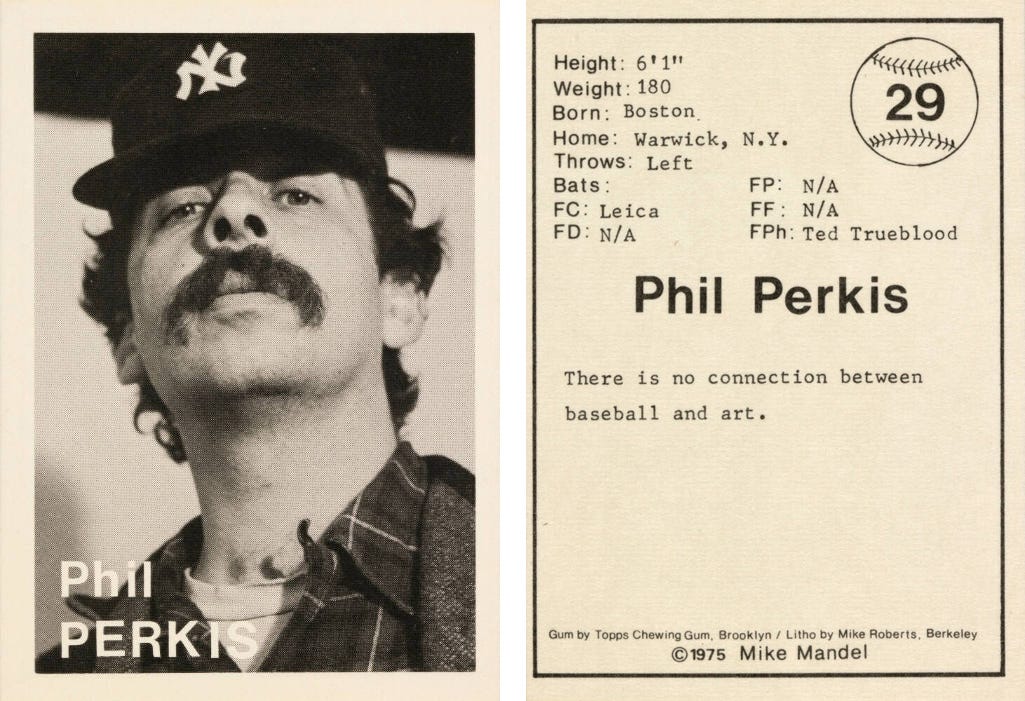
I have a copy of Perkis’ book The Sadness of Men, which is splendid, but it’s his notes on the teaching of photography that have been most influential for me.2
Teaching Photography is a very modest book. A5, 65 pages, ring bound. Almost like a student project. A notebook. It’s physical form captures something of Perkis’ attitude to photography: quiet, thoughtful, unshowy and provisional. Nothing is settled. He was comfortable living with the mystery but trying, all the same, to articulate the relationship he experienced between seeing and seeing with a camera.
The following is not so much to present defensible argument or complete explanations of concepts or technologies. It is rather to set a table that may provoke thought and trigger discussion. Most importantly, to encourage younger photographers to take some chances.
— Philip Perkis
There are no photographs in the book. Just 30 one or two page chapters, including practical exercises, short takes and pedagogical reflections. The tone is gentle, amusing, sometimes opinionated but rarely judgemental. It’s clear that Perkis had a particular relationship to photography. He was interested in the craft of the black and white darkroom. He printed for Helen Levitt. He photographed all manner of things. He was a student of light. Despite his lack of interest in the “digital revolution”, he devotes two chapters to it and acknowledged that many photographers made important, “transcendent” images with digital technology. However, more of something (easier, quicker) is not necessarily desirable.
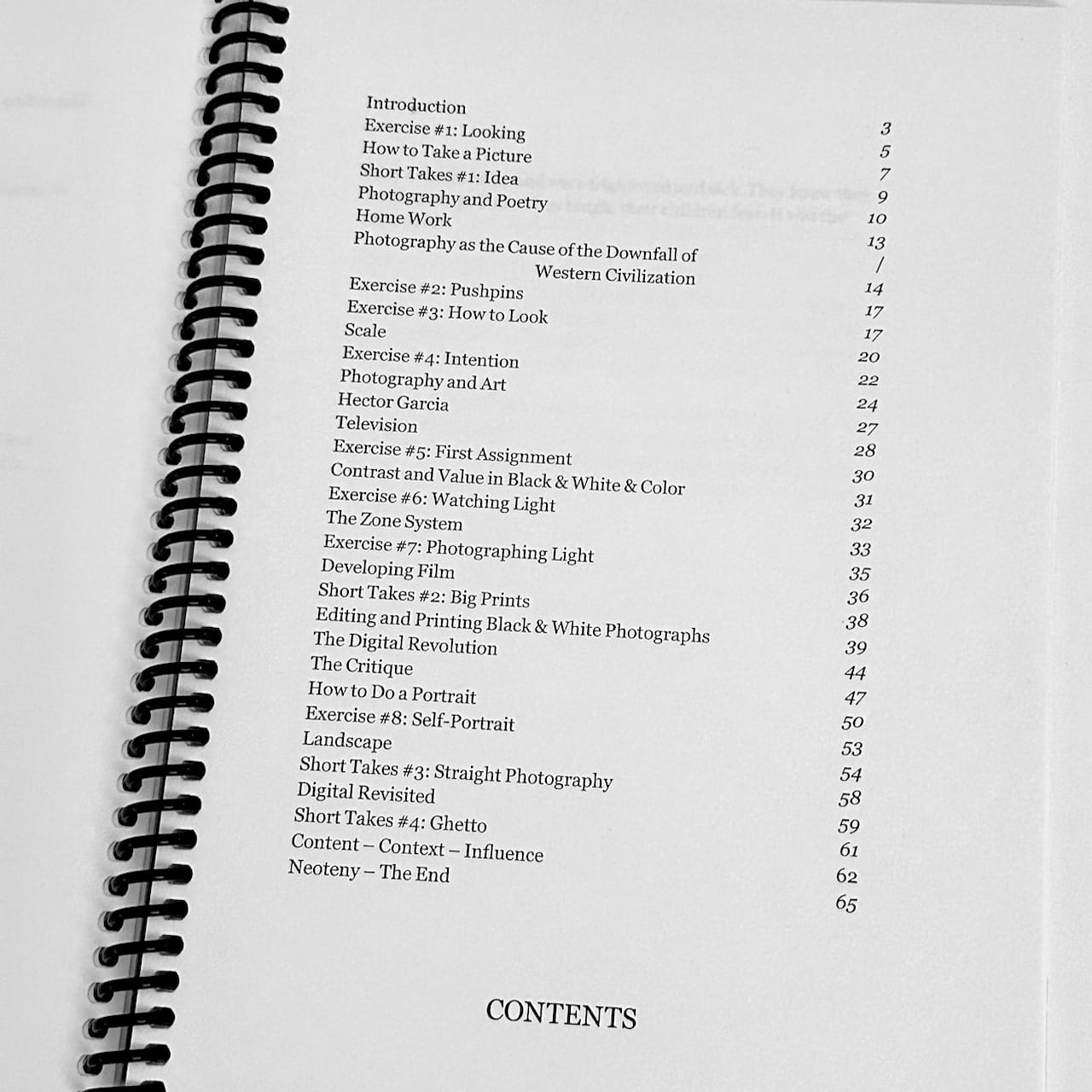
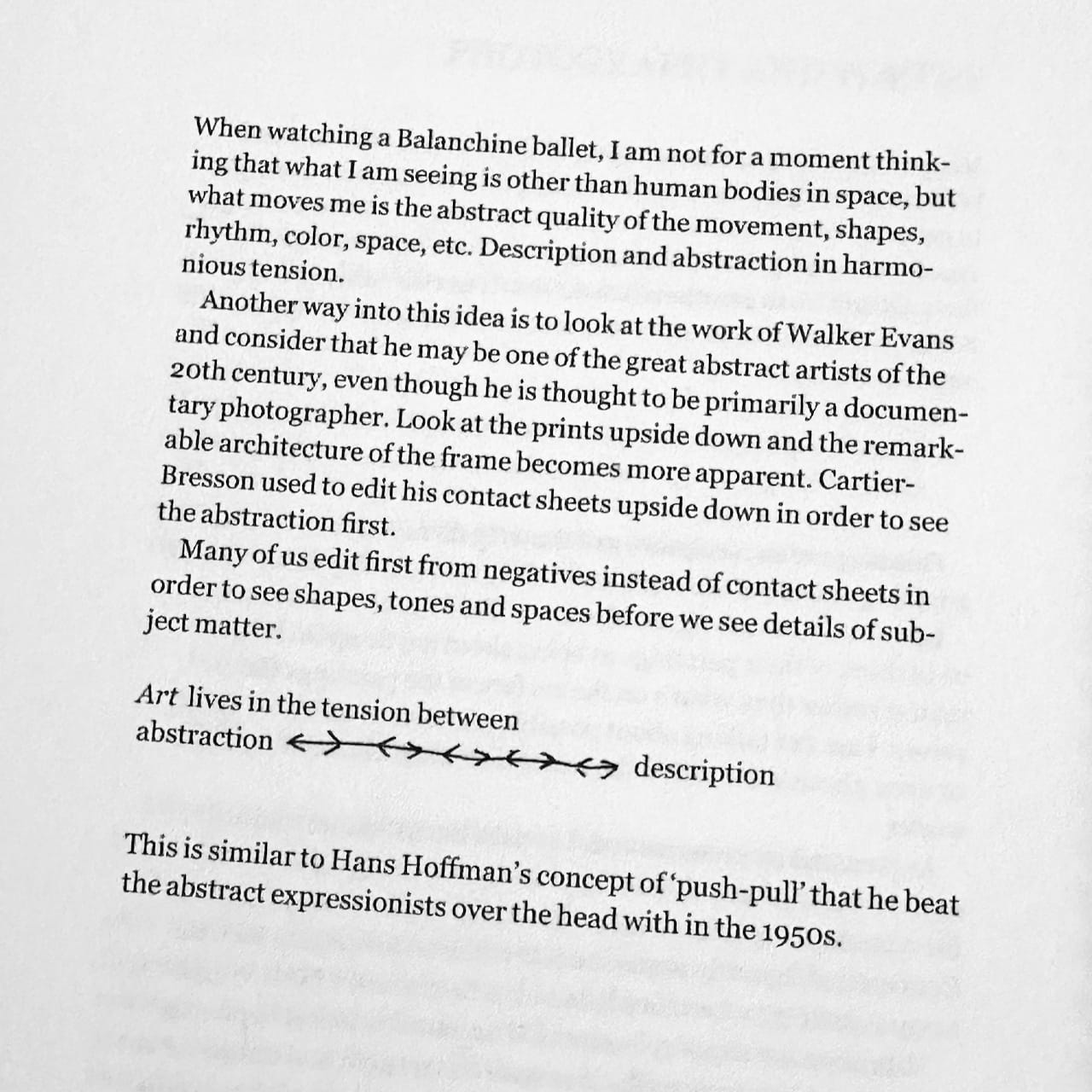
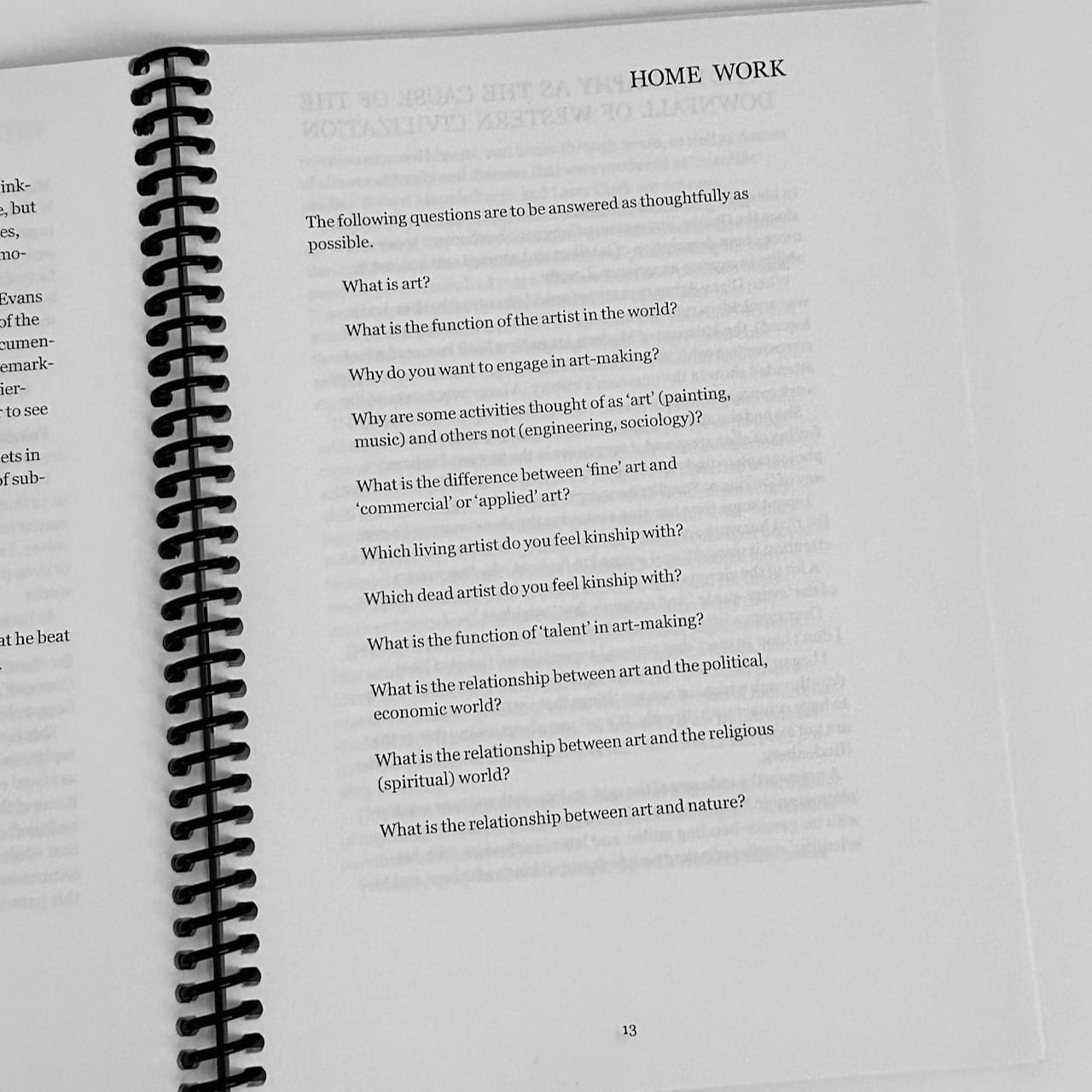
It’s somewhat invidious to attempt to summarise Perkis’ wisdom. The book is still available, reasonably priced. I urge you to track down a copy. However, here are a few of his ideas that have informed my PhotoPedagogy:
- Photography, first and foremost, is about appreciating the “object-ness of what is seen.” Meanings come later. Light on surface. “Just to see.”
- Photographic intelligence is “pre-logical”. One reason to make/take a photograph is to communicate something that can’t be communicated any other way i.e. in words.
- “You can’t bat and think at the same time.” — Yogi Berra
- Intentionality comes in different forms. Going somewhere, at a certain time with a camera sets the frame in which “high risk art-making” can happen.
- Interesting photography does not require an interesting subject. “A leaf floating on the surface of a puddle with the light a certain way can be a significant event.”
- The real subject of a photograph is light.
- Smaller is often better.
- Pictures placed next to one another alter their meanings.
- Education ought to be a process of “revealing or uncovering rather than that of acquiring […] all of us have a direction to go in and we have to find that direction through the process of working in a medium, with intelligence, over a long period of time.”
- The ‘straight’ photograph is a myth.
- All photographs describe and all are expressive to some degree. There is no real distinction between documentary and fine art photography.
Perkis often referred to his own childhood experiences of loneliness, sadness and confusion. Discovering photography provided a passport to a meaningful life, a true sense of home. The word ‘grace’ crops up frequently. I think you can sense the strange mixture of sorrow and joy in all his work.
“Photography is for life”, I often say to my students, “not just for Christmas.”
The book ends with a reflection about neoteny, the term used to describe sophisticated adults who have retained a child-like curiosity, imagination and playfulness; “a zest for learning new things”.
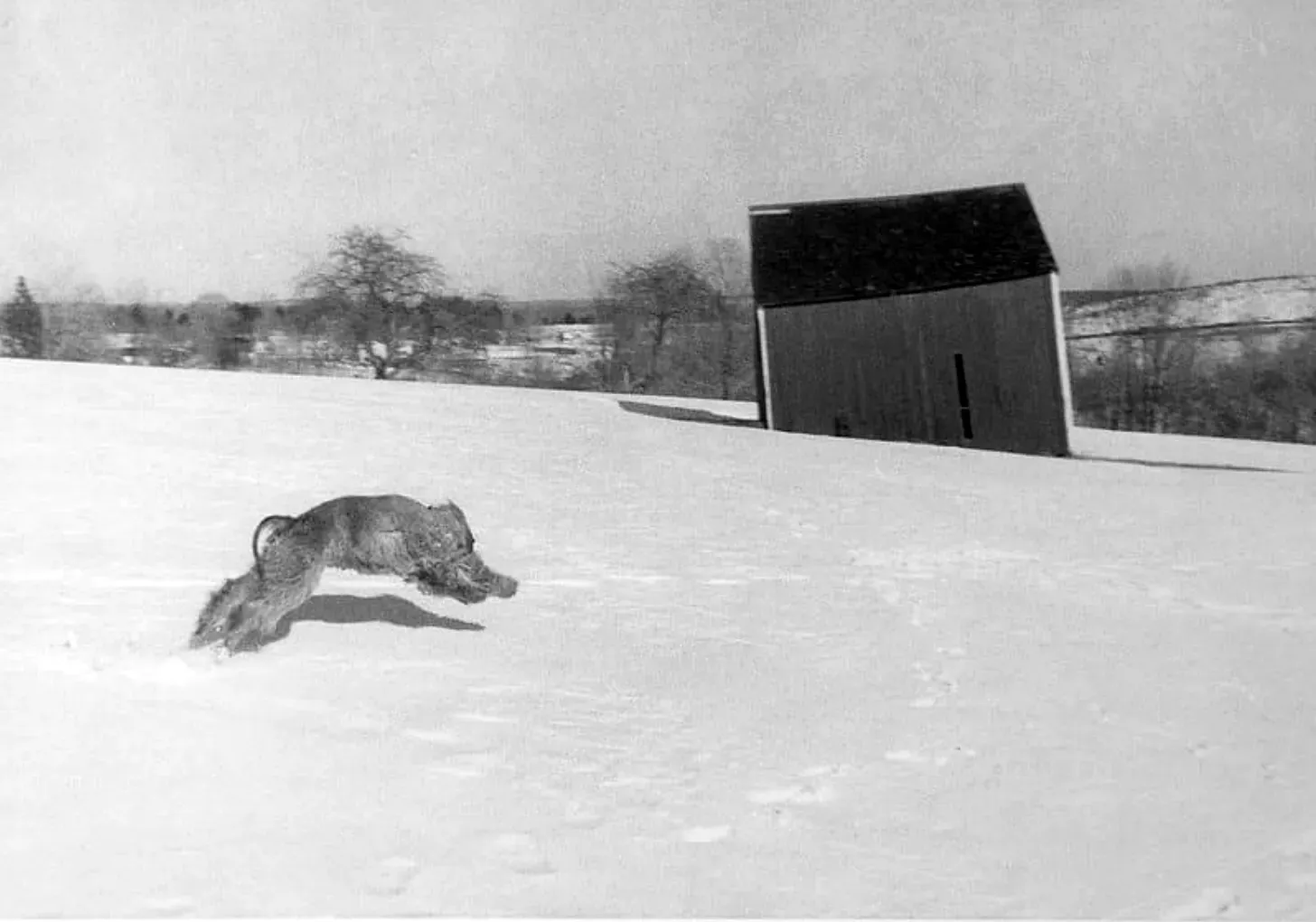
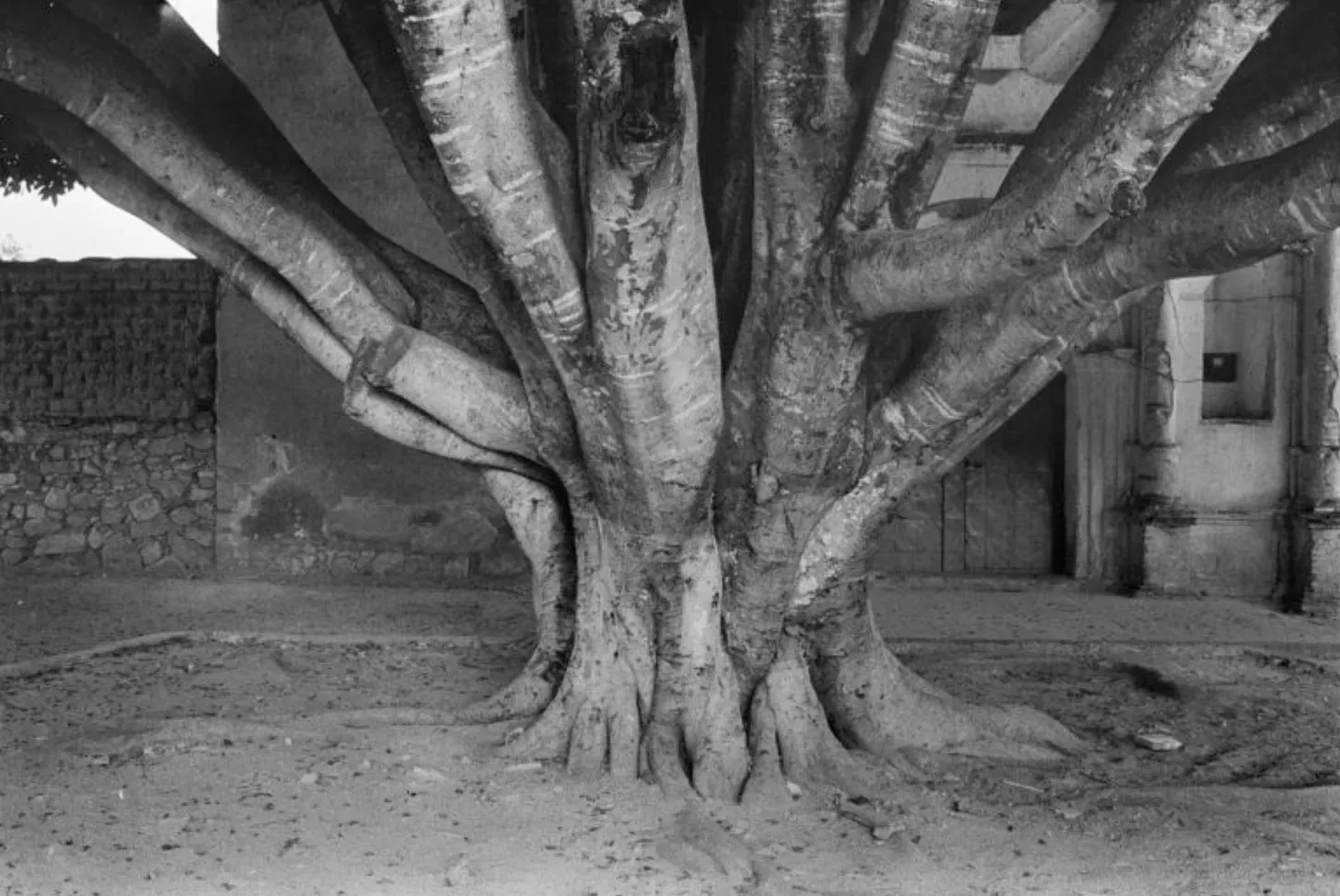
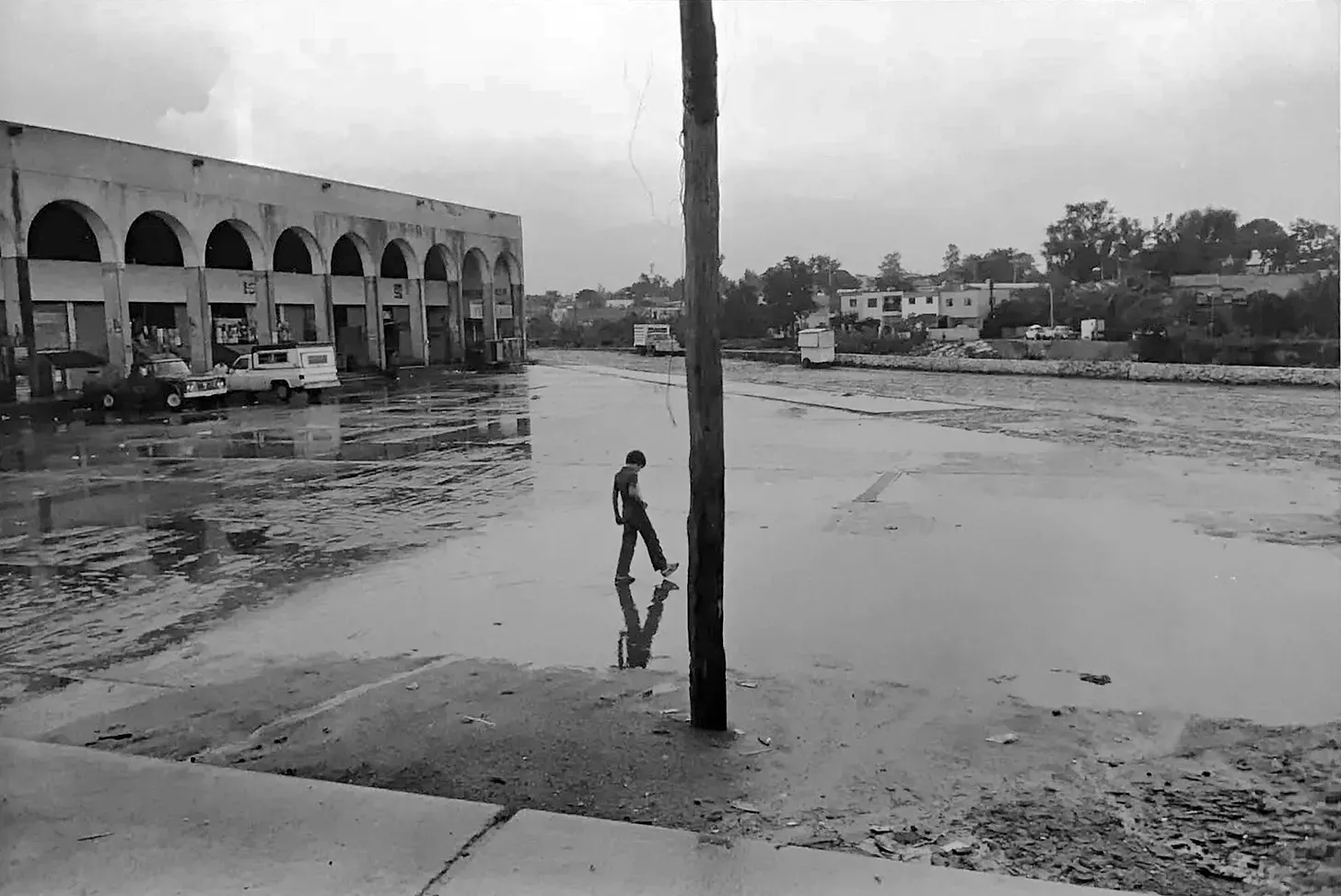
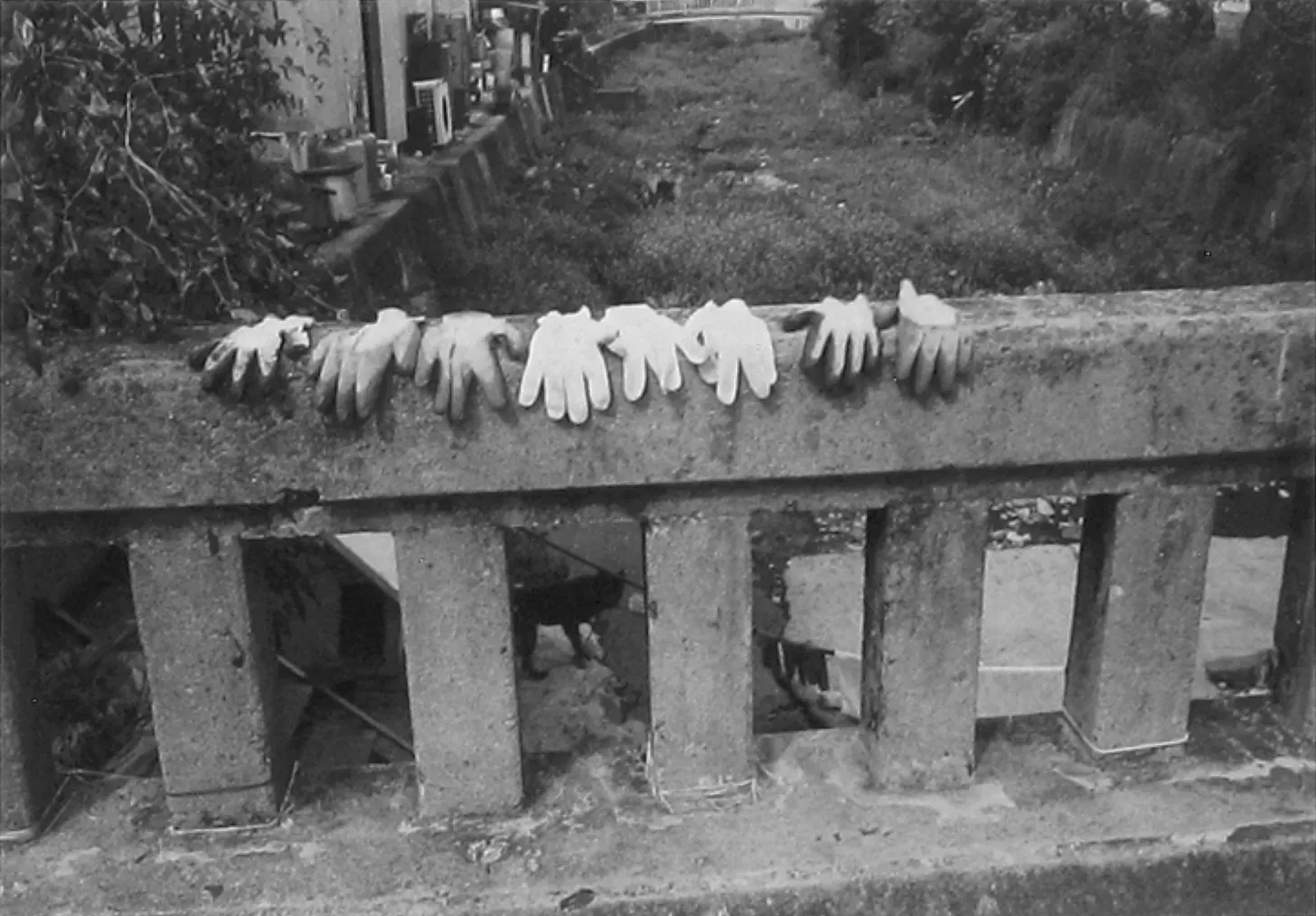
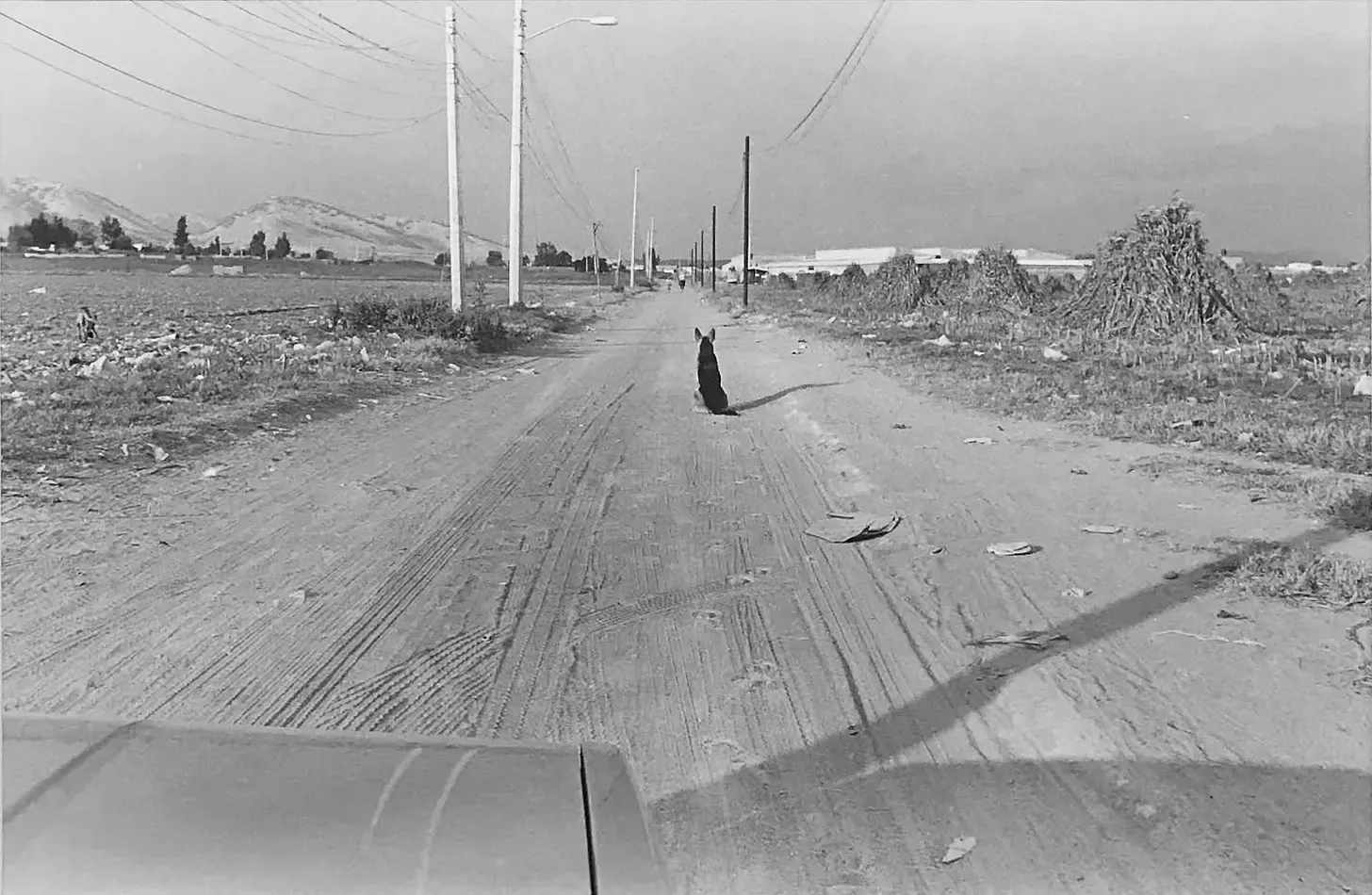
Since Teaching Photography contains, deliberately, no photographs, here are just a few of my favourite Philip Perkis images. They speak a different language but the way he sees the world with a camera is a useful supplement to his carefully chosen words.
I send a prayer of gratitude for the experience of standing in awe at the sight of birds flying past a bare tree against the winter sky.
— Philip Perkis
RIP Philip Perkis, 1935-2025.
Thanks for reading PhotoPedagogy! Subscribe for free to receive new posts.
These posts will always be free but, if you enjoy reading them, you can support my analogue photography habit, and that of my students, by contributing to the film fund. Thanks to those of you who have already done so. All donations of whatever size are very gratefully received.
* I’m fairly certain that Thomas Tallis may be the only school in the UK with a Visual Literacy Policy. I’d be happy to be proved wrong about this.
† Unfortunately, Jin Ju Lee’s excellent film Just to See - a Mystery seems to be currently unavailable. I managed to buy a copy when it was released on Vimeo a few years ago. It was made when Perkis had lost the sight of one eye and was losing vision in the other. Here is a small clip in which he discusses photographic correspondence: