From the Bookshelf
Paul Nougé — The Subversion of Images
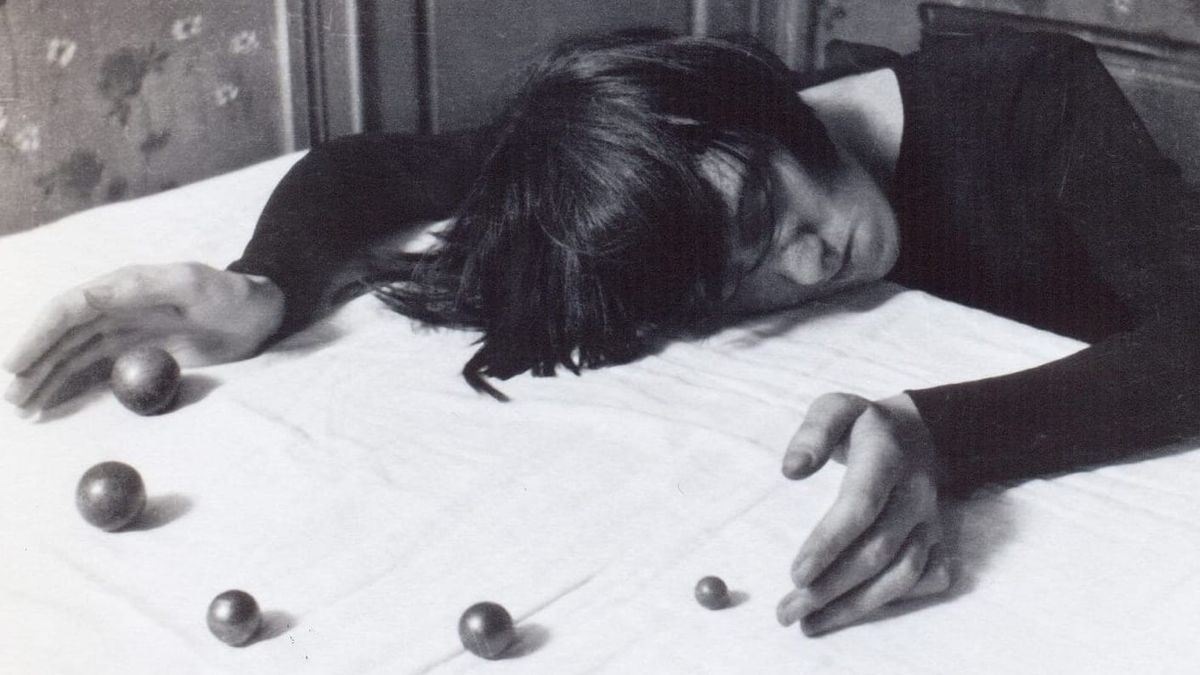
This new series of posts explores the books (and films) that have helped shape my PhotoPedagogy. The first of these is a small, slim volume, published by Wakefield Press in 2019: Paul Nougé’s The Subversion of Images.
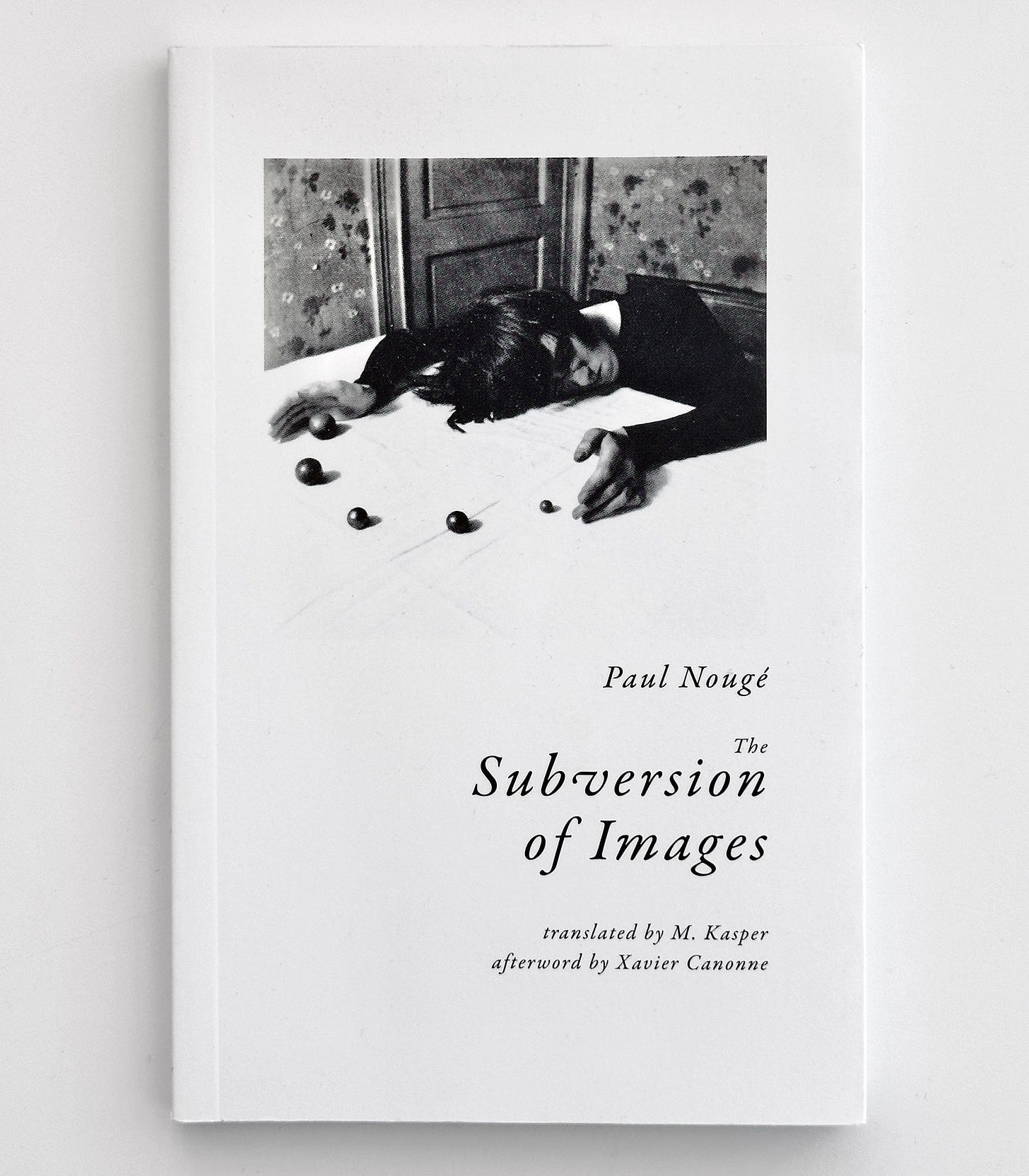
As a fan of Surrealism, especially the photographic experiments of the 1920s and 30s, I have known about these images for a long time. However, this facsimile version of the original 1968 edition includes Nougé’s accompanying text, plus Marcel Marien’s Editor’s Note and an Afterward by Xavier Canonne.
Nougé described his own life as “mediocre”. A biochemist by profession, he was friends with the much more famous René Magritte, whose pictures he often titled. He is a slightly marginal figure in modern art and yet this little publication, that originally appeared a year after his death, represents a brilliant snapshot of the theoretical approach of the Belgian Surrealists, quite different to their French counterparts. It’s a fascinating prelude to later artists’ visual/verbal experiments and the subversive potential of photographs of everyday things.
The book begins with a remarkable image and question:
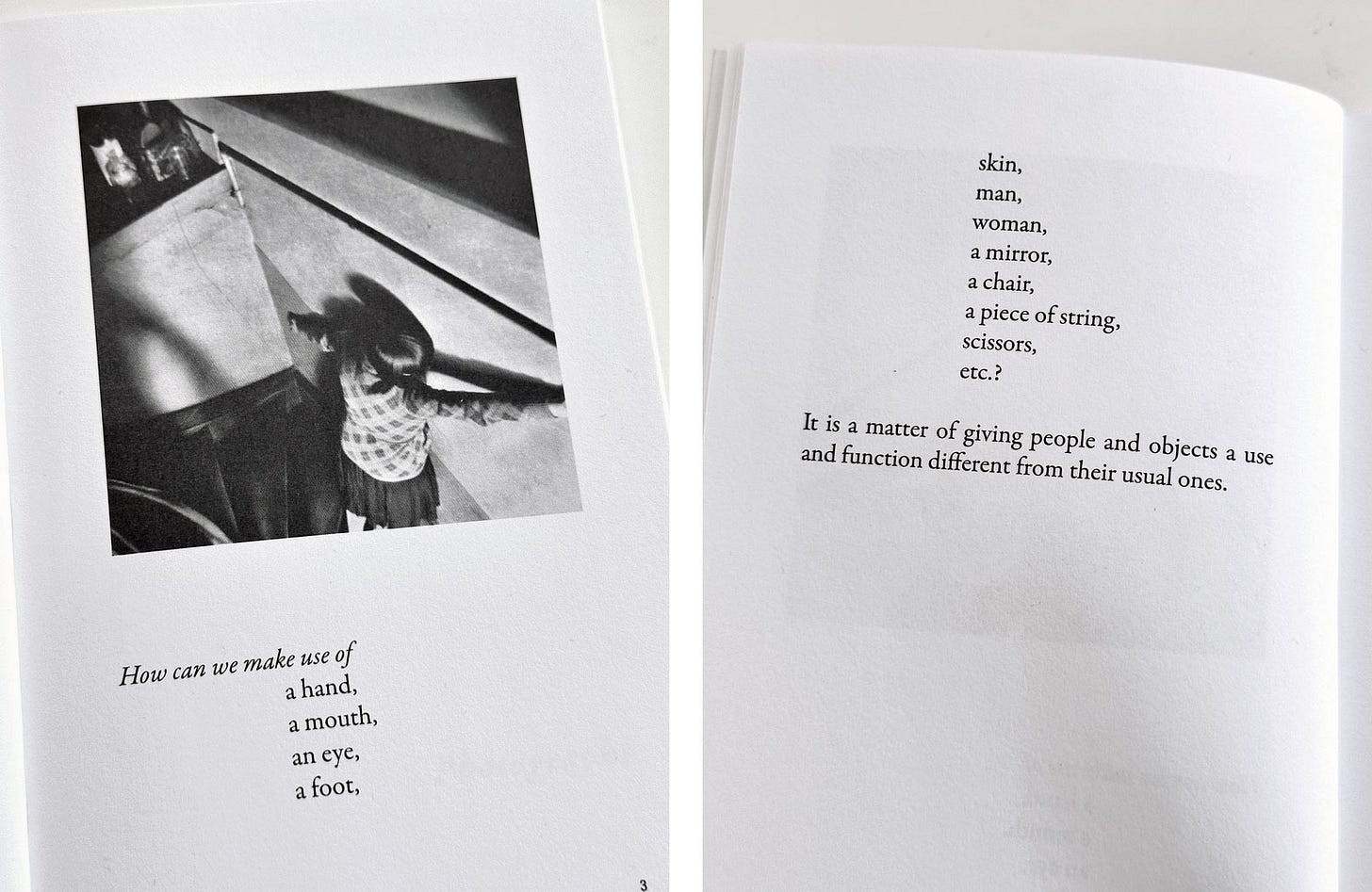
So simple. So inviting. And yet, so radical.
I’ve always been interested in the relationship between images and words. What I love about Nougé’s approach is its playfulness and spirit of enquiry. It’s the same spirit that I try to inculcate in my students. “How can I…? What happens if…?”
Photographs as questions.
For Nougé - committed to the quotidian - it was a matter of seizing objects, not for domestic or symbolic purposes, but to give them the greatest possible autonomy in a familiar setting […] With Nougé, objects always seem to have the last word …
— Xavier Canonne
I love the way he is able to utilise the most mundane resources, including the collaboration of his friends, to explore philosophical problems.
Nougé made these pictures with a simple box camera, printed by a local shop. They remained in envelopes, along with the accompanying texts, visible only to a small coterie of friends, until Nougé’s death and Mariën’s decision to publish them in an edition of only 230 copies.*
Section 2 of the book is simply entitled Photographs. It begins with an image of a woman, face obscured by a hand, reaching out in trepidation towards a a tangle of string. The domestic setting, a bourgeois living room with large fireplace, heavy curtains and chequered wallpaper, appears in nearly all of the pictures in this section.
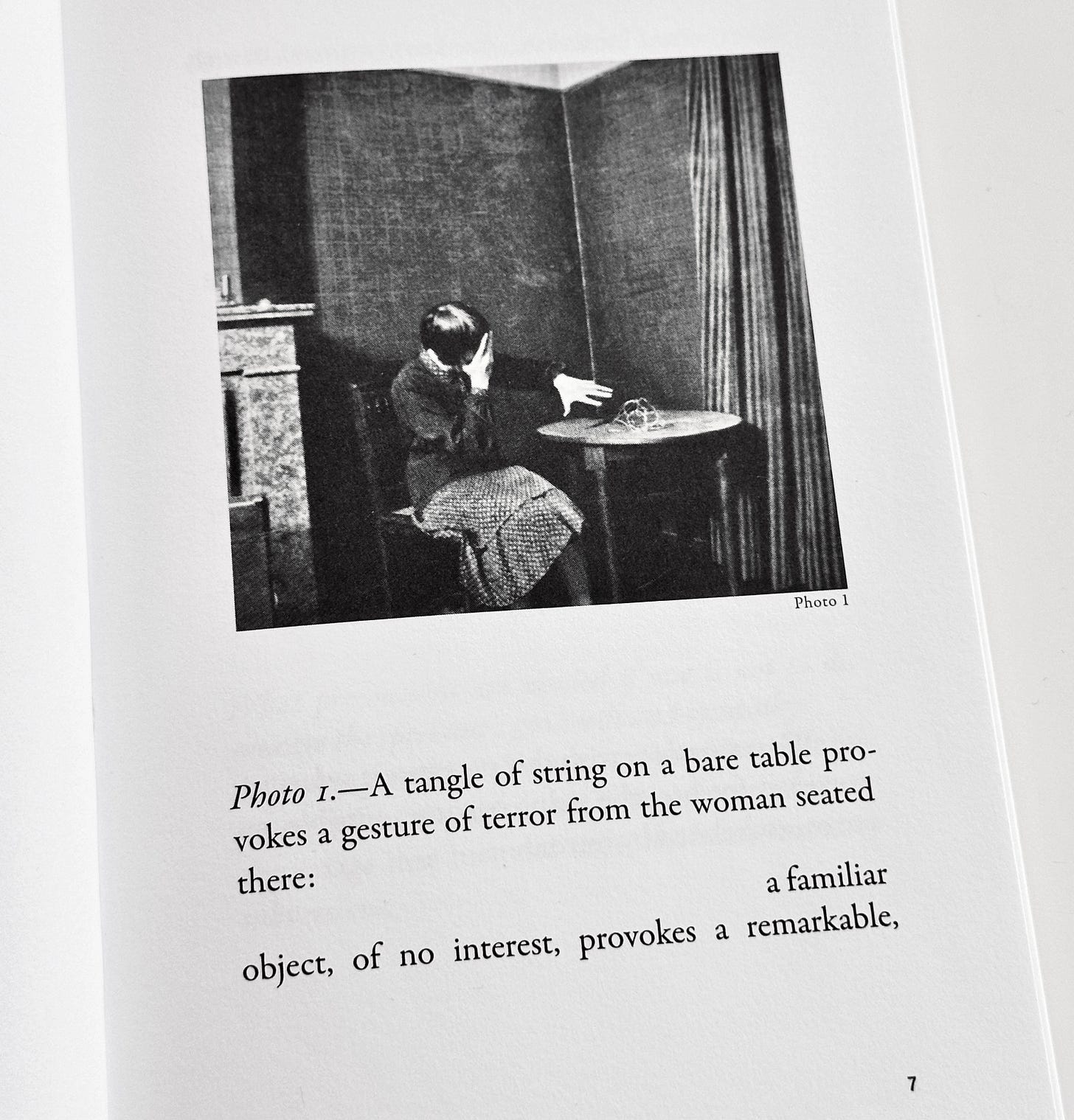
Nougé asks two different but closely related questions:
What feelings, what reactions might we experience when seeing a fan, a box of matches, a comb, a handkerchief, a bird, a sponge, etc.?
How might we be affected by the sight of this particular reaction, which the photograph, for example, presents to us? What might the spectator experience at the sight of a woman terrorised by a knot of string?
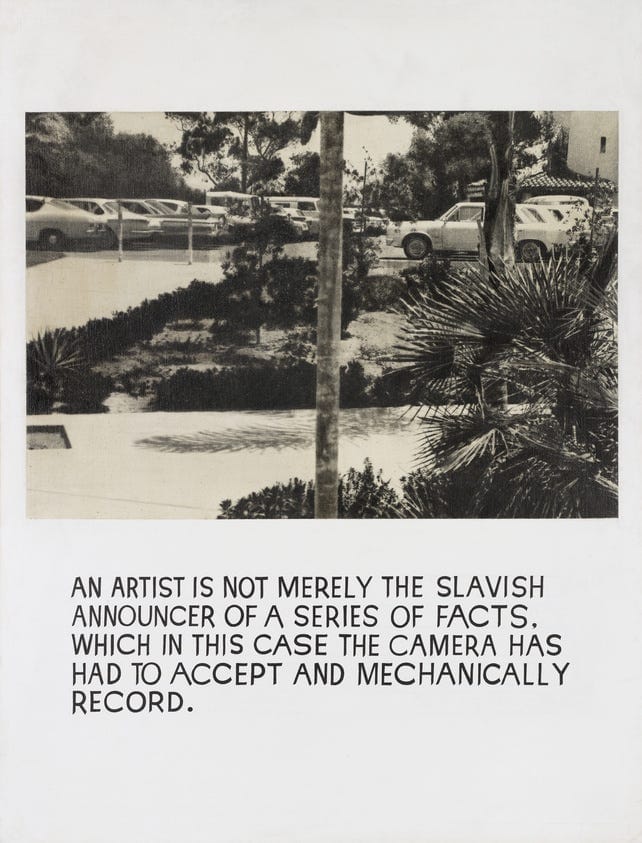
These two levels of response, firstly on seeing an ordinary thing and, secondly, on seeing a photograph of this thing, are at the heart of Nougé’s project. One only needs to think of Magritte’s paintings to recognise the disorientating effect of the ordinary made extraordinary. But Nougé is specifically interested in the transforming strangeness of photographs.†
Here’s another image from this sequence:
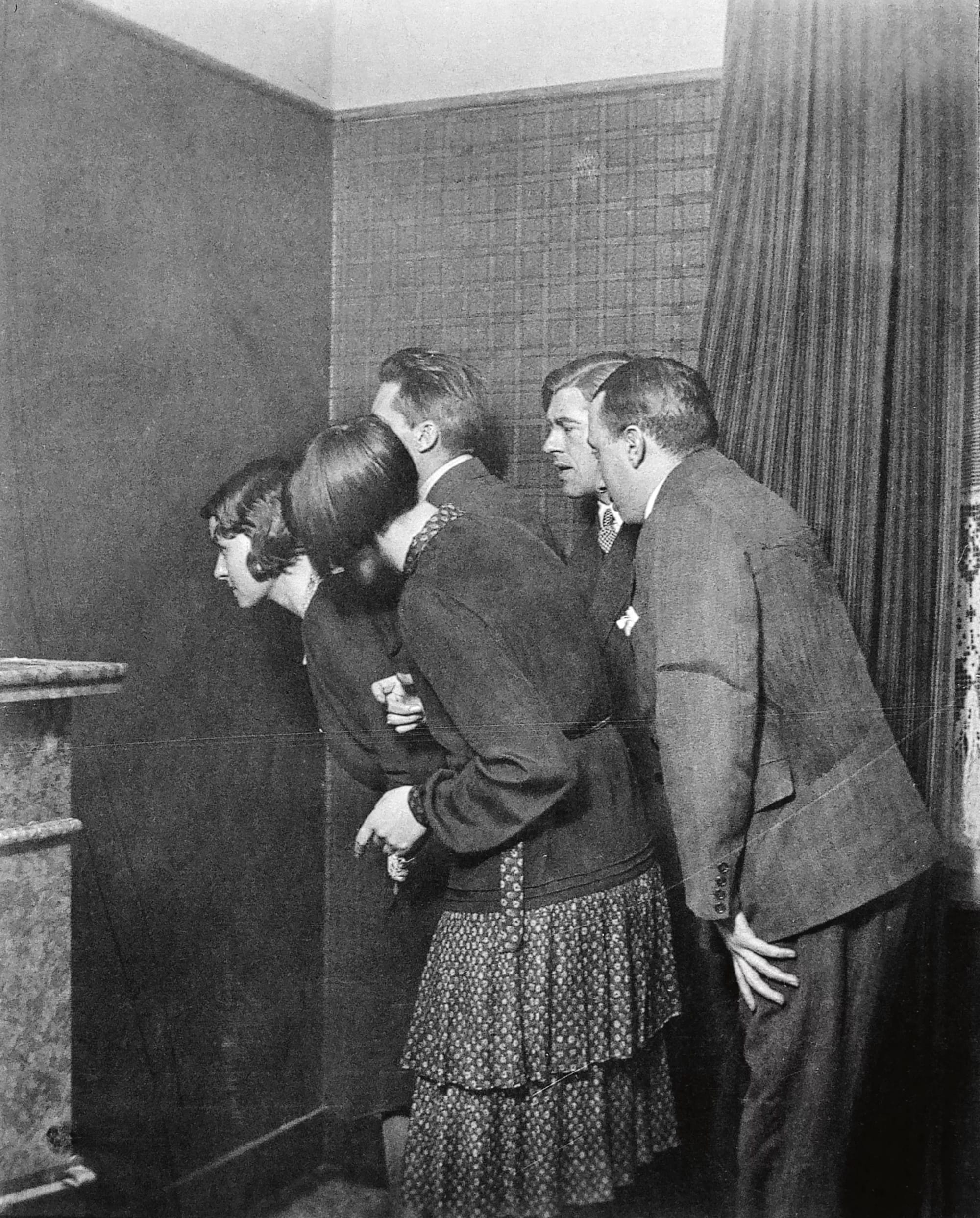
A group of people (including Magritte) is transfixed by a missing object. Nougé refers to pictures like this as Parlour games, part of a “methodical exploration” in which as many elements as possible are preserved in the scene, “so as to present an everyday image that includes only absolutely necessary subversions.” You can almost hear the friends tittering as they are instructed to stare at nothing, lie on a mantelpiece pretending to be a clock or clink invisible glasses. The other pictures in this section explore the effects of suppressed or replaced objects.
The next section, entitled Private gestures (Projects), includes a remarkable photograph of a woman intending to trim her eyelashes with scissors.‡ Here it is paired with the famous eyeball slashing scene from Bunuel’s Un Chien Andalou, also from 1929, with which it is sometimes compared:
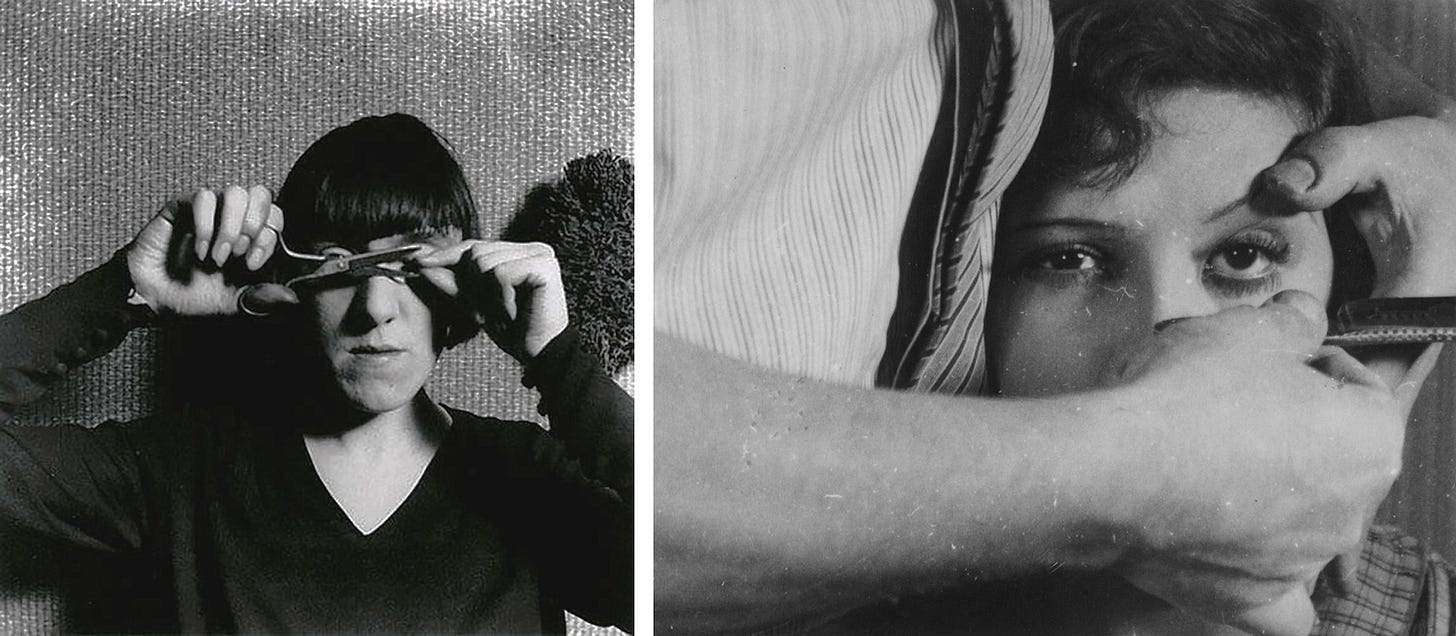
According to writers like Rosalind Krauss and Martin Jay, the Surrealists turned to photography in their search for “convulsive beauty”, the uncanny and “the marvellous”:
The photograph is particularly adept at instantiating the deferral and doubling of writing because of its dual status as indexical and iconic sign, signifying both by the physical trace left by light waves and by the resemblance its image bore to the object off which those waves bounced […] Thus Surrealist photography, long in the shadow of its other visual practices, must be seen as one of the movement’s most consequential contributions to the 20th century’s crisis of ocularcentrism.
— Martin Jay, The Disenchantment of the Eye: Surrealism and the Crisis of Ocularcentrism, 1991§
According to Jay, the Surrealists’ experiments, along with other Post WW1 artists, represent an assault on the reliability of human vision. The chaos of trench warfare disrupted the tradition of Cartesian perspectivalism (ocularcentrism) and the primacy of vision. In other words, artists, writers, philosophers and scientists began to question the relationship between what we see and the nature of reality.
What impresses me about Nougé’s pictures and provocations is their playful, rather than brutally horrific, questioning of the reliability of photographic evidence. Susan Sontag would later dismiss much self-styled Surrealist photography, claiming that all photographs are inherently surreal.
Surrealism lies at the heart of the photographic enterprise: in the very creation of a duplicate world, of a reality in the second degree, narrower but more dramatic than the one perceived by natural vision […] Believing that the images they sought came from the unconscious, whose contents they assumed as loyal Freudians to be timeless as well as universal, the Surrealists misunderstood what was most brutally moving, irrational, unassimilable, mysterious--time itself. What renders a photograph surreal is its irrefutable pathos as a message from time past
— Susan Sontag, On Photography, 1977
As Luc Sante has noted, Nougé’s brand of Surrealist image-making relies less on the dream-world of the unconscious, as practised by his French counterparts, and more on the intrinsic strangeness of photographs, the weird combination of the indexical and iconic, their seductive and ultimately misleading power.
The Belgian surrealists set out to change life itself, but they were not about to tackle the problem by employing hot air from the unconscious. Rather, their main tactic was a kind of radical clarity.‖
— Luc Sante
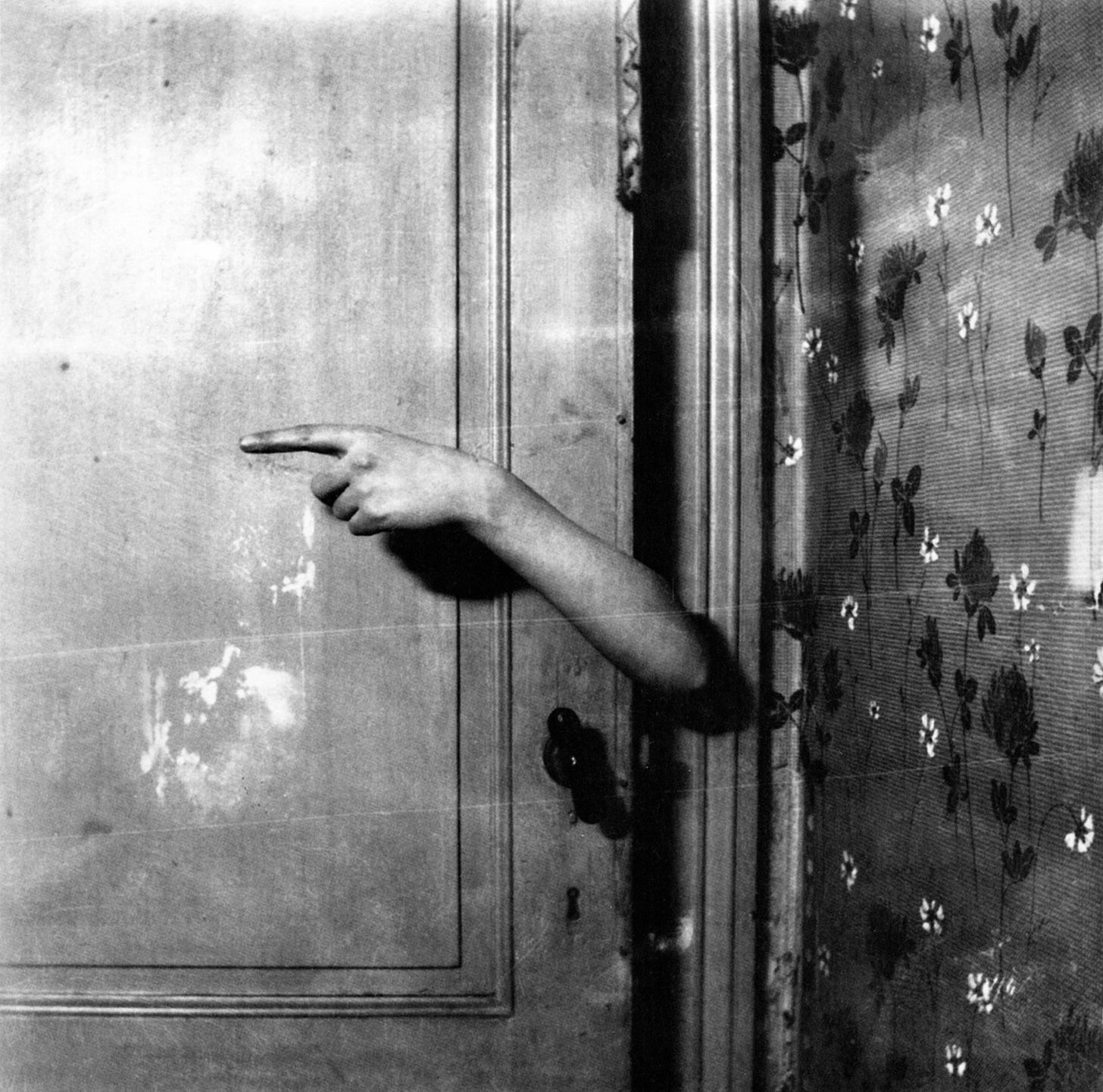
The book ends with a short sequence of Other photographs, two of which are Magritte-like text/image compositions, ending with a pile of levitating clothes.
Our open eyes pass over many things that remain, in the physical sense of the word, invisible.
— Paul Nougé
If I were to summarise my approach to teaching photography, two ideas float to the surface, both of them directly related to Nougé’s subversions:
- Photographs are strange, indeterminate, open and allusive. A photograph is different to the thing photographed. Many people don’t relate to photography in this way.
- Making photographs can help you to pay attention to the everyday, be present, face reality and notice time passing. Photography is playful and existential.
The Subversion of Images is almost like a textbook, a precursor to The Photographer’s Playbook, providing simple strategies for investigating photography.
One can imagine the following:
— a woman sews a candle onto a slice of bread.
I consider the main job of the photography teacher to be one of deliberate estrangement, questioning students’ tacit understanding of the relationship between photographs and the visible world. Despite how they look, photographs are weird and wild.
Nougé’s amateurish, modest, amusing sequence of photographs and written notes is a useful reminder of how this can be achieved.
Thanks for reading PhotoPedagogy! Subscribe for free to receive new posts.
These posts will always be free but, if you enjoy reading them, you can support my analogue photography habit, and that of my students, by contributing to the film fund. Thanks to those of you who have already done so. All donations of whatever size are very gratefully received.
* Marcel Lecomte, André Souris, René and Georgette Magritte, Marthe Beauvoisin, Marc Eemans, Camille Goemans and one or two unidentified others.
† https://www.moma.org/audio/playlist/180/2390
‡ Scissors are a favourite prop.
‖ https://www.hauserwirth.com/ursula/23192-this-is-not-a-photograph/