Through a Glass Darkly
Light and Magic at Tate Modern.
A slot in the wall
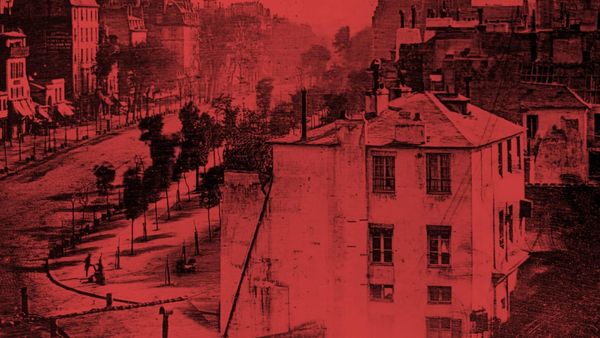
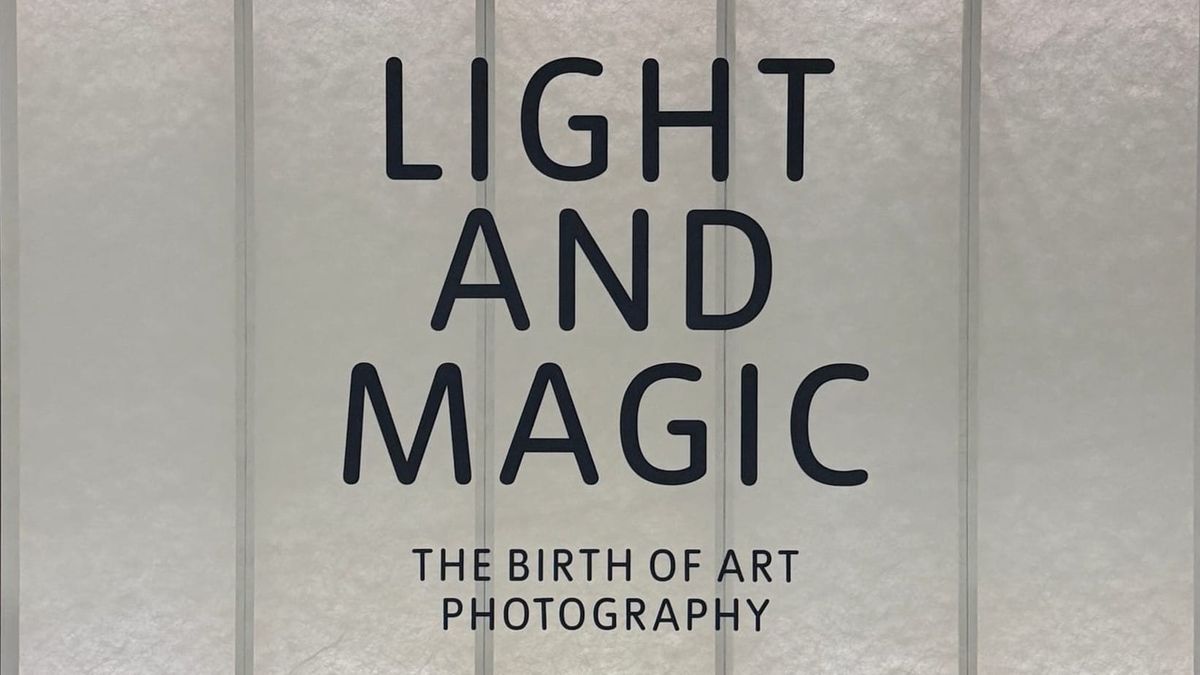
Beside the introductory text of Tate’s Light and Magic: The Birth of Art Photography, there’s a narrow opening cut in the wall. Through it you glimpse a room bathed in red. You can vaguely make out enlargers, trays and a line of drying prints. It’s the darkroom where the exhibition ends, seen at the start as if through a keyhole. A red room, through red-tinted glass, indistinct and atmospheric, with the shadowy forms of visitors coming and going.
The first room casts a kind of spell. Gertrude Käsebier's The Magic Crystal (1904), a platinum print, shows a woman bent over a glass globe, looking for something that isn't there. It’s one of many captivating images in the show. Light and magic. It’s like walking into an alchemist's workshop: gum bichromate, oil transfer, bromoil, carbon and platinum, prints worked by hand until photographs seem to be charcoal drawings.
The word the show sets out to rehabilitate is missing from its title. Tate's 2025 programme announced it as Global Pictorialism. Somewhere on the way to the poster, pictorialism became magic, which is an odd choice for a show that otherwise insists on labour, skill and intention. Magic is what we call a thing when we can't see how it’s done.
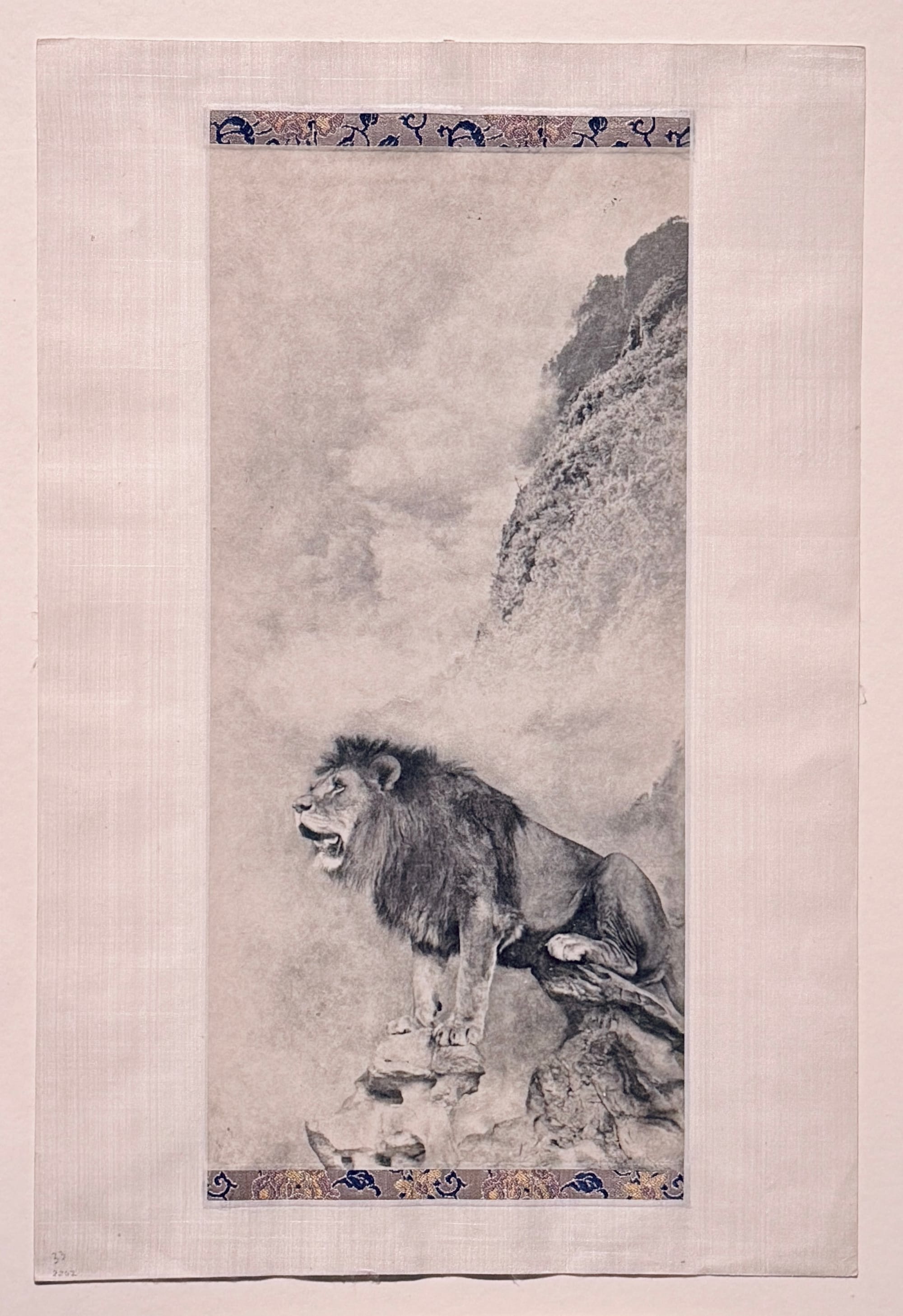
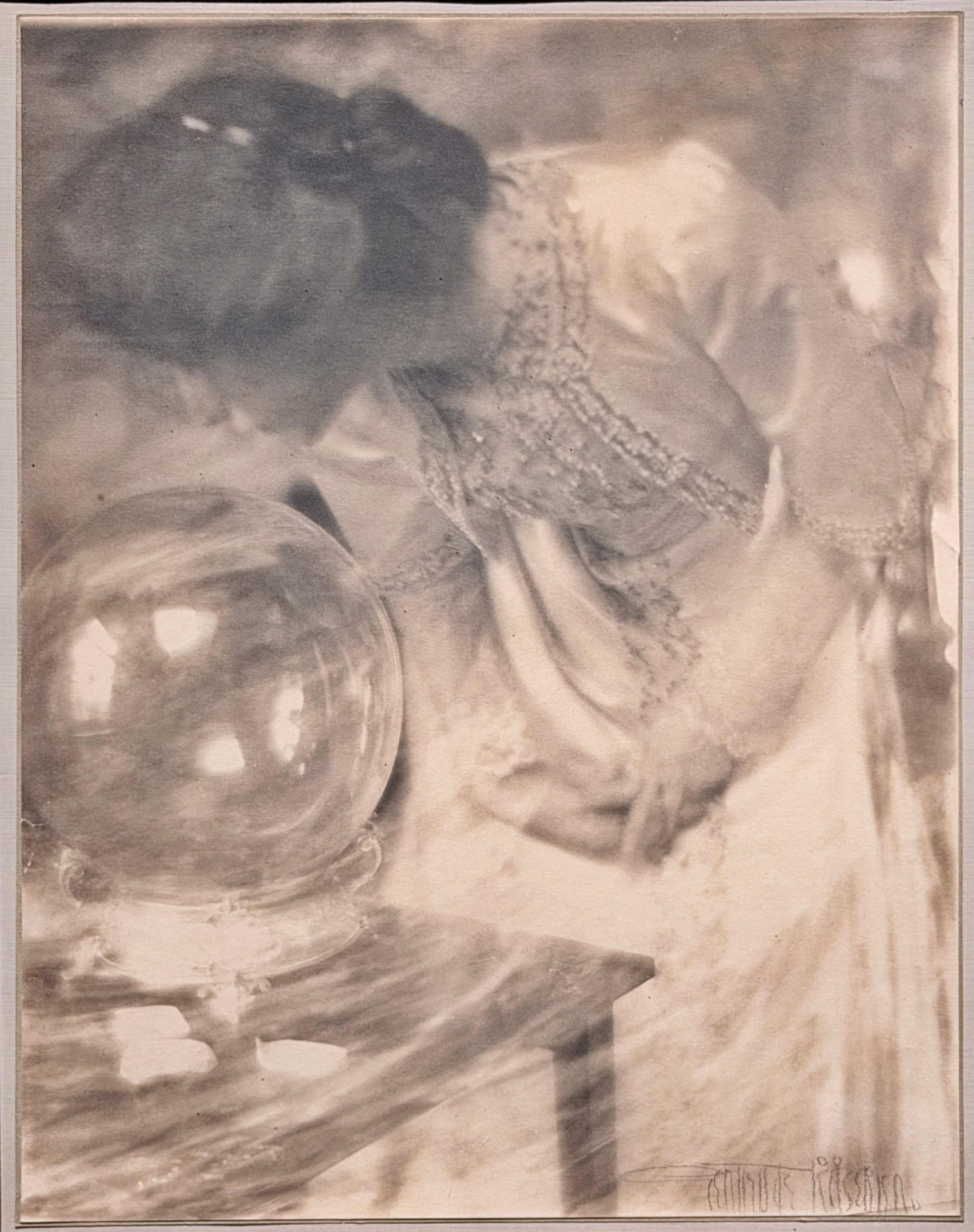
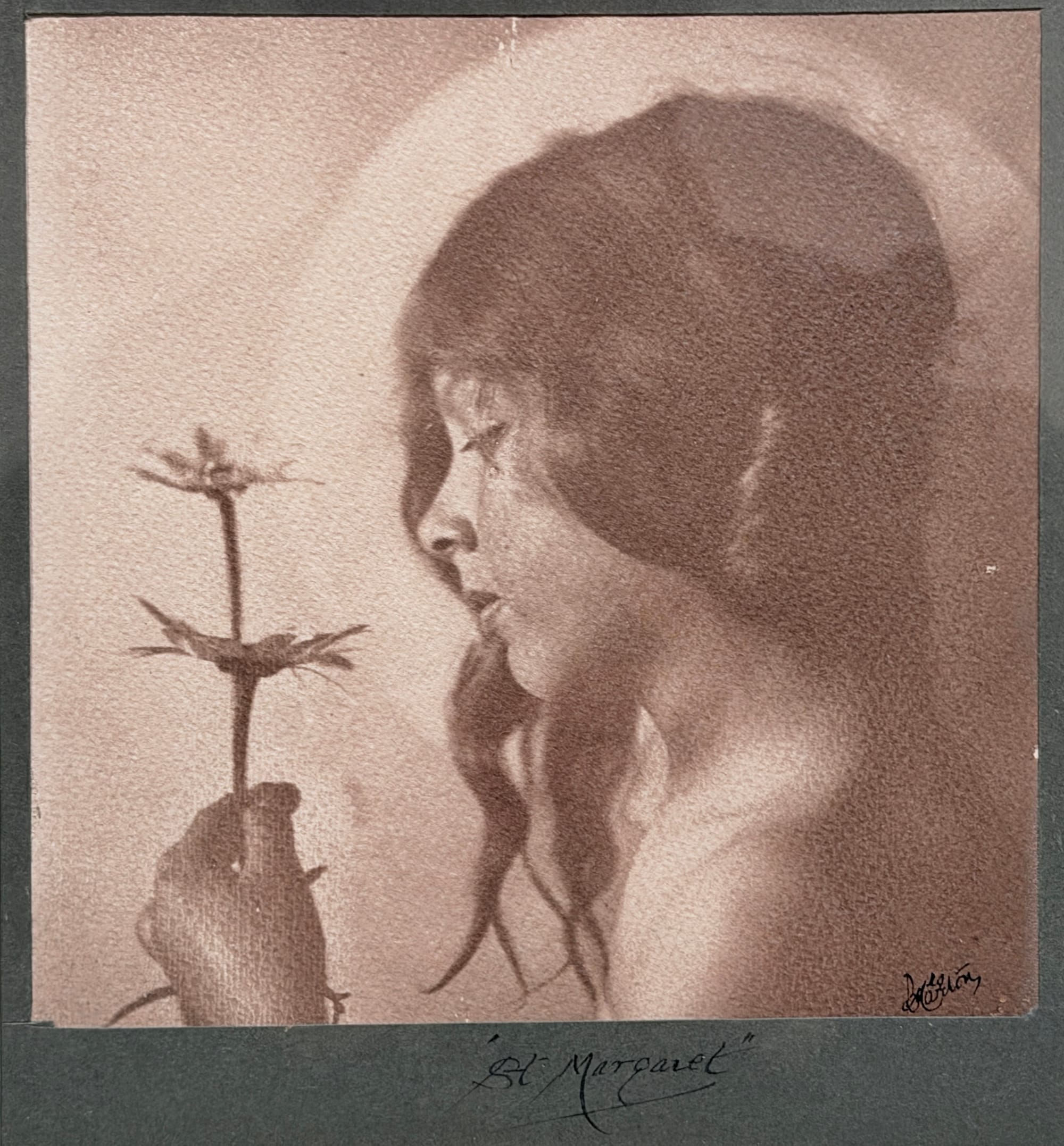
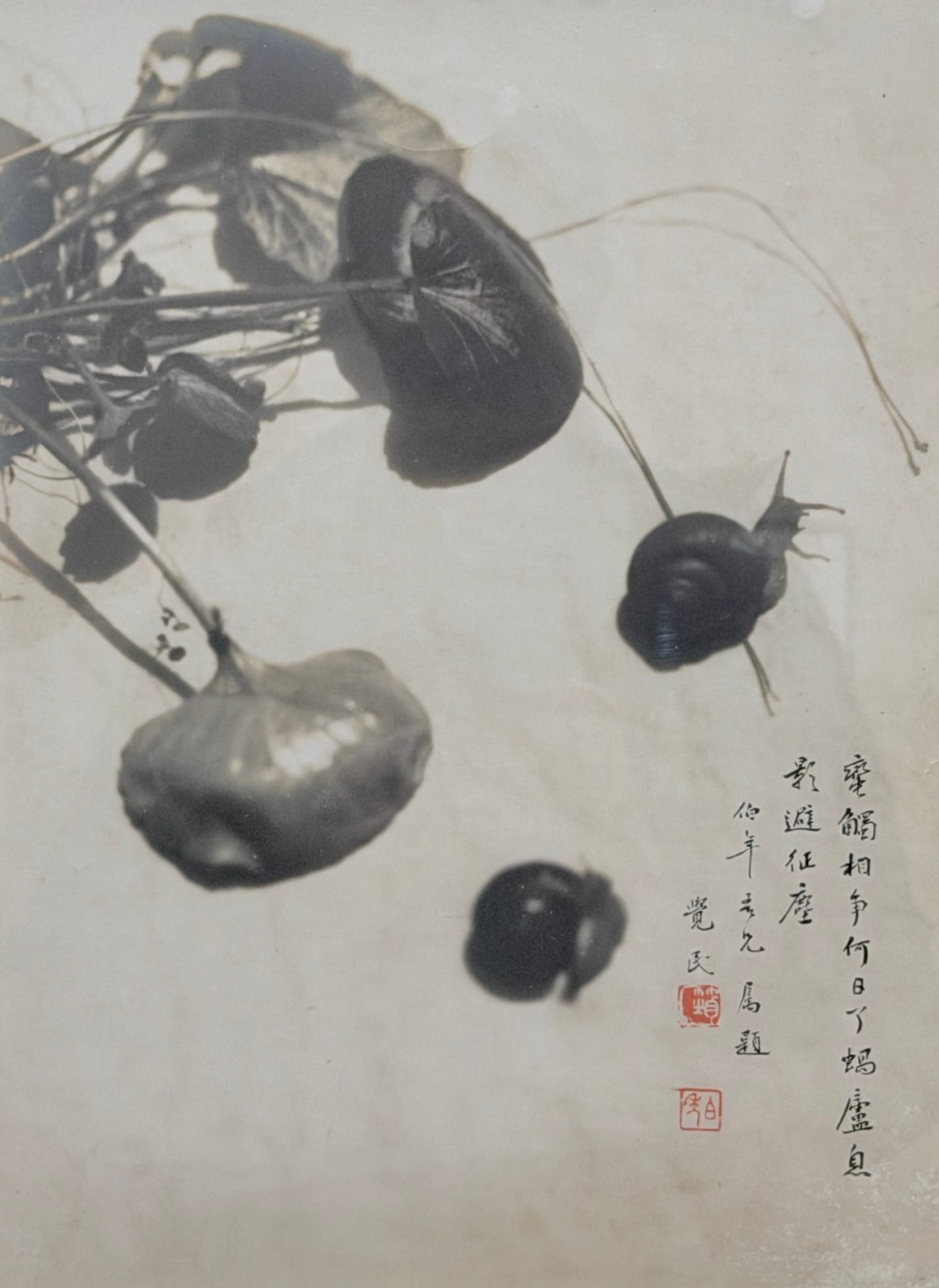
Jingshan Lang - Lion Roaring, c.1941, Gertrude Käsebier - The Magic Crystal, 1904, Emma Barton - The Awakening, 1903 and Bonian Luo - Untitled, 1930-40
A definition that won't keep still
The opening rooms give you a working definition, and it seems sturdy enough. Pictorialism is a claim that photography is art, made in competition with painting. It’s also a craft with demanding processes. It‘s a set of looks: soft focus, texture, sfumato, a certain idea of ethereal beauty. It‘s self-expression, rather than document. And, perhaps most importantly, it‘s a network of clubs and salons, with the Royal Photographic Society (RPS) at its heart.
Then the pictures start to argue with the wall text. Jingshan Lang’s Lion Roaring (c.1941), in the first room, is a composite printed from several negatives and mounted like a hanging scroll, a photograph presented as if it were an ink painting, with an explicitly political meaning. Later on, Frederick Evans's A Sea of Steps hangs beside a platinum print made from his negative in 1998, under a wall that asks, "Which do you prefer?" Elsewhere the show's rare vintage prints share the walls with inkjet versions made this year.
Each time I thought I had a firm grasp of the show’s concept, a new picture complicated it. The dance room admits a diverse range of photos on the strength of their subject. Edward Weston, known for his tack sharp prints, gets in on biography, since he began as a pictorialist. The Brazilians of the Foto Cine Clube Bandeirante get in on membership, though the wall text admits they were drawn to modernism. By the end I was struggling to see the edges. Wittgenstein would call it a family resemblance, a set of members with no single feature in common. I’ve never been a fan of neat categories and tidy isms, but this account of Pictorialism seems generous to a fault.
Not in Kansas any more
Somewhere near the room called "Cosmopolitan Networks" the walls change colour. The warm plaster pink of the early galleries gives way to a cool duck-egg blue and the alchemy gives way to administration.
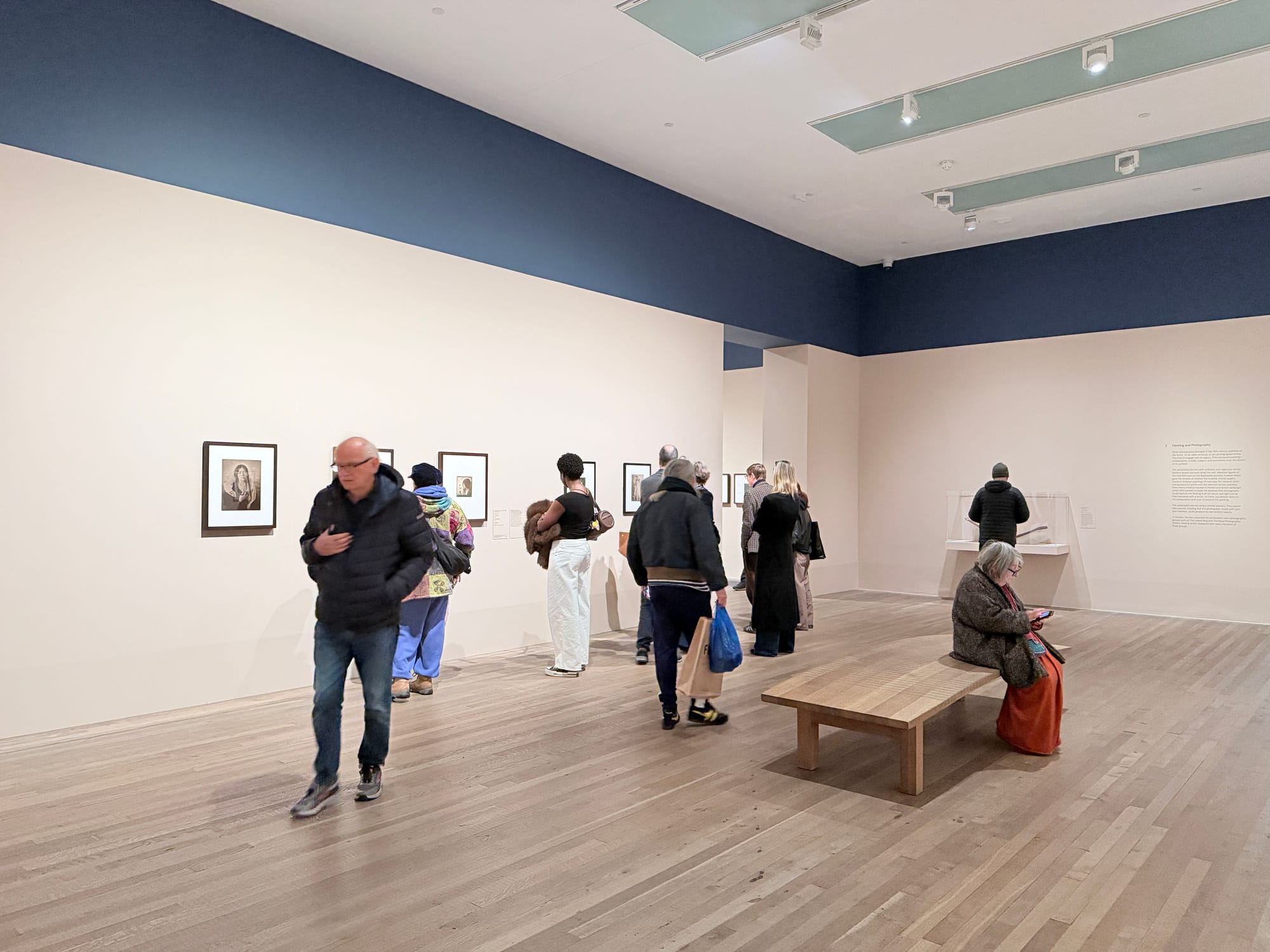
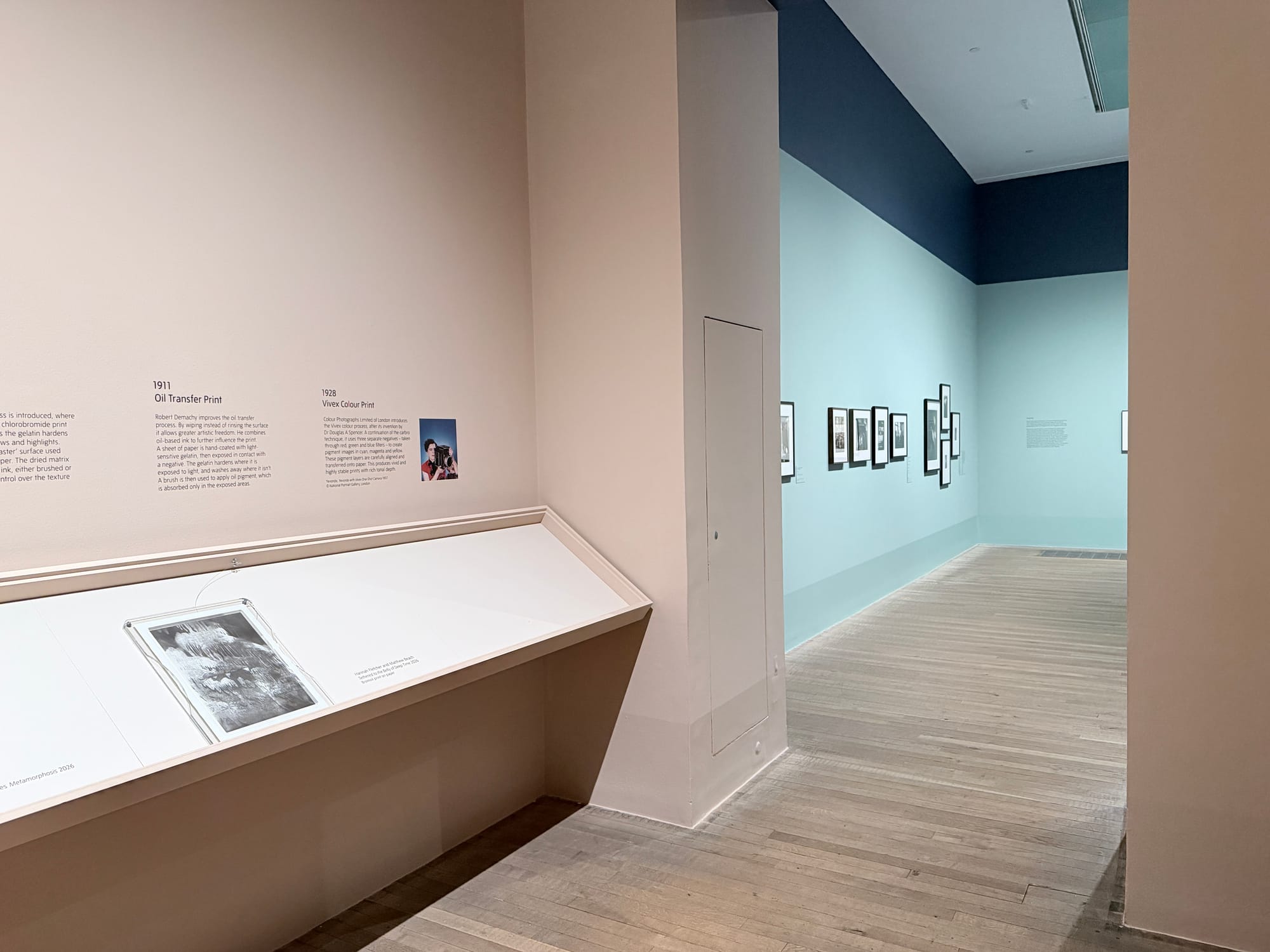
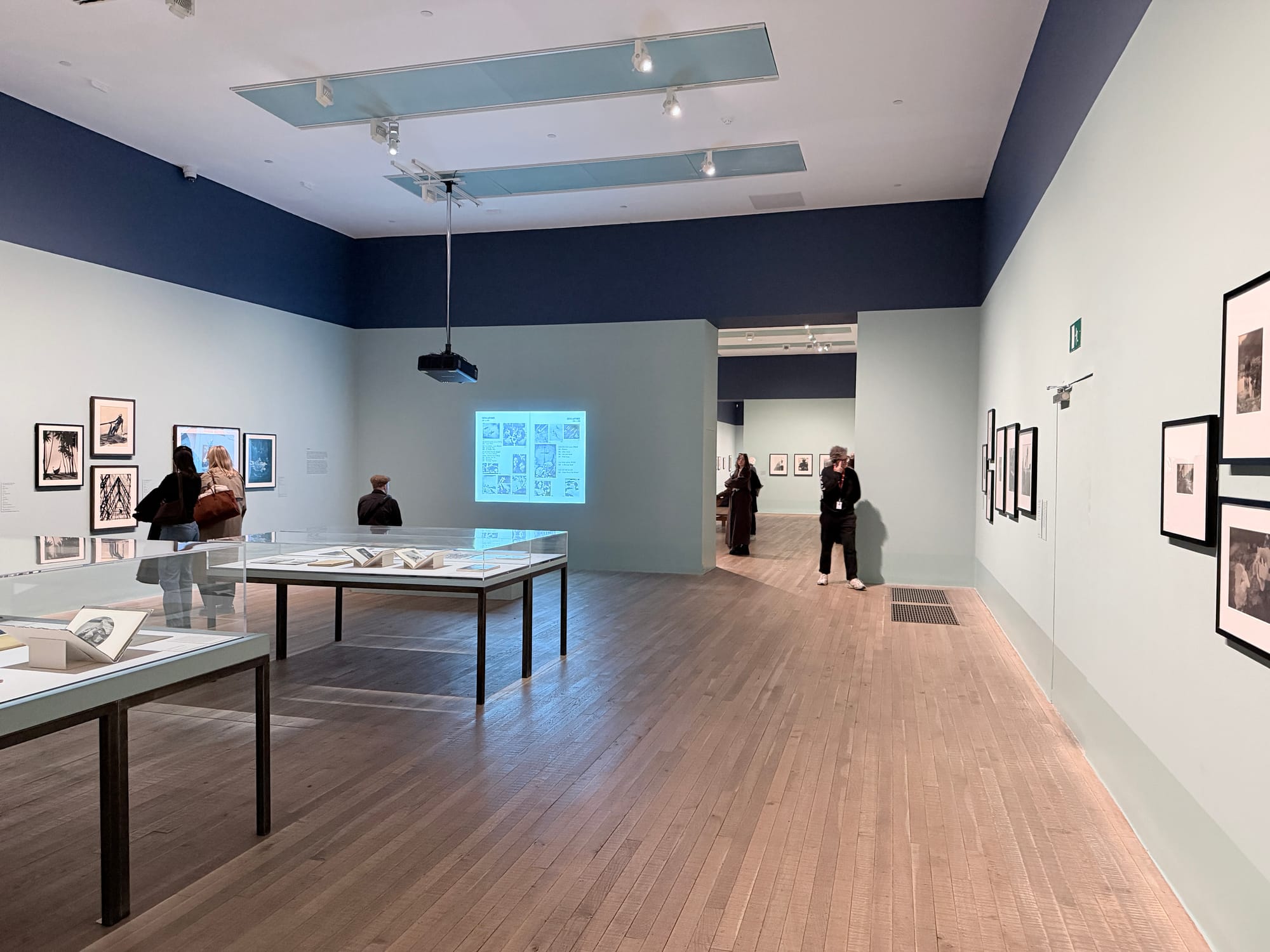
Jon Nicholls - Light and Magic exhibition installation shots, 2026
It’s where I felt the show's real subject coming into view. One wall is covered in the stickers that salons fixed to the backs of accepted prints, which photographers collected in scrapbooks like rosettes. A vitrine holds the catalogue of the 16th Singapore International Salon (1965), whose fold-out reproduces every accepted picture in a numbered grid, sorted by country. It looks like a contact sheet, or a spreadsheet. As a picture of what the salon actually was, a machine for sending, judging and ranking prints across the world, it’s more candid than any of the framed prints.
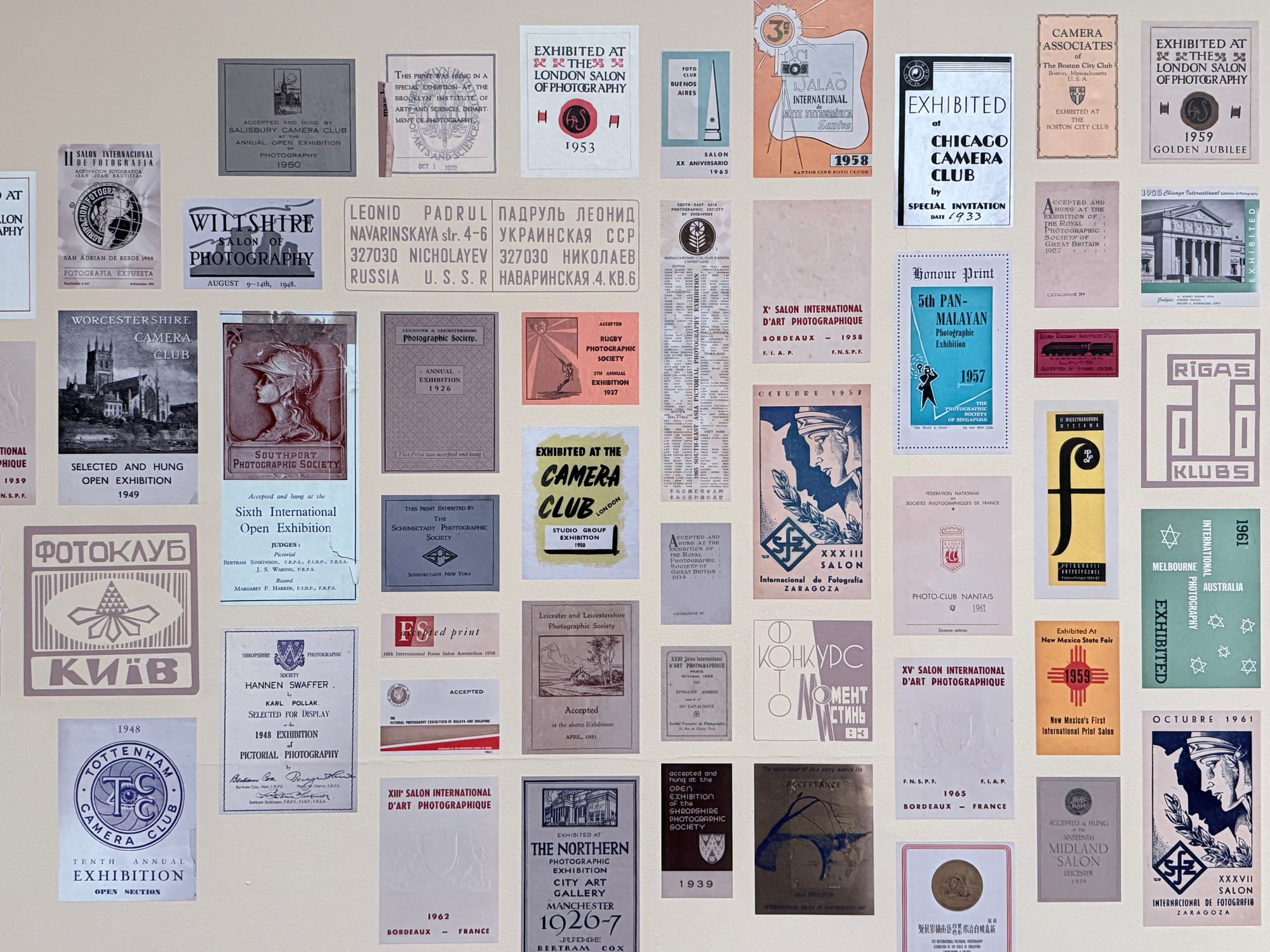
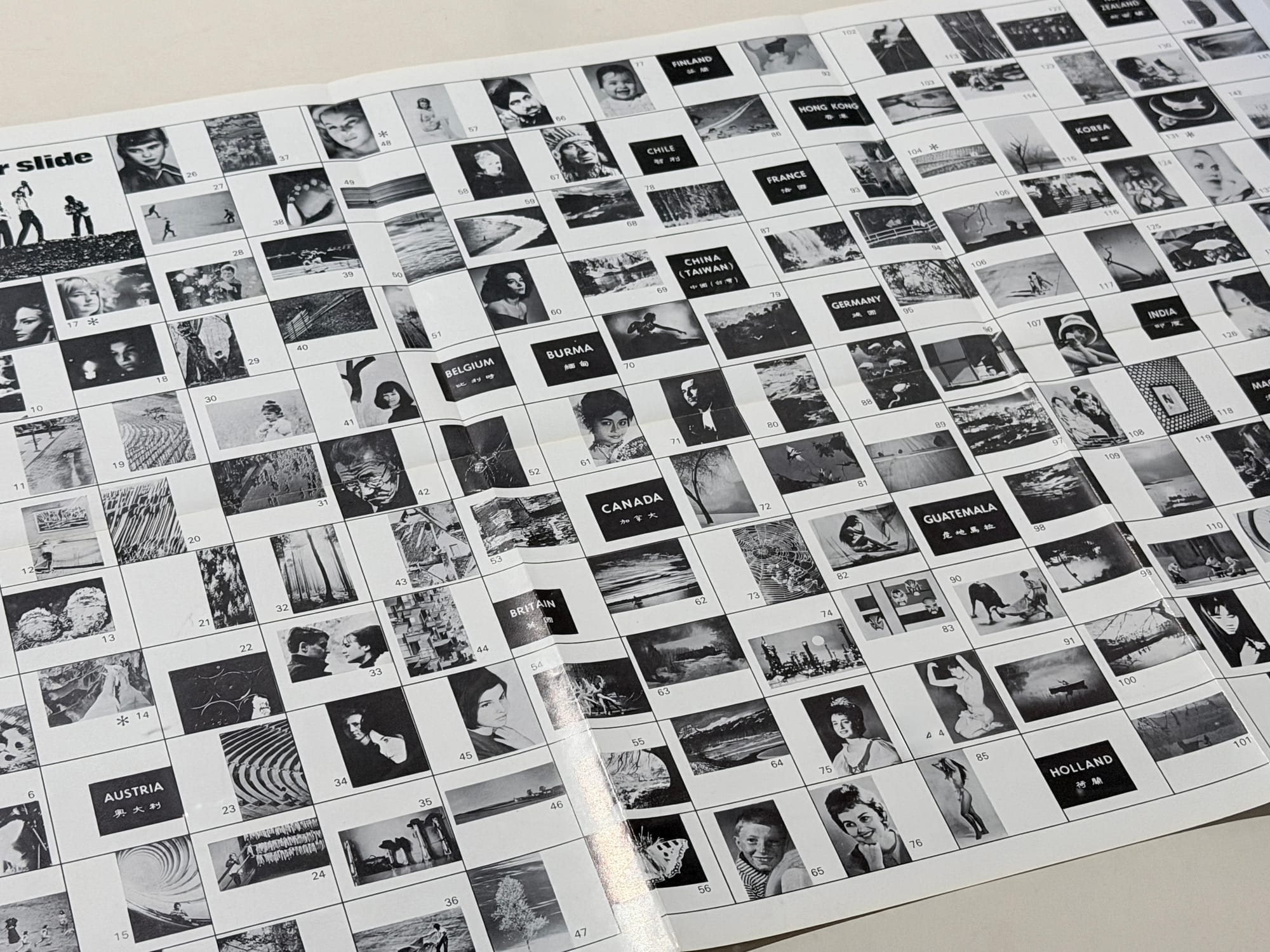
The pictures themselves become harder to place. Many were made for money. Yevonde, Bertram Park and Yvonne Gregory ran commercial studios. De Meyer worked for Vogue. Rodchenko is here because VOKS, the Soviet agency for cultural relations abroad, sent his prints to foreign salons. The artistic claim seems to have been made less in the making of a print than in the submitting of it. Park ran a Mayfair studio and also co-founded the London Salon. The line separating commerce from art is a thin one. The same print could be a commission on Monday and an entry on Friday.
Two dances
The dance room made my head spin, partly because its subject was mostly modernist. Laban, Graham and the Ballets Russes were the avant-garde and a photograph of them looks modern whatever process made it.
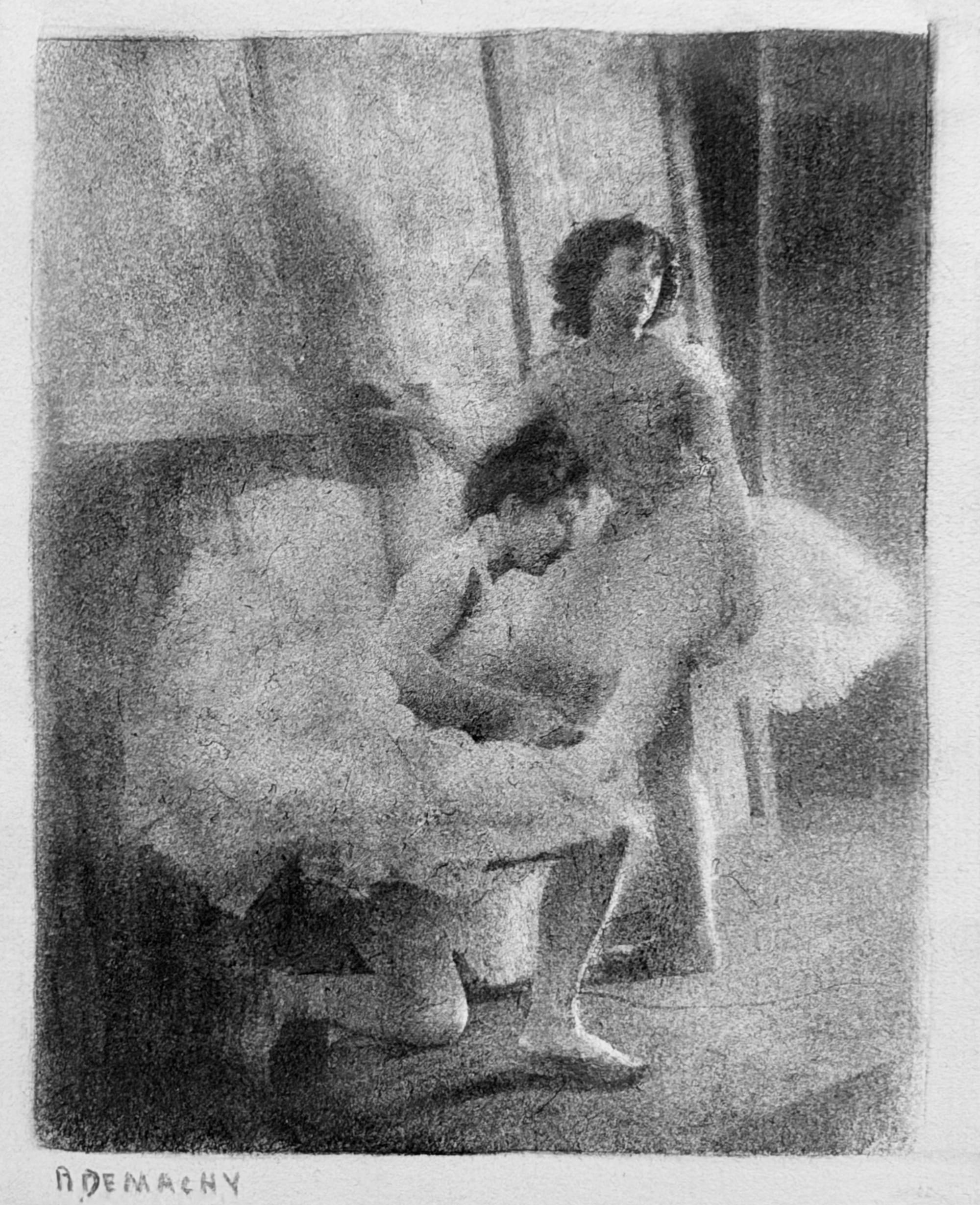
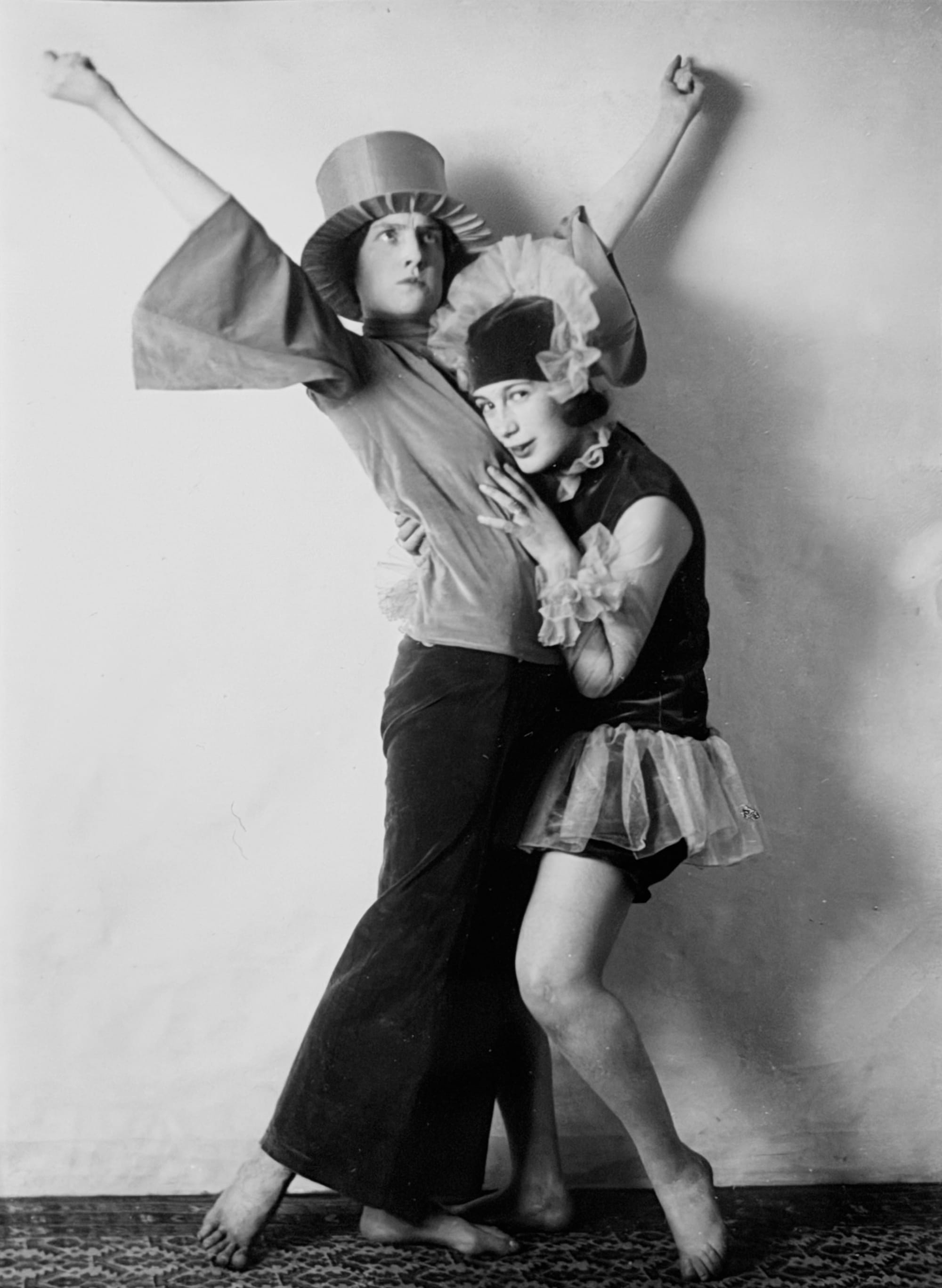
Robert Demachy - Behind the Scenes, c.1900 and Anna Riwkin - Dancer Lalla Cassel and Anna Riwkin, c.1930
Take two pictures that hang a few feet apart. Demachy's Behind the Scenes (c.1900) is Degas territory: a dancer bent over her shoe, another glancing away, caught unawares in the wings. Every inch of it has been worked by hand. The grain of the photograph has been pushed into pigment until it looks like charcoal and he signs it in the corner like a draughtsman. It’s a picture of the unposed moment, wholly manufactured. Anna Riwkin's Dancer Lalla Cassel and Anna Riwkin (c.1930) looks more like a Dadaist performance. Two women in costumes that might have come from the Cabaret Voltaire hold a pose against a bare wall, one with arms flung up and a pretend glare from under a hat. Everything is staged. You see the cast shadow, the cheap carpet, the soles of their feet. The woman in the ruffled bonnet looks straight back at the camera, Riwkin herself, dancer and photographer in one frame. Demachy's dancers don't know we’re there. Riwkin looks back knowingly. I can't see what makes this second picture pictorialist, except the room that claims it.
The same room presents Sunami Soichi's soft studies of Graham-era dancers. Sunami was also, for decades, the Museum of Modern Art's staff photographer, recording the modernist collection that relegated pictorialism to a footnote. One career covering both sides of the divide is better evidence for the show's argument than anything on its walls. The label doesn't mention it.
Another example. Olive Cotton and husband Max Dupain were celebrated members of the Sydney Camera Circle. Other than that association I simply can't see what makes them pictorialist.
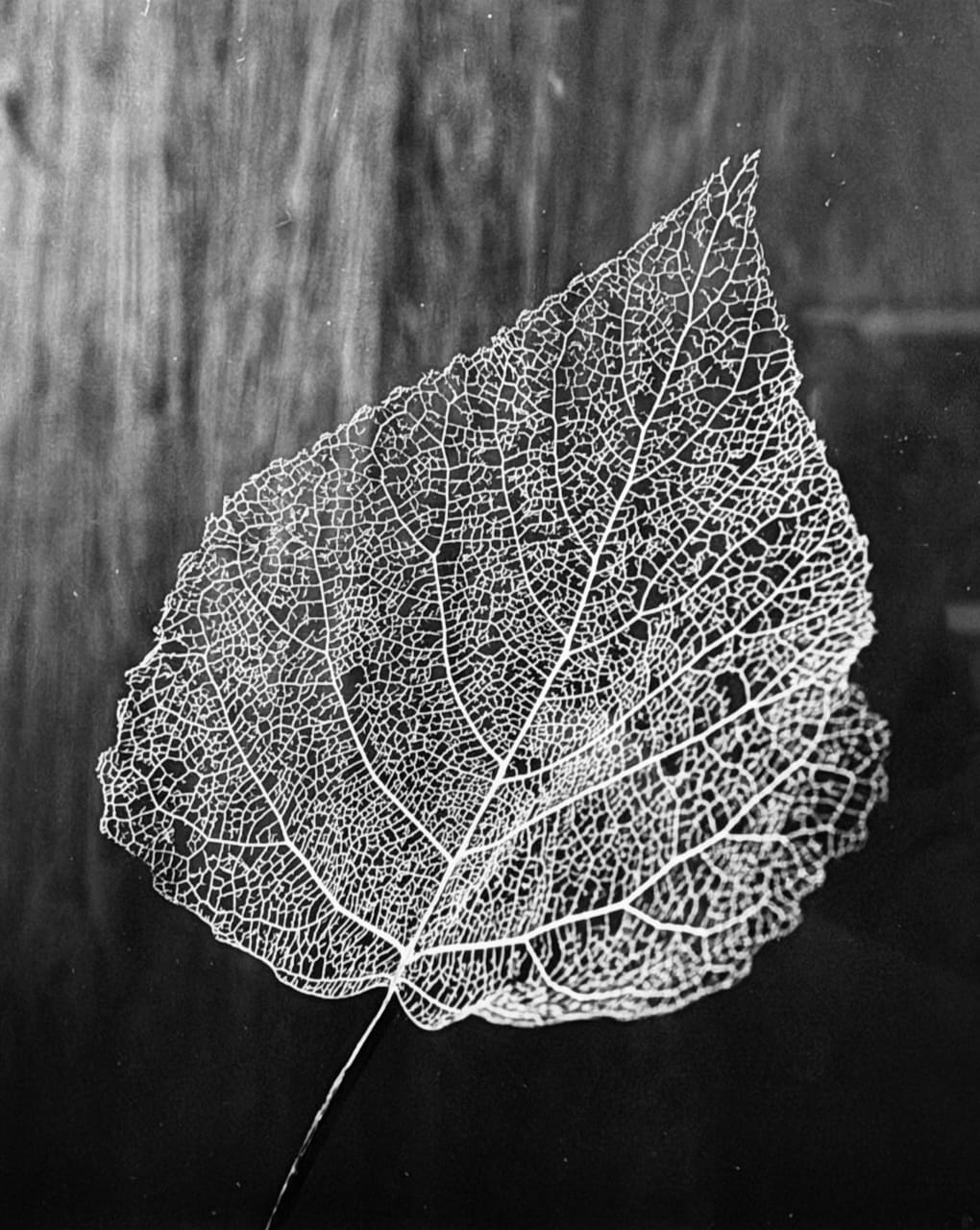
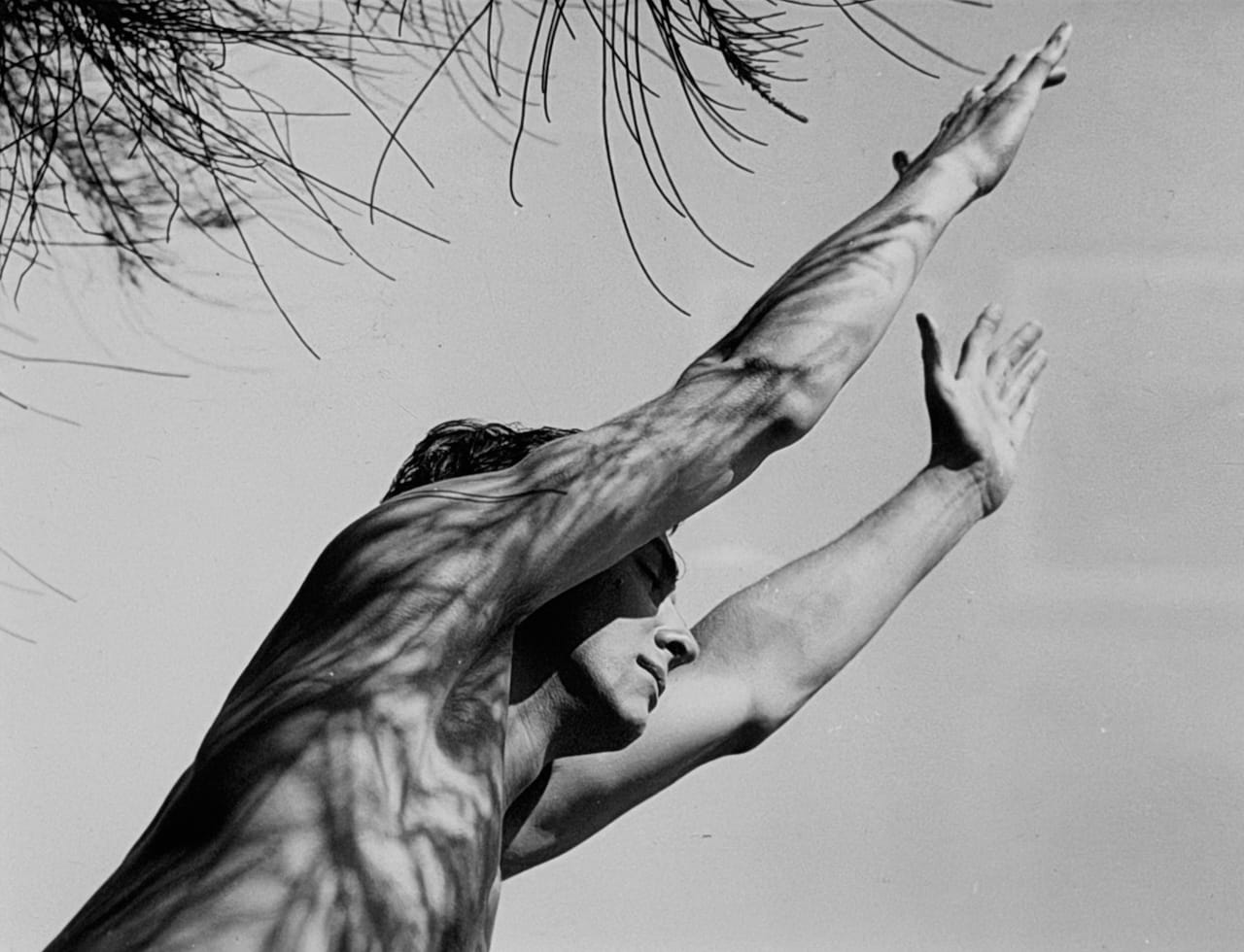
Olive Cotton - Leaf Skeleton, 1964 and Max in Shadows, 1945
Two arguments in one building
I struggled to pin the thesis down but I think that’s because there are at least two, pulling in different directions.
The first is the curator's. Charmaine Toh, who wrote her doctorate on pictorialism in Singapore, calls this "probably our first ever revisionist photography exhibition" and describes style as "a red herring". In her account, pictorialism was a desire for photography to be accepted as art and its real contribution was the network of clubs and salons, which reached Seoul, Sydney, São Paulo and Singapore and lasted into the 1960s. That argument is clear and well evidenced. It also needs pictorialism to be something other than a look, or the Brazilians and Rodchenko can't be included. Hence the generosity.
The second is the building's. The subtitle promises The Birth of Art Photography, and the last room, "Modern Visions", tells us that pictorialism "did not end with modernism, it gave birth to it". That argument needs pictorialism to be a style, something with a look that modernism could refute. Hence the obscurity, since the first argument has already dissolved the style. Toh herself speaks of "the curse of the avant-garde", the habit of treating modernism as the destination, yet the show ends with Stieglitz, Steichen, Weston and Strand.
The absence that gives it away is Camera Work 49/50 (1917), the final issue, which Stieglitz dedicated to Strand's hard, direct pictures before closing the magazine. That was the clean break, staged by the man who had done most to build pictorialism. A show arguing that there was no clean break can't hang it. So Strand appears through Miss Thomson, New Mexico (c.1922), the softest picture he could have lent, and the Camera Work vitrine shows the 1913 volume. Every revisionist show chooses its evidence I suppose.
Stickers and accession numbers
Two institutions sit underneath the pictures. The first is the RPS, which gets a room of its own as the hub of a global network. Much of the show comes from their collection and the poignancy is hard to miss. The Society sold that collection in 2003 to the National Museum of Photography, Film and Television in Bradford. The Science Museum Group moved it to the V&A in 2017. The Society is now selling its Bristol headquarters. What Tate presents as the RPS's power is held, institutionally, by someone else. There is a further twist. In 1892 the Linked Ring walked out of the RPS objecting to its method of judging of pictures alongside lens tests and lantern slides. If art photography was born in London, it was born out of that quarrel.
The second institution is Tate itself, which began collecting photography seriously only around 2009. A late collector can't buy the canon. The Stieglitzes and Westons in the last room are mostly loans. The pictures Tate owns are the Asian, Brazilian and Korean work bought in the last decade and the labels credit acquisition committees for 2024, 2025 and 2026. The revision of the history and the building of the collection prop each other up. That doesn't make the revision wrong. Canons are often rewritten by whoever arrived too late to own the first one.
What gets lost in the transfer is the salon's own logic. A salon jury judged the print. A museum collects a name. The club gave a photograph a sticker. Tate gives it an accession number and a biography. The RPS still runs an open, international exhibition where amateurs and professionals hang side by side, and nobody is buying it. A salon entry once cost the photographer postage and a fee. A visit to this one costs £20, plus £5 for the audio guide and £40 for the catalogue.
Through a glass
The show opens with a glass ball and ends with a window. In the last room hang Josef Sudek's The Window of My Studio pictures from Prague, the glass misted and dripping, the garden beyond it smudged out of focus. Nearby, Lionel Wendt photographs light rippling through a window in Colombo, with a lighthouse framed beyond. Käsebier's woman looks into glass for something that isn't there. Sudek looks through glass at something that is there but is unclear.
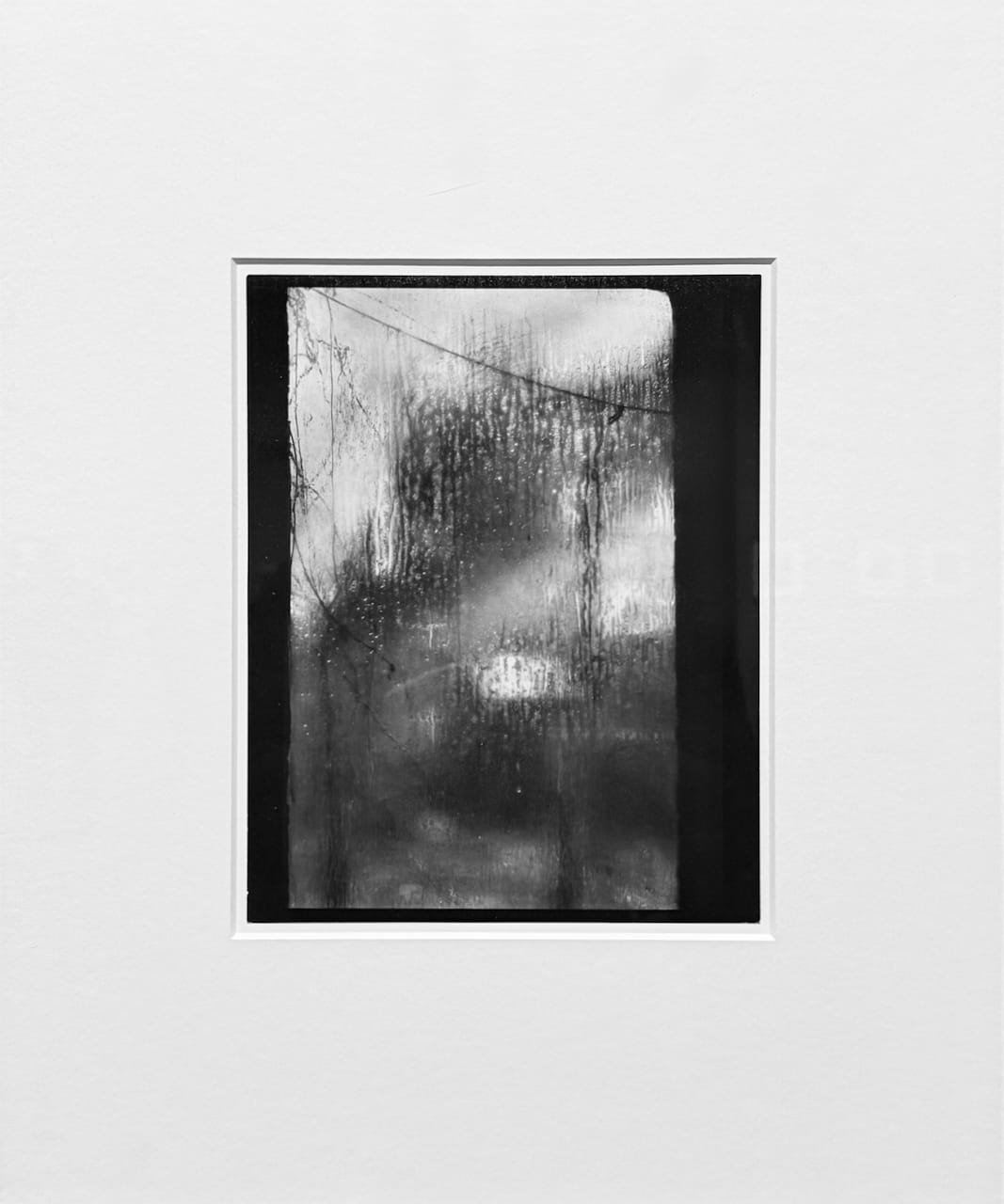
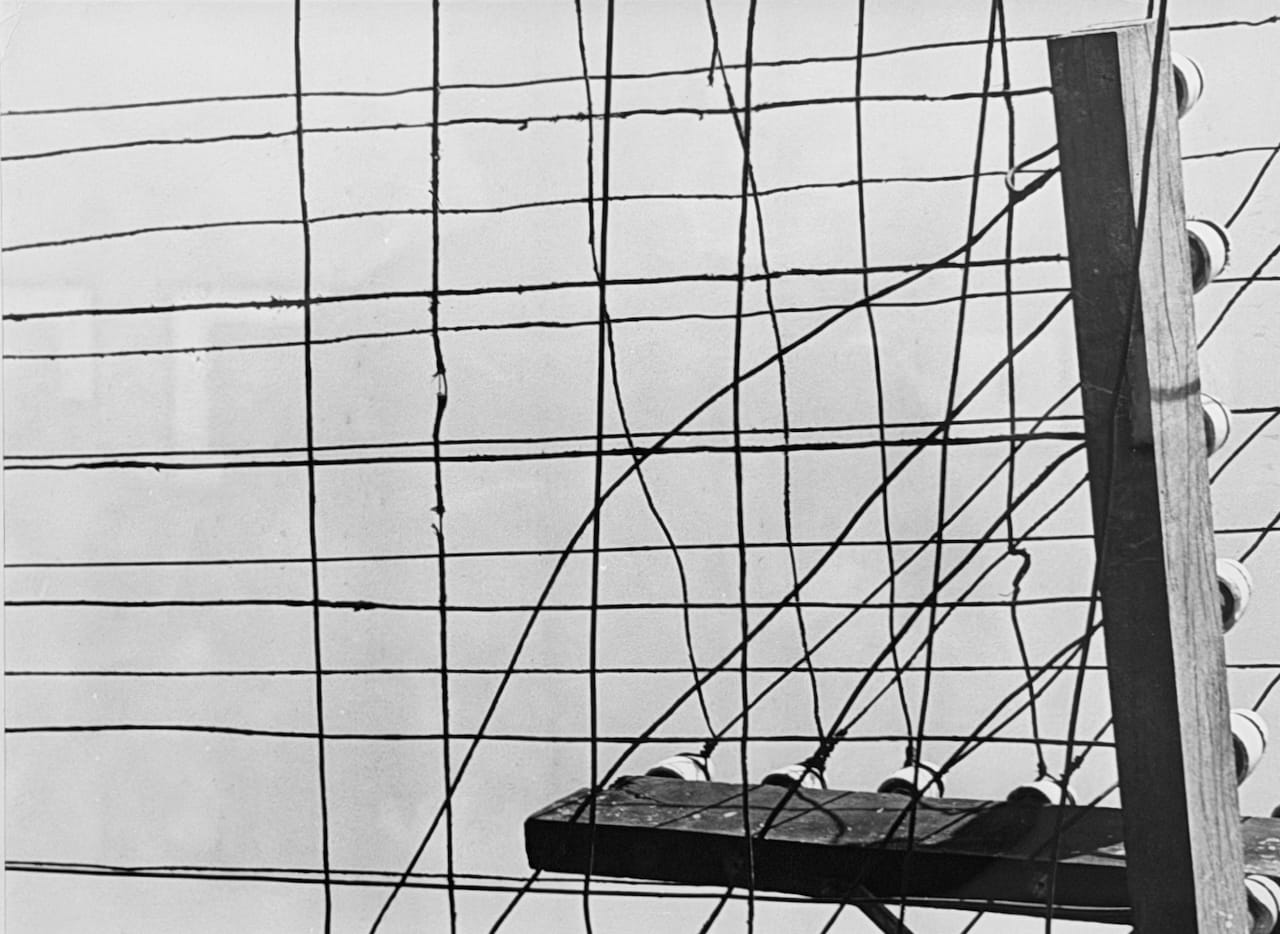
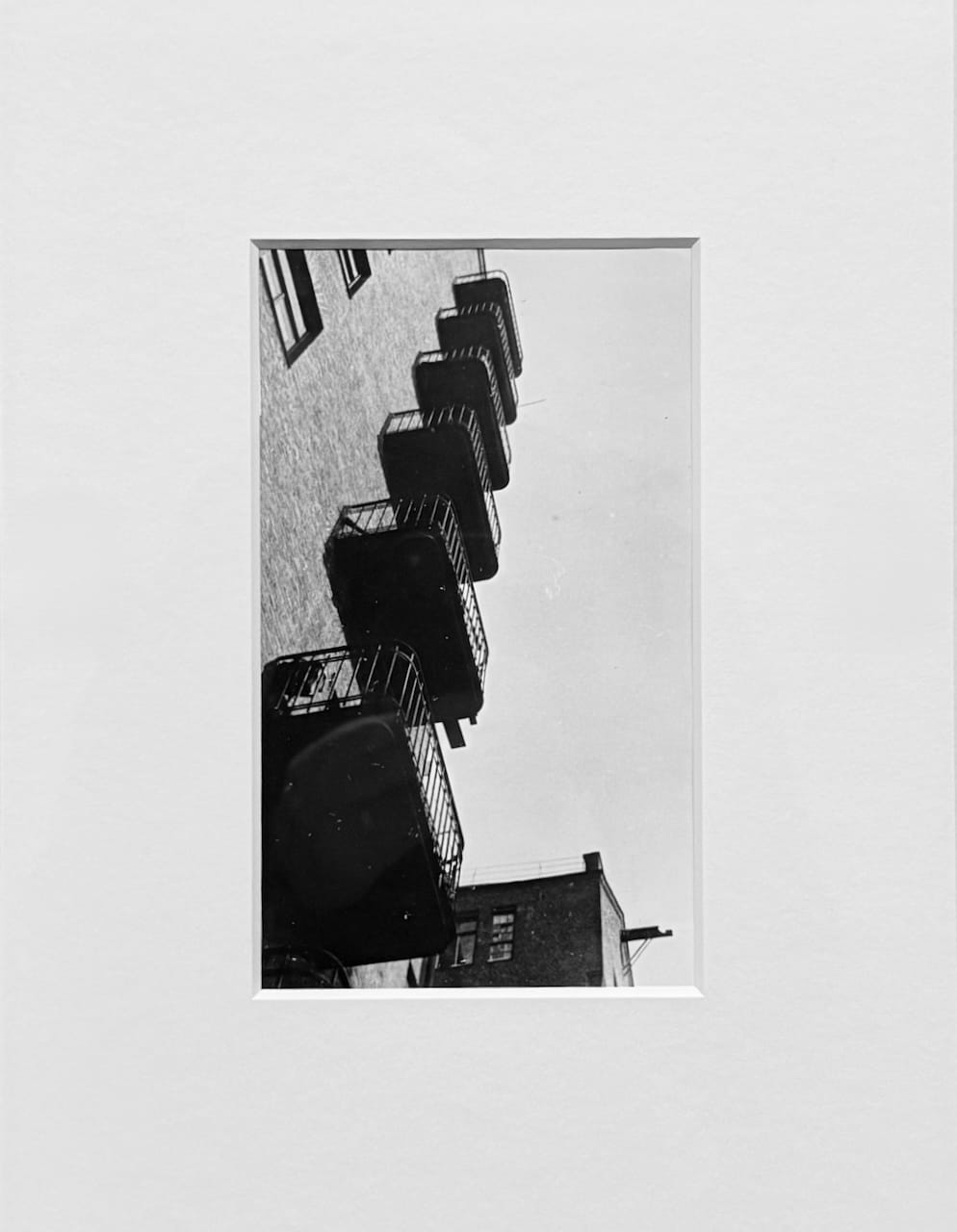
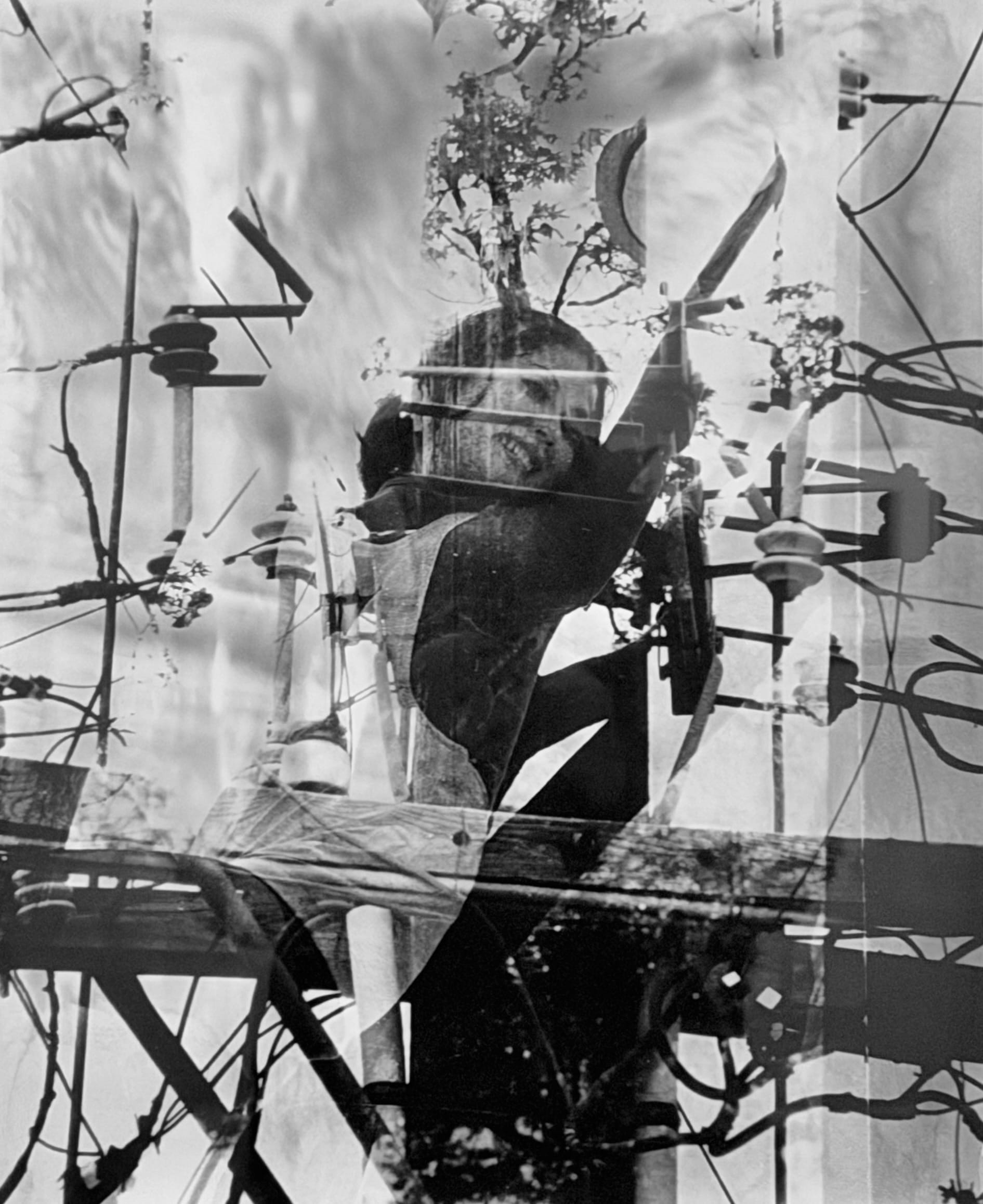
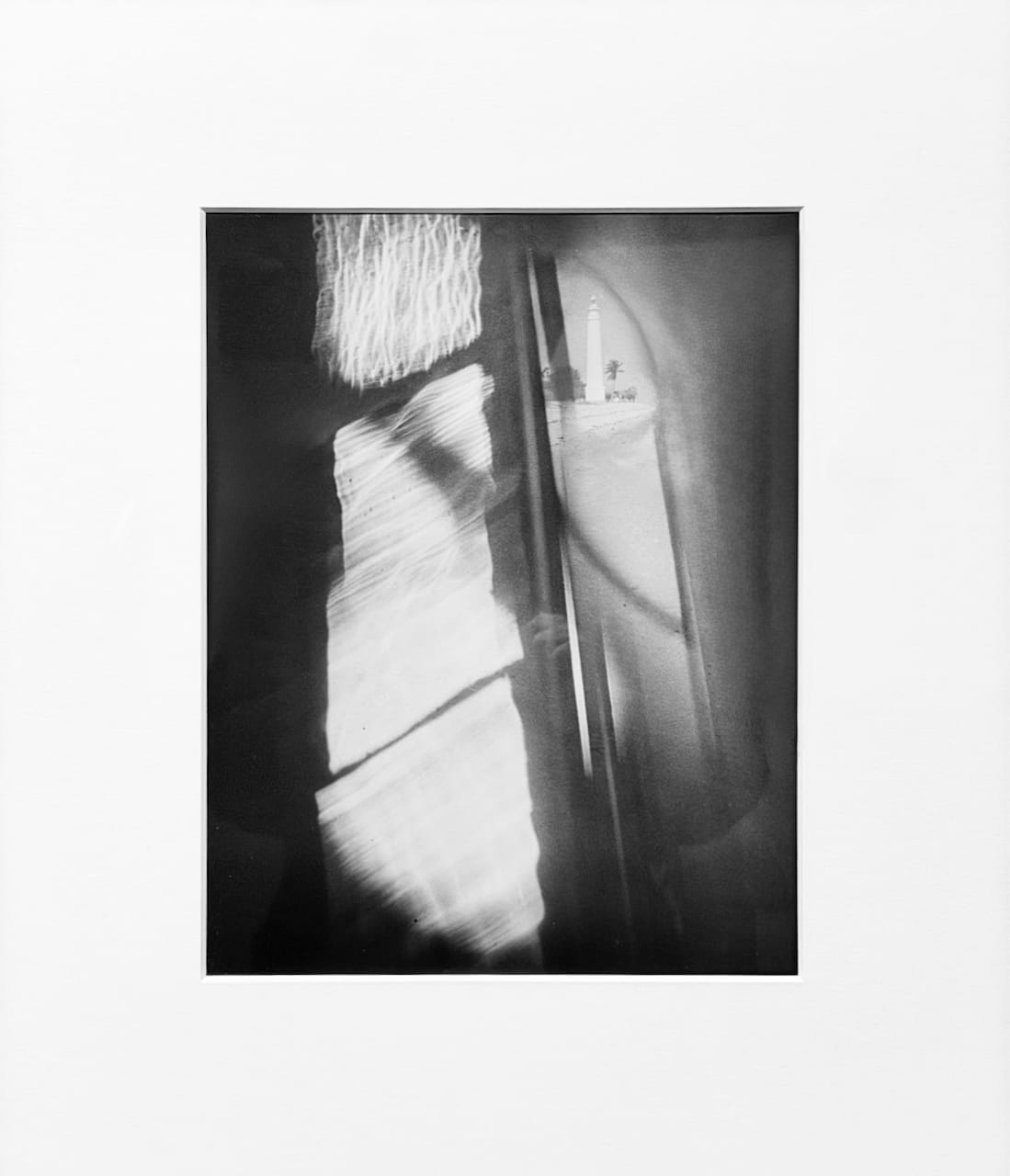
Josef Sudek - The Window of my Studio, 1954, Geraldo de Barros - Untitled (Telegraph Wires), c.1950s, Aleksandr Rodchenko - Balcones, 1925, Ōnishi Shigeru - [title not known], c.1950s and Lionel Wendt - [title not known], c.1933-8
For a while I thought this might be the definition that survives: pictorialism prefers glass you can see and modernism wants glass you can't. But it breaks on Rodchenko's Balconies (1925), shot from below on Myasnitskaya Street. The glass is visible there too, as an angle no eye would choose, which would make Moholy-Nagy a pictorialist. The show has more or less admitted him already, through Wendt's solarisations and Ōnishi Shigeru's multiple negatives. The glass is a good image for the exhibition but it won't hold as a definition.
Then you walk into the red room glimpsed at the start, where the safelights glow and process-based courses are on offer at £120. I came out with less understanding of pictorialism than I took in and more questions. That’s no bad thing.
The salon and the gallery
If the show has a thesis, it's that art photography was born in the salon rather than the gallery. Long before museums would hang a photograph, clubs from London to Singapore built the apparatus of an art world for themselves: open calls, juries, medals, annuals, the stickers on the backs of prints. Stieglitz learned his trade in that system, winning medals and joining the Linked Ring in 1894, and then left it. At 291 there was no open call and no jury. He chose, and his choice was the verdict. Szarkowski later gave that figure an office at MoMA, and modern photography grew up under the curator rather than the jury.
The salon made photography an art among photographers. The gallery made it an art for everyone else. Light and Magic takes the salon's side, and does so generously. But it can only make the case in a gallery, through a curator's choices and a collection's acquisitions. The verdict on the jury system is being delivered, sixty years on, by the figure who replaced it. I left unsure whether Tate had rescued the salon or simply absorbed it.
Light and Magic, The Birth of Art Photography at Tate Modern closes on 21 February 2027.
Thanks for reading PhotoPedagogy! Subscribe for free to receive new posts. If you know anyone who would enjoy these ramblings, do please share the site with them.
These posts will always be free but, if you enjoy reading them, you can support my analogue photography habit, and that of my students, by contributing to the film fund. Thanks to those of you who have already done so. All donations of whatever size are very gratefully received.