A Little Bit of Magic
The photograph inside.
At Photo London last week, I spent some time in front of a series of works by the Belgian artist Jesse Willems. From a distance they read as bold abstract collages. I was drawn to one in particular. Large areas of near-black, cream forms that suggest something between wing and wave, a slash of blue, a touch of orange near the top. Up close, the surface reveals itself as paper, different weights and textures, folded and creased, assembled from old stationery and archive materials. Almost everyone who stopped in front of them had the same experience. They looked. They were puzzled. Then they quizzed the gallery assistant.
“Where is the photograph?”
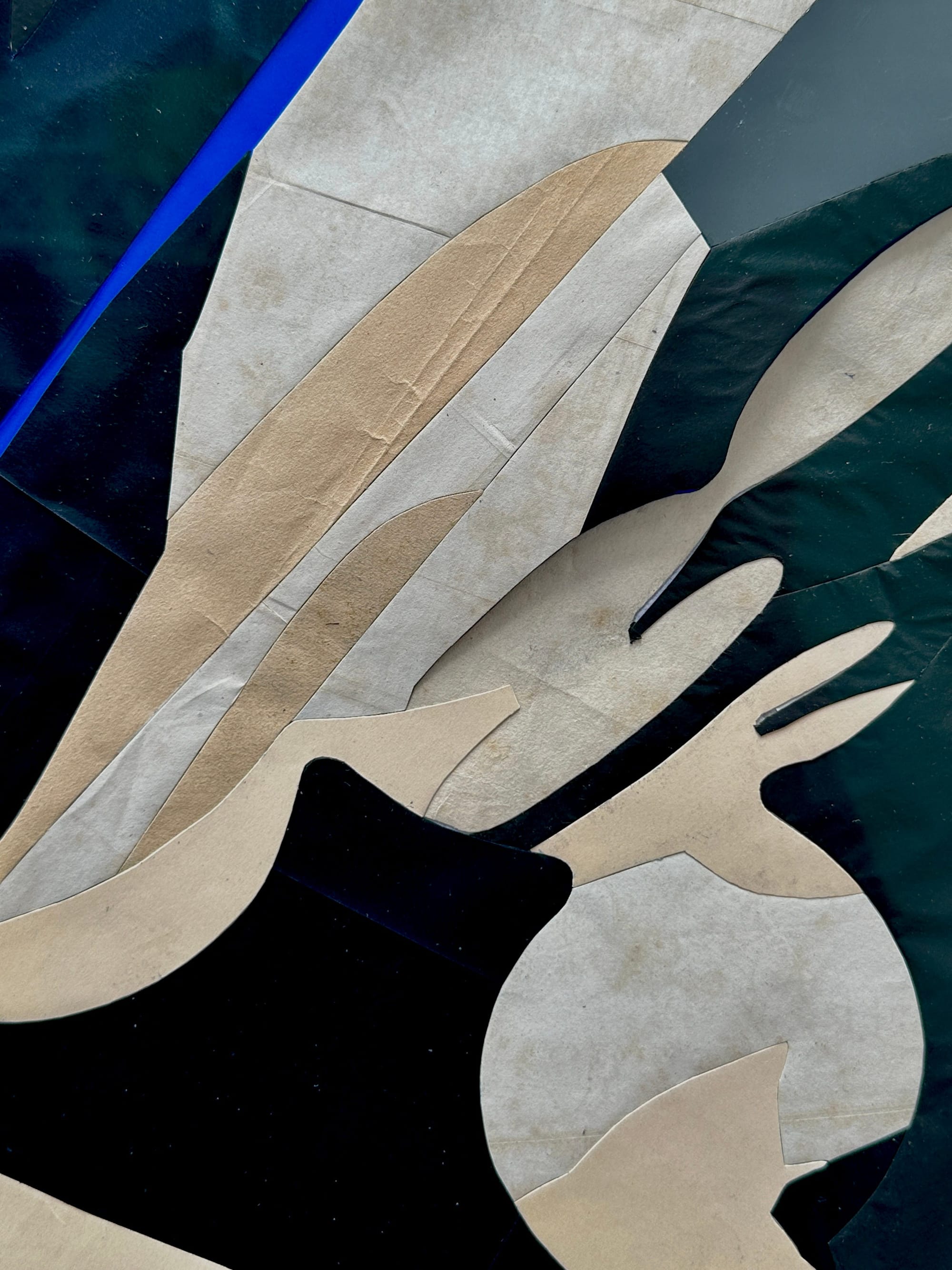
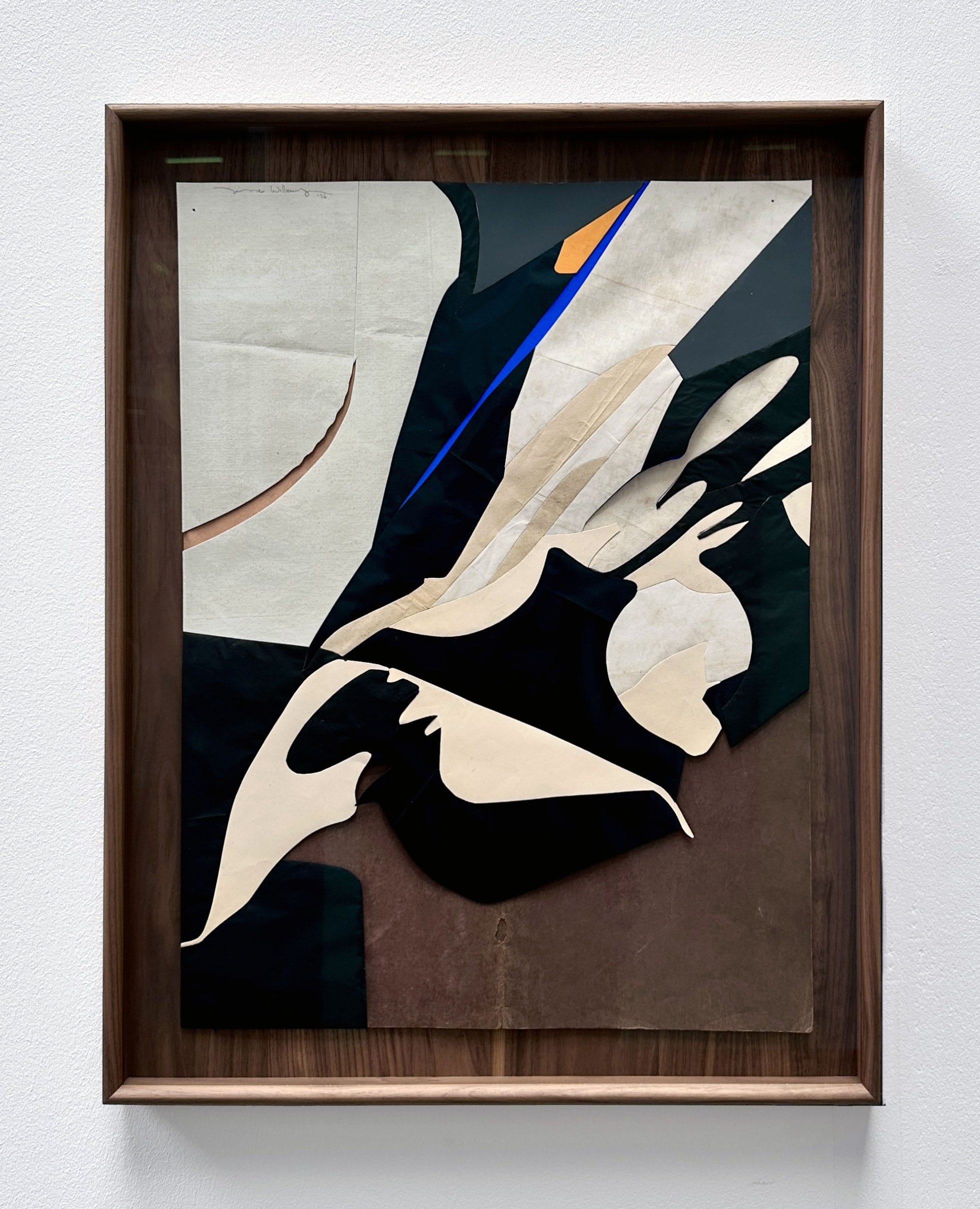
Jesse Willems - (Title unknown), 2025, and detail
The answer is that it’s inside. Willems begins with street photography, photographs of mundane things (a patch of pavement, a corner of wall, light and shade), cuts the prints into sections and wraps each section individually in found paper sourced from old stationery shops and flea markets. He then reassembles the wrapped sections into a composition. The photograph is present in each work as a structural and indexical fact. The light touched something real. It exists inside the paper parcels. But you can’t see it. What you construct imaginatively from the surface is your own projection.
This is a kind of philosophical joke about photography’s central truth claim. The guarantee is there but inaccessible. The magic is inside the box; what you see is the wrapping. And the gallery assistant, summoned to explain the work to a series of genuinely puzzled visitors, becomes an unavoidable part of the encounter.
Willems has cited the 1920s avant-garde as an influence, which is appropriate. László Moholy-Nagy, writing in that period, was dizzyingly optimistic about what photography could do for human vision. For him the camera was a genuine prosthesis for seeing, capable of revealing what the unaided eye could never grasp; motion too fast, duration too long, scales too vast or too small for ordinary perception. He argued that visual literacy, the ability to read photographs critically and fluently, would become as essential as reading text, that the illiterate of the future would be those who could not read images. It is one of the more prescient observations in the history of the medium, though perhaps not quite in the way he intended. He imagined a populace trained to see. What we got was a populace trained to believe.
Willems takes that modernist excitement about photography as revelation and performs a quiet inversion. The prosthesis is present but non-functional. The visual information was gathered, the light did its work and then it was wrapped up and put away. What you see is the bandaging, not the limb. The confusion his work produces makes the wrapping visible.
Reading Ian Cowmeadow’s PhotoWords post the following day, I found myself thinking about a different kind of wrapping, one considerably less visible on the surface.
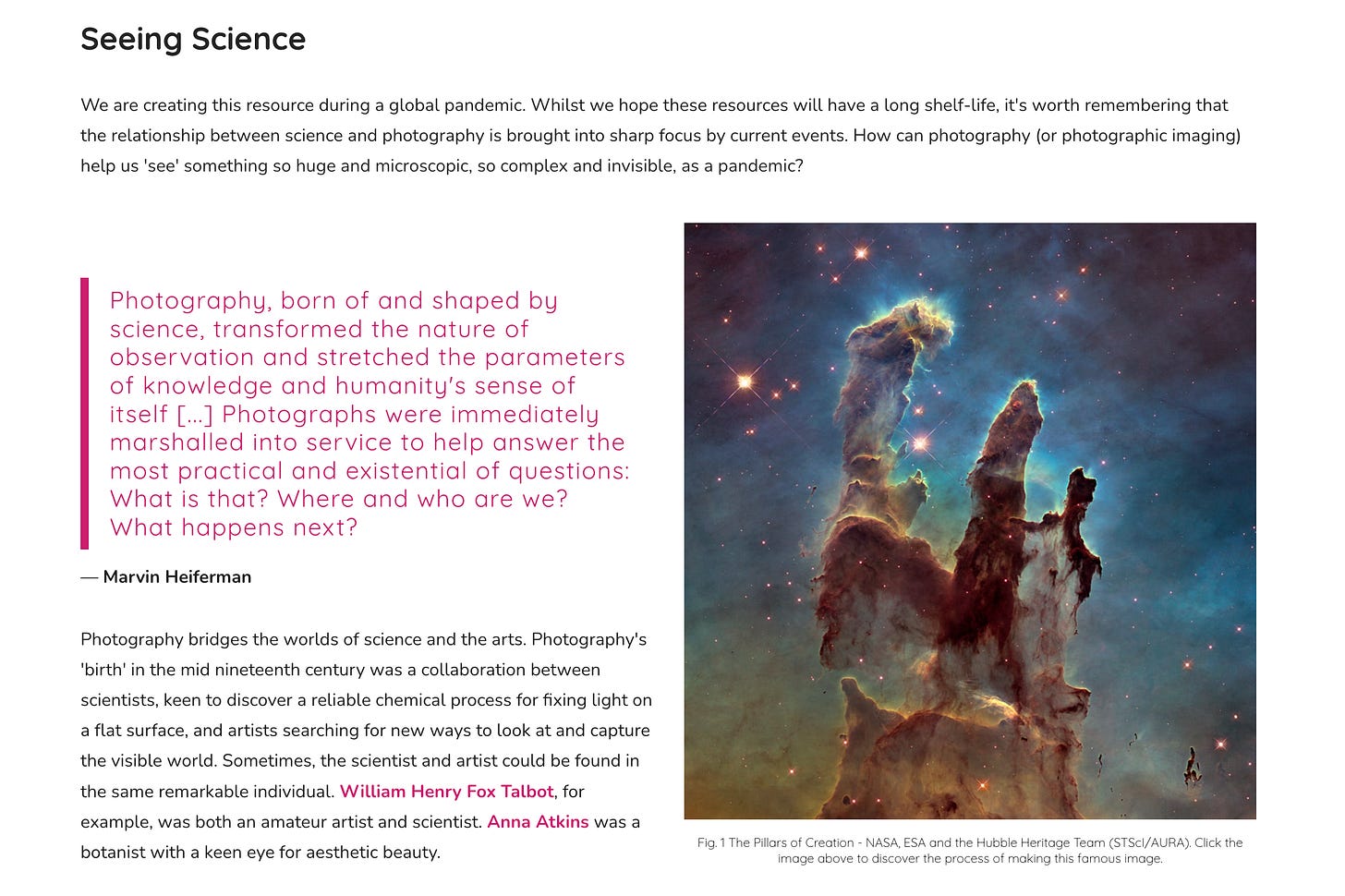
Ian writes about the Pillars of Creation, those extraordinary images from the James Webb and Hubble telescopes, assembled from wavelengths of light invisible to the human eye, gathered across multiple passes, processed into something our vision can read. Nobody has seen what those photographs appear to show. They are meticulous constructions presented as revelations.
When the pictures finally land on Earth, they may as well be abstract – unless you’re an astrophysicist. It’s not like the friendly face of the Earth or even the barren deserts of Mars. The deep space telescopes show us places where we could never get a foothold, or hold on to any anchor. It’s unlikely that, were we to somehow open our eyes up there, we would actually see anything like the gorgeous, swirling clouds of gas and dust or the twinkling jewels of distant stars. Looking at the well-understood images from Artemis we know where we are. But out there, way out there, viewpoint and scale have become detached from our experience and we are left with nothing but beauty and strangeness to hang our imaginations on.
— Ian Cowmeadow
The word “revelations” does a lot of work in photography’s history. It is the title of an exhibition at the National Science and Media Museum that brought together the pioneers of scientific image-making: Fox Talbot, Muybridge, Edgerton, alongside X-ray plates, long exposures, images of phenomena that exist entirely outside the range of ordinary human perception. Fox Talbot described his own work as “a little bit of magic realised.” It is a generous description. Magic, as any competent magician will tell you, is also a technology of misdirection. You watch one hand while the other does the work.
Scientific photography has, from its beginnings, made a specific promise: that removing the human hand from the image removes distortion. Lorraine Daston and Peter Galison, in their history of scientific objectivity, call this “mechanical objectivity.” It’s the belief that the camera, precisely because it is not human, cannot lie. The photograph becomes evidence. But the certification conceals as much as it reveals.
Think about what early scientific images actually did and what they concealed in doing it. Muybridge’s sequence of a horse in motion, made in 1878 to settle a bet about whether all four hooves left the ground simultaneously, revealed that the human eye had always been wrong. Painters and sculptors had depicted horses in motion for centuries and none of them had seen what the camera saw. But Muybridge’s photographs also imposed a grid on the body, turned biological movement into data, and presented that abstraction as objective truth. Röntgen’s first X-ray of his wife’s hand in 1895 showed the bones inside a living person, an image that reportedly produced something closer to horror than wonder in those who first encountered it. The body, always opaque, was suddenly legible. But the X-ray also trained the eye to read a representation as a transparent window onto the interior, suppressing the considerable technical apparatus that produced it. Edgerton’s stroboscopic photographs of a bullet passing through an apple, a milk drop throwing up its perfect crown, are genuinely extraordinary. They are also choices about timing and angle that leave everything outside the strobe’s reach in darkness.
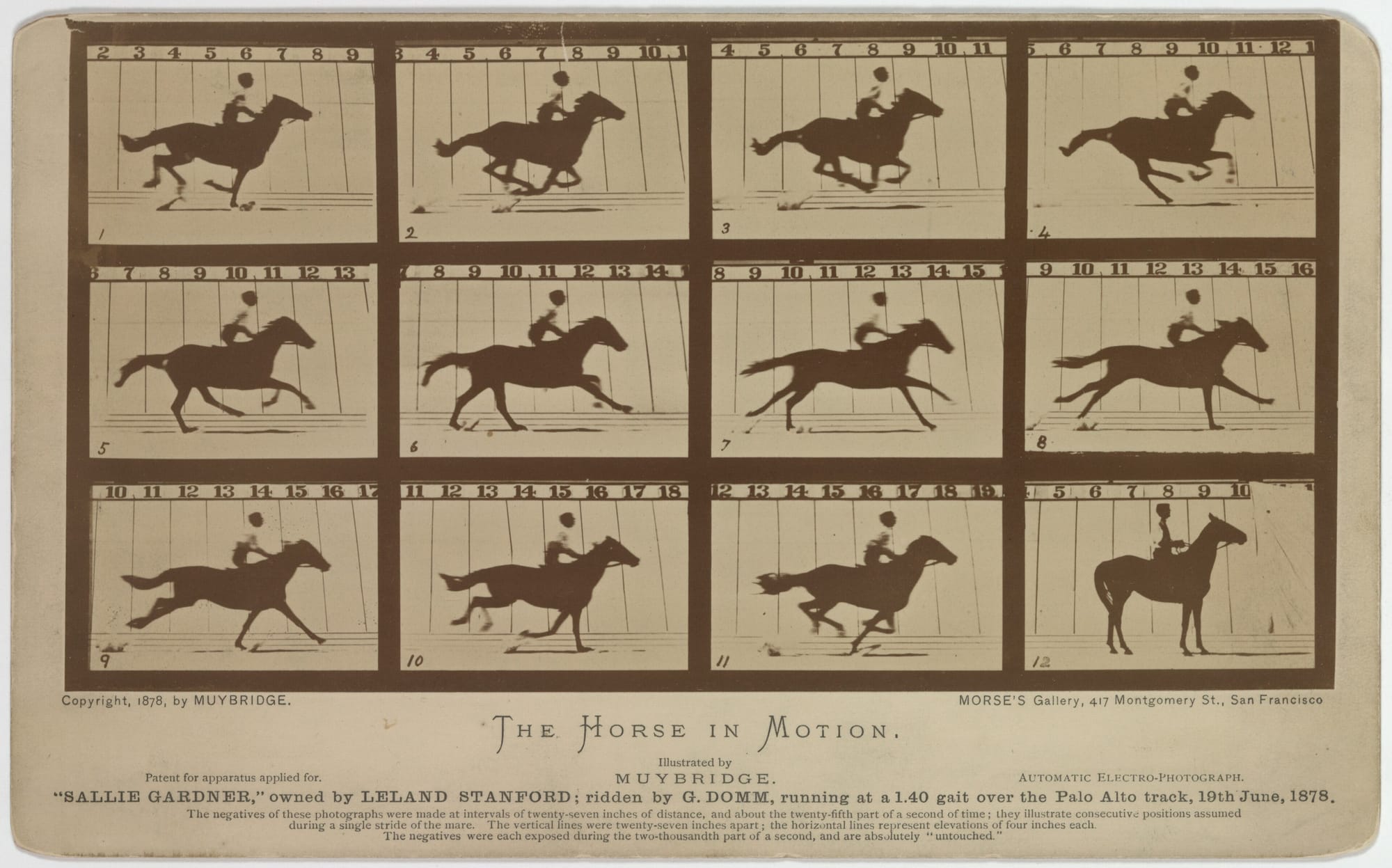
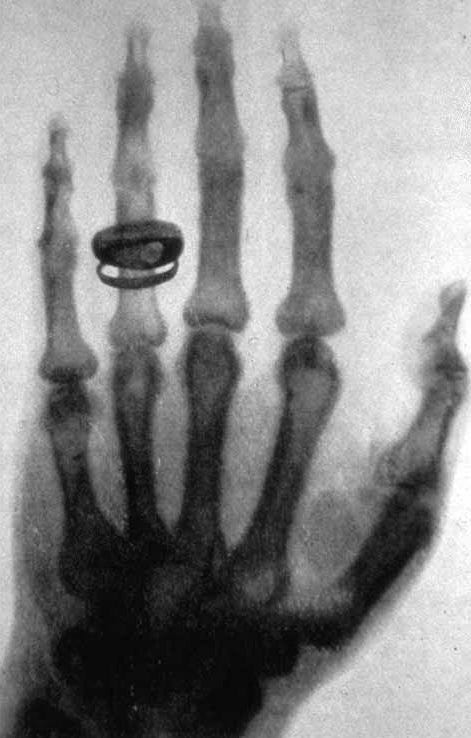
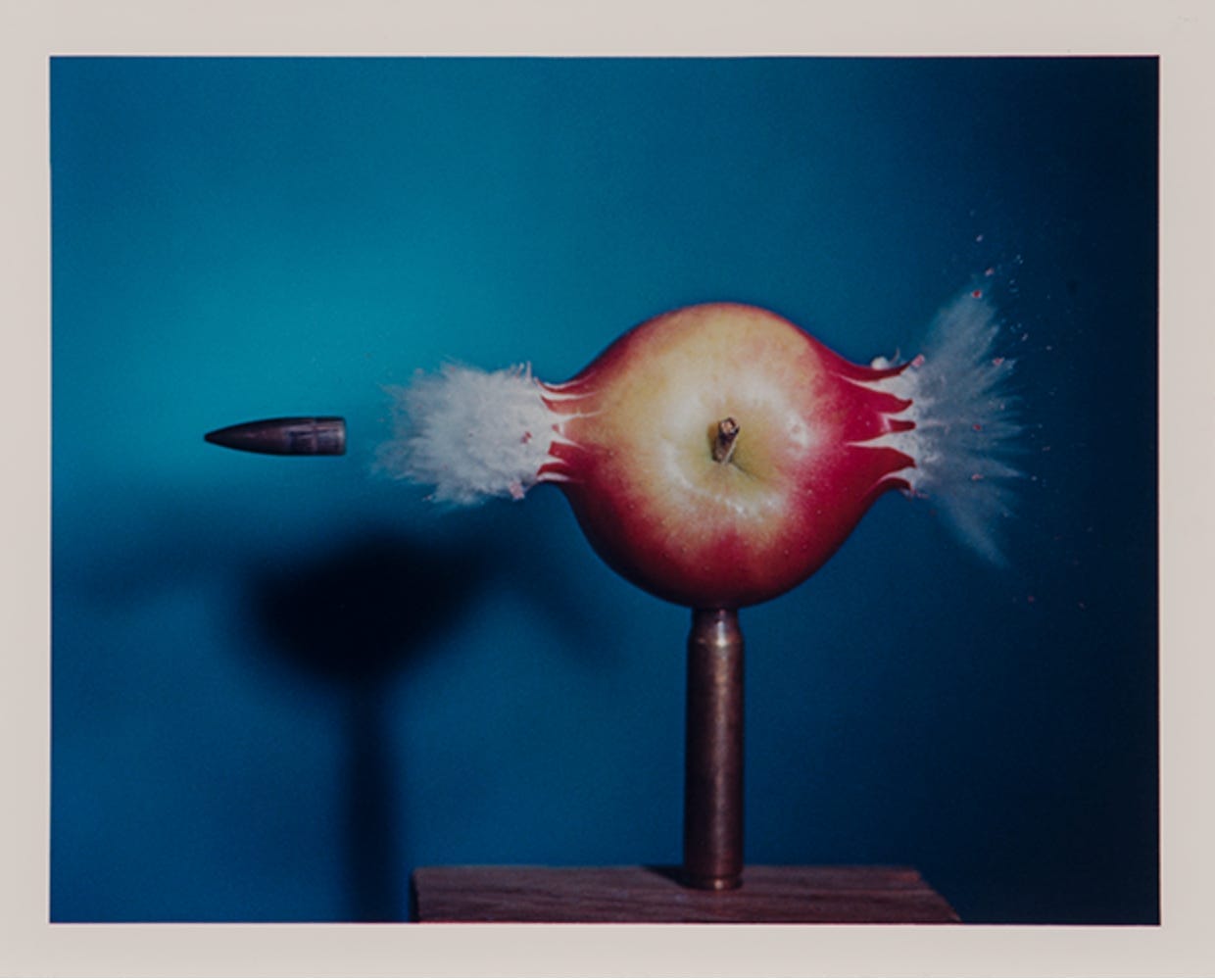
Muybridge, Rontgen and Edgerton
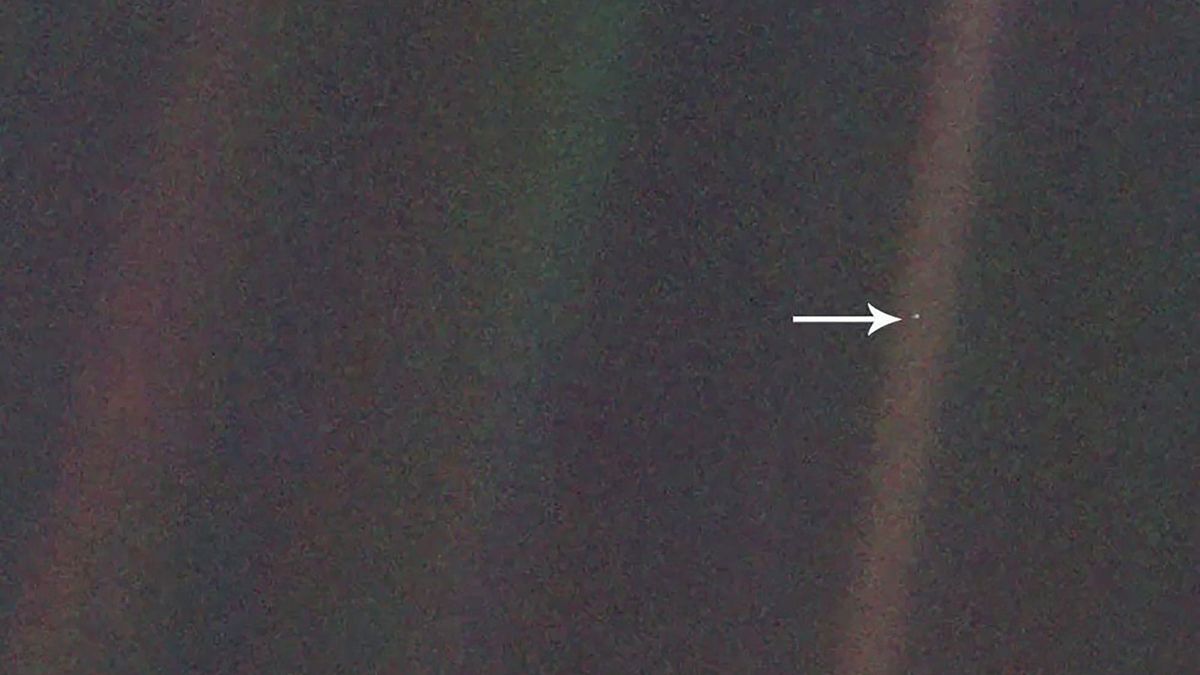
The images accumulate and so does the belief. When the Apollo 8 crew photographed the Earth rising above the lunar surface in 1968, the image catalysed something close to a planetary shift in environmental consciousness. Carl Sagan, reflecting on the Voyager 1 image of Earth as a pale blue dot seen from beyond the orbit of Neptune in 1990, wrote about it with explicitly religious fervour. In 2019, the Event Horizon Telescope collaboration released the first image of a black hole, assembled from a network of radio telescopes across multiple continents, rendered in false colour so that human eyes could read it. The scientists involved made hundreds of decisions in producing that image, about data processing, about what counts as signal and what as noise. None of those decisions are visible in the photograph. What looks like a direct encounter with a cosmic object is an extraordinarily sophisticated argument about what that object looks like.
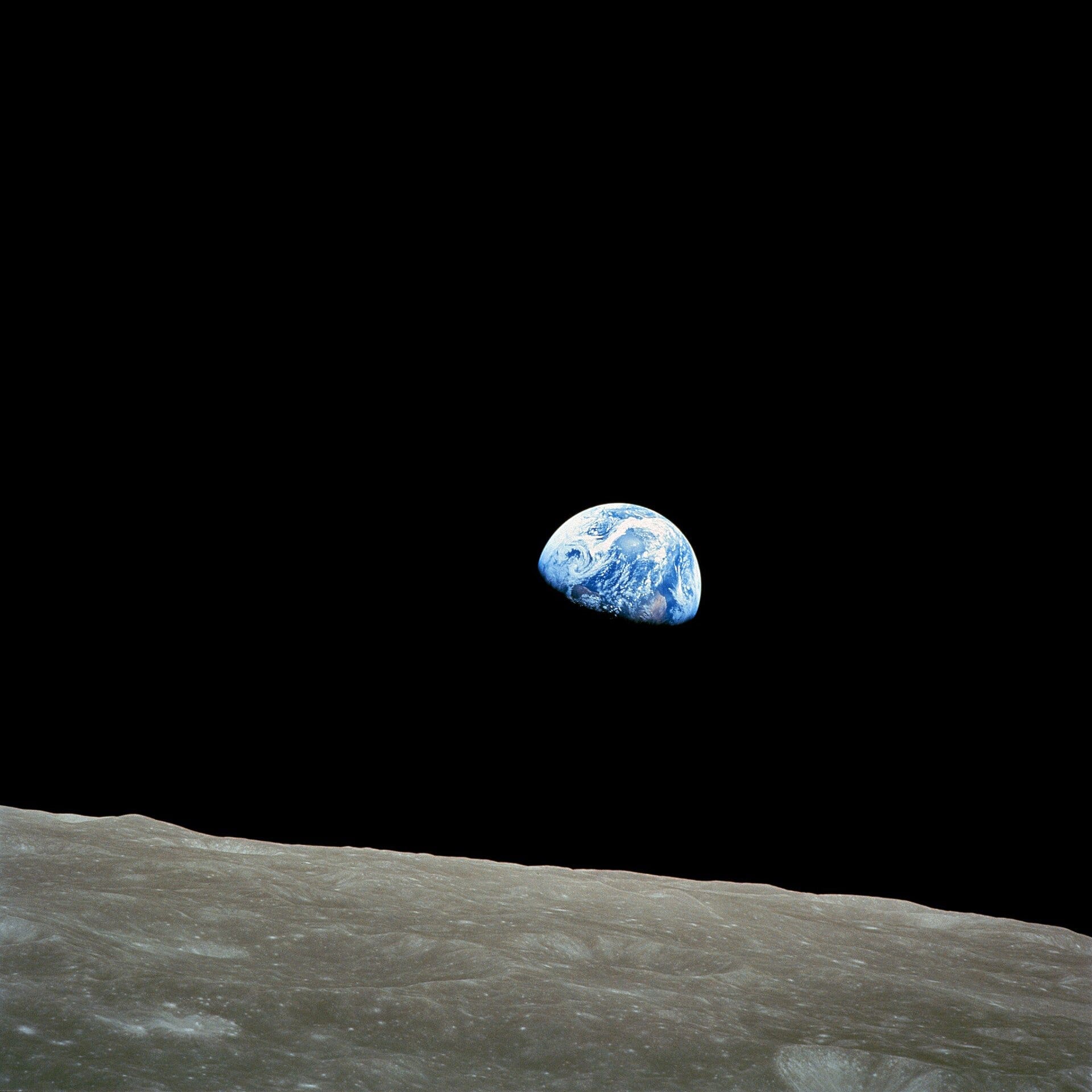
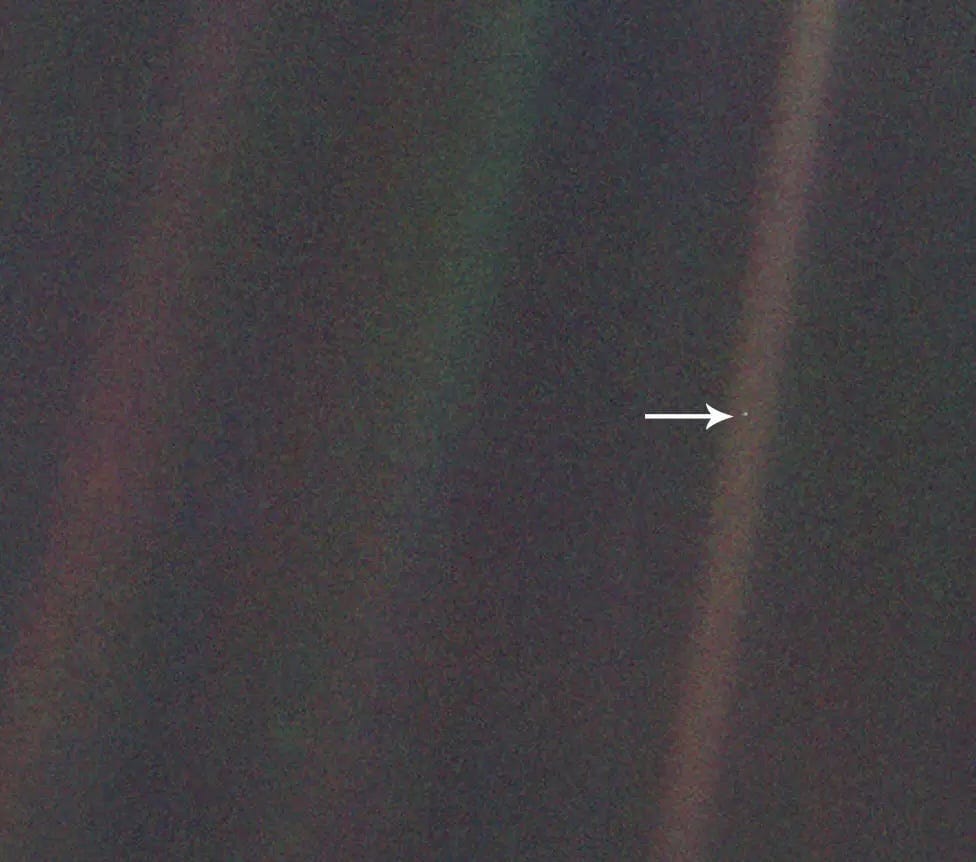
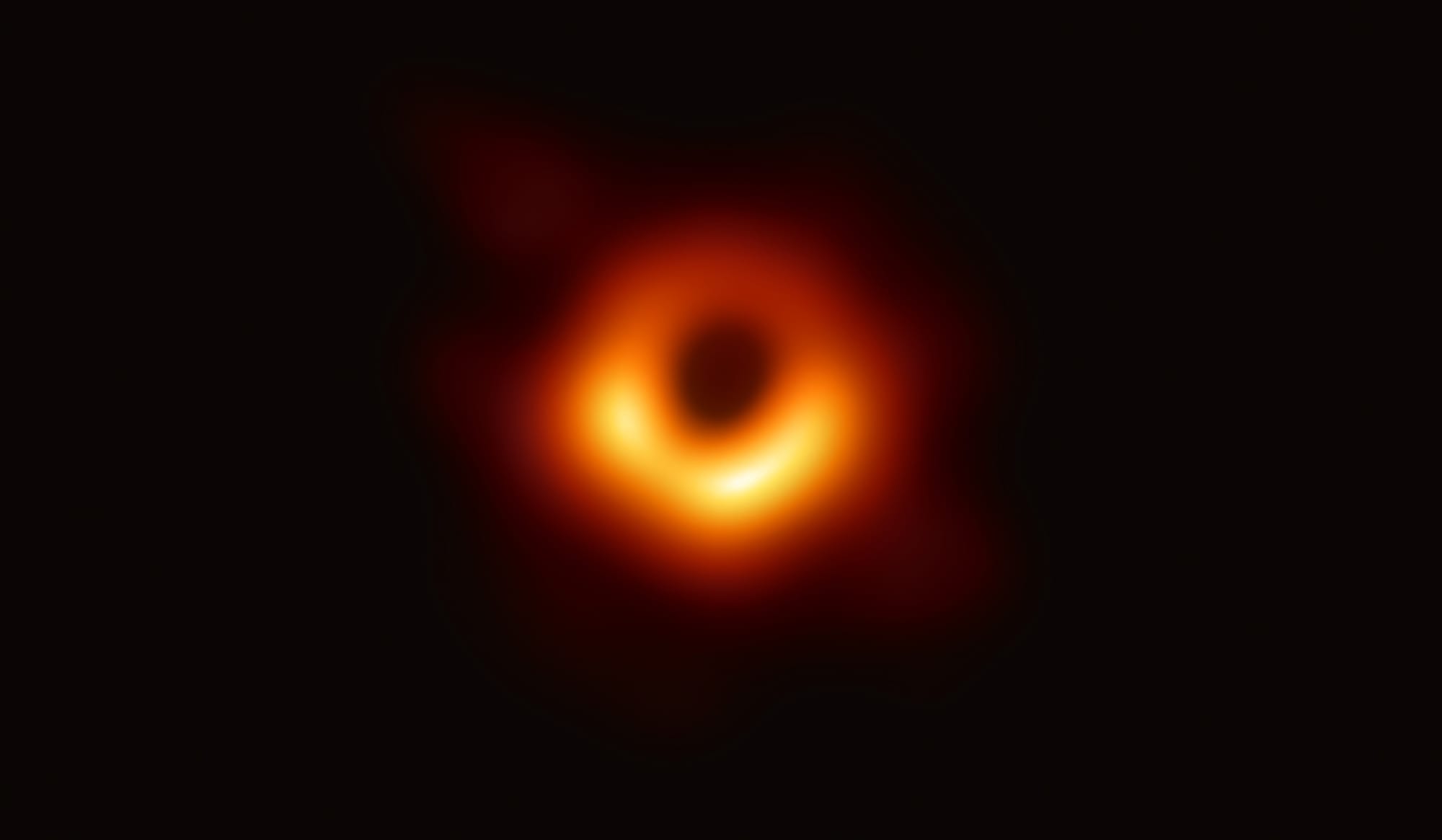
Earth Rising, Earth from Neptune and a black hole
None of this is a criticism. It is a description of what all photographs do. But it is most consequential in images that carry the authority of science, because those images suppress their own subjectivity. An art photograph announces its mediation; Willems practically shouts about it. A scientific image naturalises its construction and presents the result as unmediated access to the real. The gallery assistant his visitors needed is nowhere in sight. Nobody stands in front of the Pillars of Creation and asks to speak to someone. The image looks immediately, completely self-explanatory, which is exactly the problem.
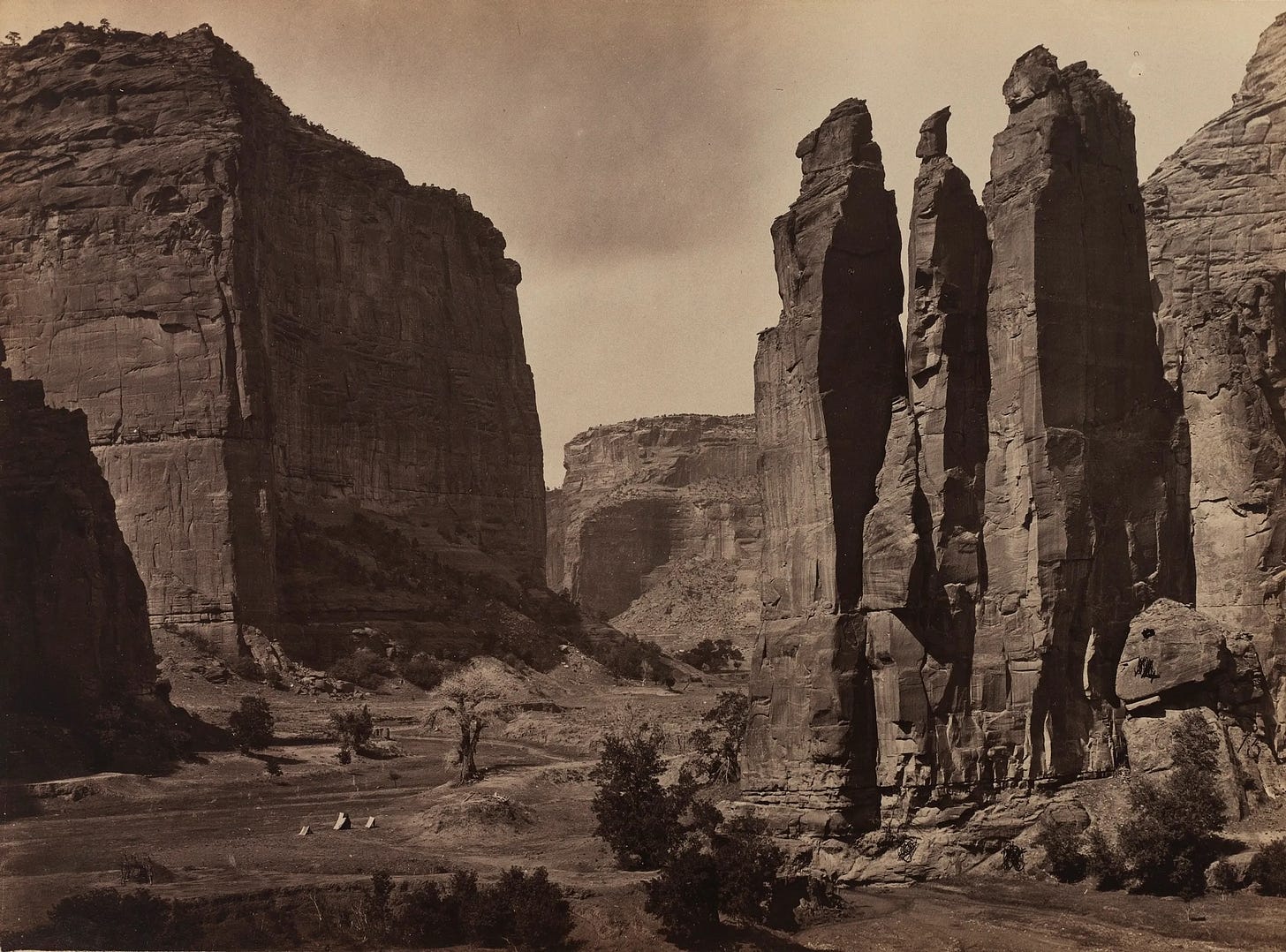
The stakes become clearest when we move from laboratory and observatory to landscape. The survey photographs made by Timothy O’Sullivan and others in the American West during the 1860s and 70s were presented as objective records. They were also arguments. What they systematically excluded, the indigenous populations, existing settlements and any trace that the landscape was already inhabited and known, was not an accident of framing. It was the frame’s purpose. An empty land is a land awaiting use. Martha Sandweiss, in her history of photography and the American West, shows how thoroughly the survey image operated as an imperial instrument wearing the costume of documentary record. Nobody had to instruct O’Sullivan to leave people out of the frame. The wrapping was invisible because the ideology was structural.
The Pillars of Creation add one further complication. Those structures are approximately six thousand light years from Earth, which means we are seeing them as they were six thousand years ago. Astrophysicists believe the pillars are probably already gone, dispersed by a nearby supernova. The photograph reveals the past and performs it as the present. What looks like a window is actually an archive. What looks like existing reality is already history. The temporal wrapping is as complete as any of Willems’ papers.
We are living through a moment in which photography’s authority, accumulated over nearly two centuries, is being loudly mourned. AI image generation has broken something, the argument goes. If a machine can produce a photograph of something that never existed, then photographs can no longer be trusted as evidence. The grief is real but misplaced. Photographs should never have been granted the authority they were given. The claim that a photograph is a direct trace of reality, that it is caused by light reflected from an actual object and is therefore uniquely trustworthy, was always only partially true. And the true part tended to conceal the rest. Fox Talbot’s magic was in persuading people that no magic was involved.
AI image generation hasn’t destroyed photographic truth so much as made photographic construction undeniable. This might be the occasion for a proper reckoning with what photographs were always doing. Moholy-Nagy wanted a visually literate public capable of reading photographs critically. Perhaps the present disorientation is that literacy, arrived late and by an unexpected route. What both Willems’ collages and the Pillars of Creation make visible, each in their own way, is the gap between what a photograph promises and what it delivers. The promise is revelation, unmediated access to the thing itself. What it delivers is always a construction, a set of decisions about what to show and what to fold away inside the paper.
Do consider subscribing to PhotoWords, Ian’s excellent Substack.
And if you’re interested in the relationship between science and photography, you might enjoy Seeing Science, a resource we created for the RPS a couple of years ago.
Thanks for reading PhotoPedagogy! Subscribe for free to receive new posts.
These posts will always be free but, if you enjoy reading them, you can support my analogue photography habit, and that of my students, by contributing to the film fund. Thanks to those of you who have already done so. All donations of whatever size are very gratefully received.