What's the point of teaching photography in the age of AI
Unblocking the pipes.

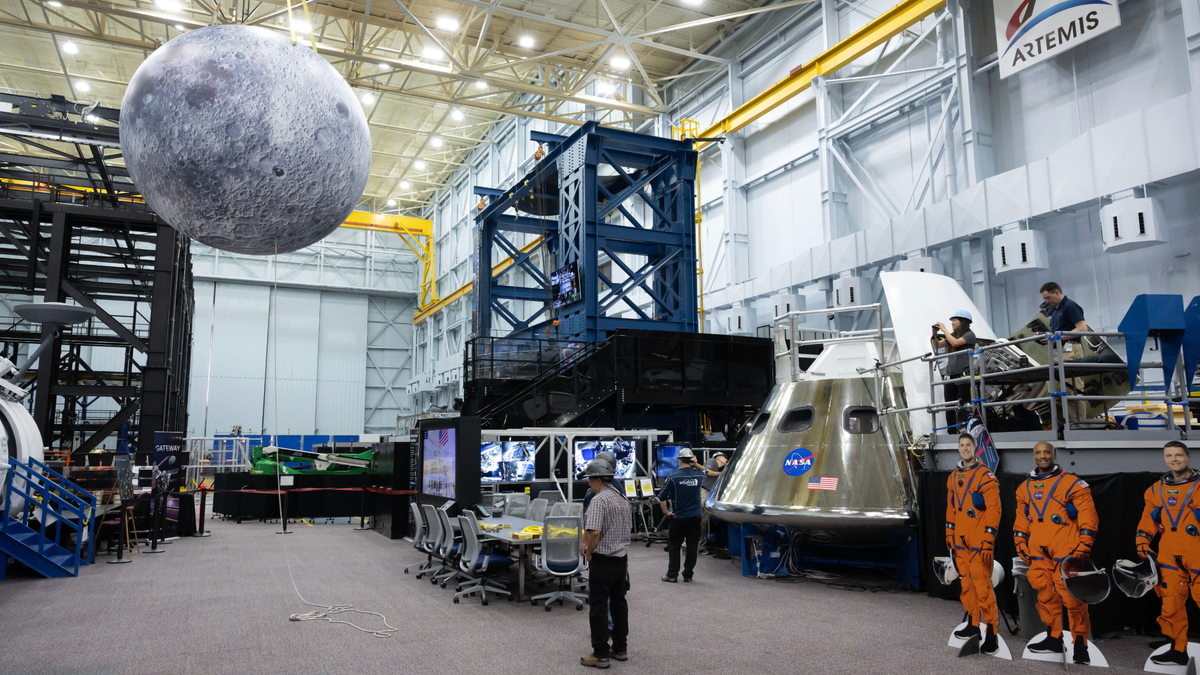
In April 2026, four astronauts aboard the Artemis II spacecraft became the first humans to travel to the far side of the moon. They took photographs. They also had a problem with the toilet. It cost about twenty-three million dollars to design and build, but its pipes became blocked. The solution, devised by astronaut Christina Koch, was to rotate the spacecraft toward the sun until the pipes thawed. It worked. The crew came home safely, carrying photographs of Earth taken from a distance no human being had previously achieved. Commander Wiseman said of watching and photographing Earth disappear behind the moon: “It’s amazing to watch your home planet disappear.”
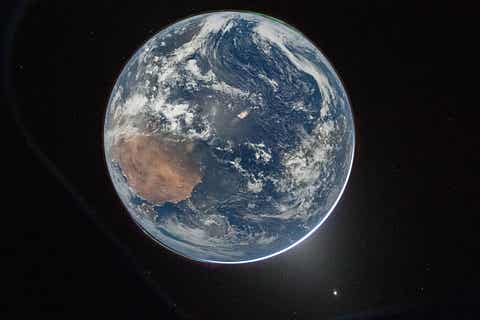
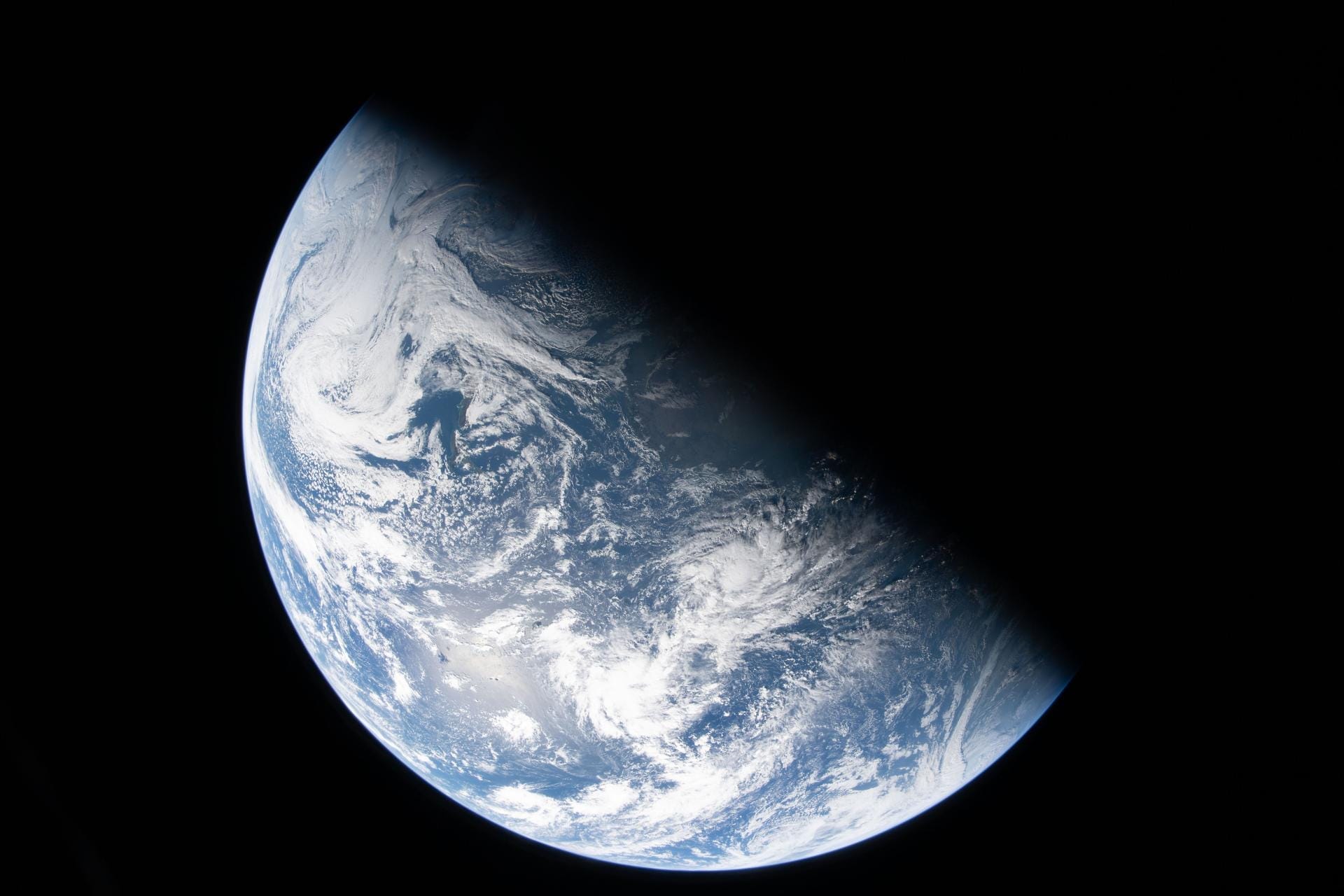
Views of Earth taken by Commander Reid Wiseman from one of the Orion spacecraft's windows April, 2026
On social media, AI-generated content claimed the entire mission was fabricated. One video, viewed over a million times, showed the astronauts suspended by wires in a studio. It was AI-generated. As Professor Peter Knight, who researches conspiracy theories at the University of Manchester, observed, it’s not that people believe in crazy things that aren’t true, it’s that they refuse to believe in things that are real, insisting instead that it’s all fake news or AI-generated.
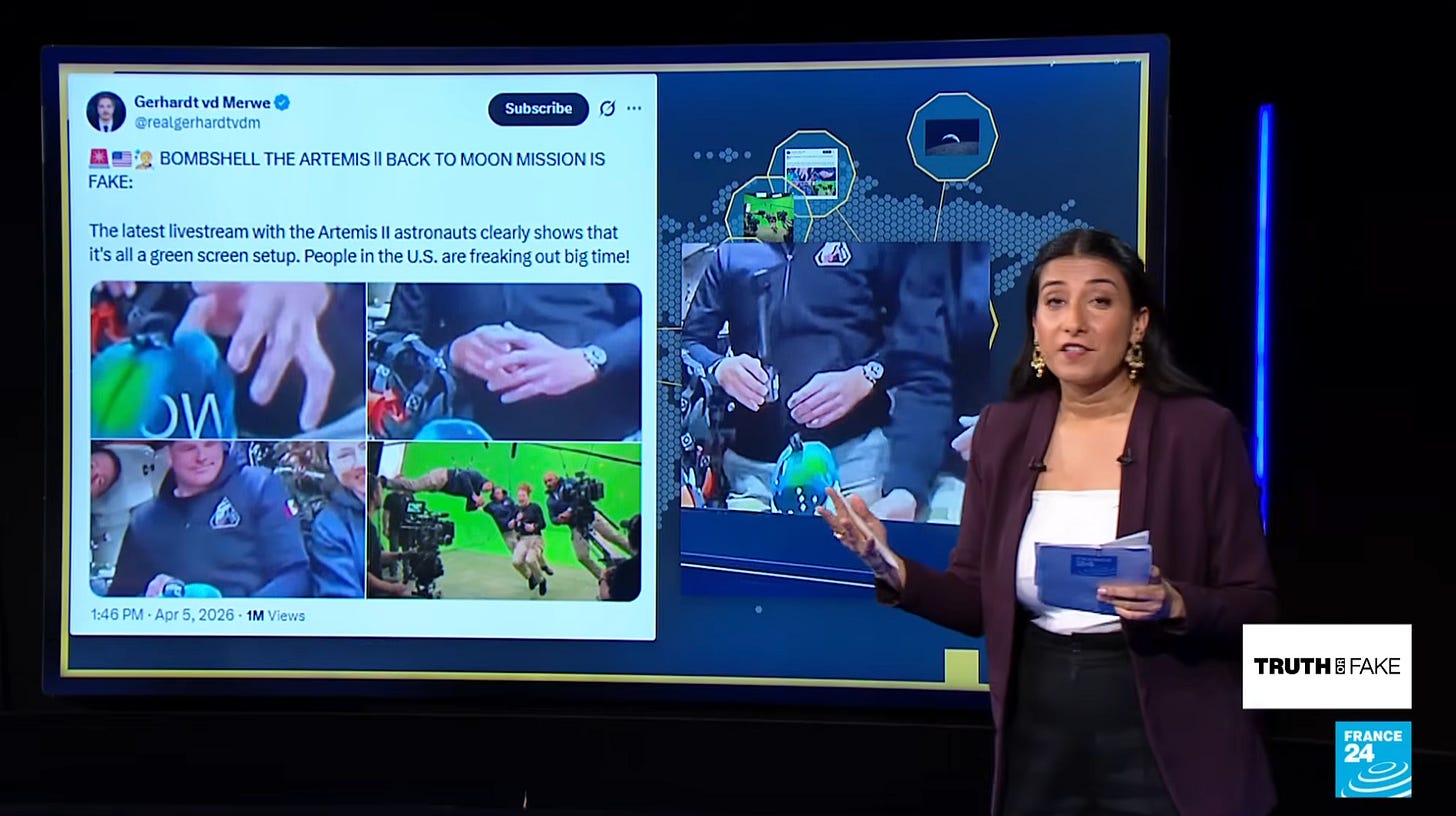
These are the conditions in which photography education currently operates. So, what is photography education for?
Photography is a minority subject. It will remain one. Most students in any school or university will never study it. That’s not the point. The point is whether it knows what it’s for. A marginal discipline that cannot articulate its own purpose has no serious claim on anyone’s attention or resources. Its very marginality is the provocation. But what follows isn’t a manifesto. It’s a modest attempt to find some common ground, to open a conversation that doesn’t seem to be currently happening across institutional boundaries, without the usual assumptions about who has something to teach whom. The commercial photography tutor, the GCSE teacher with one camera and no budget, the university lecturer supervising experimental post-photography and the documentary photographer teaching ethics through practice are all doing related but distinct things. I hope there’s something here for all of them.
These, then, are some propositions about what a good photography education, at whatever level, might be for.
Photography begins with a world that’s full
Most arts begin with a kind of emptiness or potential. The painter encounters a blank canvas. The sculptor a waiting material. The playwright an empty stage and the theatre an absent audience. Each requires the artist to project something into that emptiness. Photography begins differently. The world is already there, full of things that have their own existence regardless of the photographer’s intentions, indifferent to their wishes, refusing to cooperate. Even the photographer who works entirely with existing images, archives, found photographs, appropriated material, begins with a fullness that precedes them. They negotiate with what already exists. This proposition doesn’t survive every objection. It’s offered as a starting point. But something about photography’s relationship to existing reality feels constitutive rather than incidental. The full world is not the backdrop to the photograph but its material. Teaching young people strategies and tactics for negotiating seriously with what exists is, in my view, a form of education worth having.
Photographs disappear
This is photography’s most seductive and most dangerous quality, and it’s what makes photography education specifically necessary rather than merely useful. The subject dominates the image. The frame disappears. The decisions, the contingencies, the technology, are all quietly erased by the persuasiveness of the result. We look through photographs rather than at them, as if they were transparent windows onto the world rather than highly constructed arguments about it. Most students arrive at a photography education already fluent in photography’s conventions without realising it. They think they know what a photograph is and does. This tacit understanding is mostly unhelpful. A good photography education, therefore, involves estrangement and the discovery of cracks in what students already think they know. This is different from acquiring new knowledge. It is closer to finding that the ground you've been standing on is less solid than you thought. Holding the image still long enough for its own constructedness to surface. Asking where the frame ends and what was left outside it.
This doesn’t mean teaching students that photographs lie, or that all images are equally valid or invalid, or that reality is inaccessible. It means developing the habit of asking better questions. How was this made? By whom? For whom? Under what conditions? With what consequences? These questions apply as readily to a fashion photograph as to a war photograph, to a GCSE portfolio as to a doctoral thesis, to an AI-generated image as to a frame of analogue film.
Some argue that critical pedagogy, by teaching students to distrust official images and authoritative accounts, has contributed to the epistemological chaos in which the Artemis conspiracy theories flourish. If you teach students to question the truth claims of photographs, don’t you produce students who question everything, including things that are true? The answer depends on what kind of scepticism is being taught. Genuine critical thinking asks questions, weighs evidence, remains open to being wrong and changes its mind when the argument requires. The fake news reflex does something categorically different. It forecloses inquiry before it begins. It’s a pre-emptive refusal of evidence dressed up as independent thought. Its political function is not to democratise doubt but to concentrate credulity in whoever holds most power. Trust nothing except the authority that tells you to trust nothing. Shouting fake news is not a critical position. It’s an authoritarian ideology that dismisses critique rather than engaging with it. A good photography education encourages students to look harder, to keep looking, to develop criteria, to understand what fabrication looks like because they have created their own images. The student who has learned to ask how this image was made is better equipped to evaluate contested imagery.
This cuts in more than one direction. Critical education can itself become a closed system if it decides in advance which questions are permissible and which conclusions are correct. A classroom that treats certain histories as settled, certain images as beyond interrogation and certain interpretations as mandatory is not doing critical education. It’s doing catechism with a different sign. Students notice when scepticism only runs in approved directions. The result is not deeper engagement but cynicism, which is itself a recruiting ground for the fake news reflex, approached from the other direction. Genuine critical education must be willing to follow the argument into territory that’s uncomfortable for everyone, including the teacher.
What photographs do in the world
Photography is a democratic medium, relatively cheap, technically accessible and capable of producing documents that circulate widely and quickly. It has been used consistently by people without institutional power to make visible what those with power would prefer remained invisible. It has also been used, at least as consistently, to classify, surveil, objectify and harm. Both things are true. A photography education that acknowledges only one of them is incomplete. This political dimension belongs to all photography education, not only to documentary or photojournalism programmes. The commercial photographer who understands how images construct desire and identity is doing something related to the documentary photographer who understands how images construct evidence and witness. The fashion student who can read the politics of representation in a magazine spread is doing something related to the GCSE student who understands why their photographs tell a particular story about a particular place. The apparatus changes. The questions don’t.
On teachers
Clearing a bookshelf recently, I found a thank you card from three former students. It read: “Thank you so much for all your help over the past two years. We appreciate how you always smell nice and let us chatter away during our intense study days.” Not a word about threshold concepts or critical theory or photographic history or the ethics of representation. The quality of presence in the room. What students remember, years later, is not what was taught but what was caught. And what is caught requires proximity. A teacher who is genuinely alive to the medium, genuinely present to the student, genuinely willing to let the conversation go where it needs to go, is doing something that no technology replicates and no curriculum document captures. This is also the argument for schools and universities that no platform or app can make redundant. Anyone can learn from YouTube. But educational buildings create conditions that are impossible to replicate virtually. The suspension of ordinary demands. Communities of people struggling with the same recalcitrant material. The sustained attention of a knowledgeable adult to a particular young person at a particular moment. An ethos absorbed rather than declared.
But something must be admitted. The argument for aliveness implies a standard of pedagogical seriousness that current structures make very difficult to achieve. There is no PGCE in photography. School photography is frequently taught by art teachers working at the edges of their expertise, under impossible pressures, with inadequate resources. This is a structural problem, not a personal one. University lecturers in photography are often teaching to support their underfunded practices. The institutional gap between school and university photography education is wide and the conversation across it is almost entirely absent. The frameworks that might connect these levels of education barely exist. The professional structures that might develop and sustain photography teachers are largely absent. The pipes are blocked. The conversation needs to happen. The GCSE teacher with one shared camera and no budget may have as much to contribute to that conversation as the university professor. Possibly more, because constraints force a clarity about essentials that abundance sometimes obscures.
On AI
The relationship between photography and AI image generation is more complicated than either enthusiasts or alarmists suggest. The boundary between a photograph and a generated image is less stable than it appears, already blurred by decades of digital manipulation, computational photography and the long history of photographic construction. Photography is not innocent. It has served power as readily as it has questioned it. AI extends and accelerates these tendencies rather than introducing them. Both technologies are bad for the environment, implicated in exploitative labour practices, capable of aiding authoritarian projects, and able to produce images that lie convincingly. The defence of photography education cannot rest on the virtue of the medium. It rests on the virtue of the thinking the medium demands when taught with seriousness and care.
One of my Year 12 students recently handed me a three-page letter explaining why she had chosen not to participate in a cautious classroom experiment with an AI photography guide. She wrote: “Just because something has been promoted as inevitable, does not make it any more ethical […] AI is not the future, it is destroying the future.” She didn’t need a philosophy of photography education to arrive at this. She needed a classroom in which serious thinking was expected and the time and safety to follow the argument wherever it led. That she directed some of it back at me is precisely the point. AI presents a specific danger. Its business model, like that of social media before it, depends on increasing engagement, reliance and ultimately dependency. Young people who grow up using AI as a default thinking aid, who have outsourced the struggle that produces genuine understanding, will lack the critical distance required to use the tool rather than be used by it. AI dependency is largely invisible. It looks like productivity. It may be its opposite. The moral panic will come. After some initial enthusiasm for everyday efficiencies, schools will probably reach for prohibition, as they did with phones. What photography education can offer, if it’s doing its work, is something more useful than either panic or accommodation. It has always been in the business of teaching students to look hard at seductive technologies and find the construction underneath. The question is whether it’s being taught widely enough and seriously enough to make a difference before the dependency forms.
Saying yes
There is a kind of experience that cannot be put into words. You know this if you have ever tried to describe a piece of music to someone who hasn’t heard it, or explain why a particular arrangement of light and shadow suddenly demanded to be photographed. The American photographer Henry Wessel described the experience with characteristic precision. “I try and work before my mind is telling me what to do,” he said. “You cannot be thinking. You’re just, ‘Yes,’ feeling, ‘Yes.’ Boom. You’re there.” That “Yes” is a bodily response to something encountered before language arrives to name it. Photography is, among other things, a discipline for cultivating this kind of attention. The kind that precedes naming. Philip Perkis, the great American photography teacher, understood what is lost when education rewards only what can be measured. “When a very small child sees the dog, points and says, ‘dog’, the parents go nuts with enthusiasm,” he wrote. “What about the light that describes the dog’s fur in the sun, in the shade? No rewards for any of this. The naming is what counts.”
A good photography education makes room for the knowledge that is genuine but evaporates when you try to express it in words. For the walk that produces nothing and then, at the last moment, something that can’t be easily explained. Photography is, in this sense, a great adventure in thinking and looking. Teaching it should feel like one.
But this kind of attention is not innocent. The freedom to look carefully, to take pleasure in a fragment of an unfinished world, depends on conditions that are not equally distributed. Safety. Time. The absence of immediate threat. The luxury of attention. These are political achievements, not natural states. Photography education cannot conjure those conditions from within a classroom. What it can do is use the protected time and space that schools and universities provide, slightly walled off from the world's full demands, to cultivate something worth taking back out into it. The habit of looking before judging. The willingness to sit with what resists easy interpretation. The sensitivity to what is present but overlooked. These are not only photographic capacities. They are ways of being in the world more carefully, more justly, with eyes open to what the speed and noise of ordinary life tends to obscure. Photography education, at its best, develops people who see more clearly. Not only better photographers, but more attentive witnesses.
Why this conversation needs to happen
Young people are already navigating vertiginous conditions. The self-consciousness of adolescence, the intensity of social judgment and the pressure toward certainty at precisely the moment when everything is most uncertain. Add an information environment saturated with fabricated images, contested realities, and technologies designed to exploit attention and the need for an education that develops genuine critical faculties becomes urgent rather than merely desirable. Photography education can’t offer stability. But it can offer company in the instability. A teacher who has looked hard at difficult things and kept looking. A community of people negotiating the same resistance. The sustenance of being taken seriously by someone who has more experience than you and can point at things that disrupt your everyday understanding, that may not be what you wanted but might be exactly what you need. The calibration of a moral compass through repeated encounters with difficult images and difficult questions, without the pretence that the questions have easy answers. Not an education in despair. Something closer to an education in remaining curious about a world that doesn’t resolve. Whether these arguments hold across the full range of contexts in which photography is taught, from the fashion studio to the community darkroom, from the GCSE classroom to the doctoral seminar, is for practitioners to judge. These are propositions, not prescriptions, an attempt to locate some common ground on which serious photography educators, across institutions and levels, might stand together and ask questions.
The Artemis II photographs of Earth are extraordinary. Made deliberately, intentionally, by people who understood exactly what they were doing and why, they show a world that is simultaneously completely familiar and utterly transformed by the distance from which it is seen. Blue and white against the absolute dark. Fragile. Particular. Irreplaceable. Full. Surrounded, on social media, by fakes that a million people found more convincing.
The photographs are worth arguing about. So is the education that might teach us to look at them seriously. That conversation needs to happen.
Thanks for reading PhotoPedagogy! Subscribe for free to receive new posts.
These posts will always be free but, if you enjoy reading them, you can support my analogue photography habit, and that of my students, by contributing to the film fund. Thanks to those of you who have already done so. All donations of whatever size are very gratefully received.