The Excessiveness of the Frame
On thresholds and \cracks\.

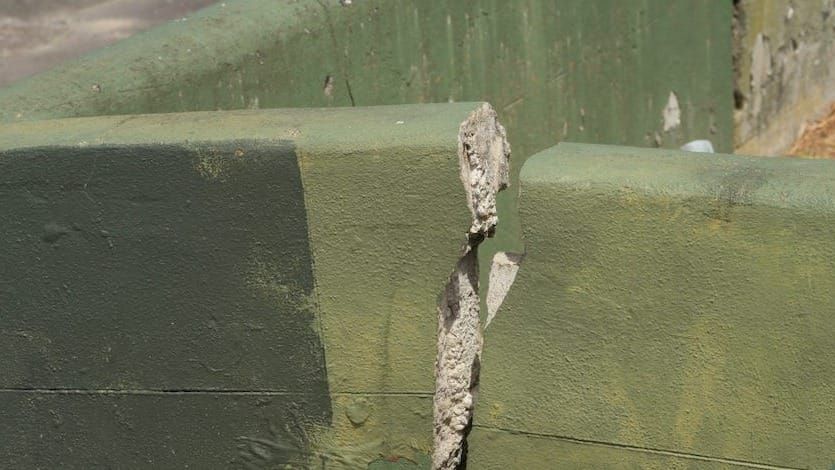
A few years ago, Neil Walton, Subject Leader for PGCE Art and Design at Goldsmiths, offered a thoughtful critique of the threshold concepts we’d developed for PhotoPedagogy and ArtPedagogy. His argument, in essence, was that our concepts lacked a historical spine. Without some account of how the idea of art has shifted over time, students have no way of understanding why contemporary practice is the contradictory, bewildering thing it is. He proposed a framework built around three paradigms: traditional, modern and contemporary. Each carries its own values, its own pedagogy, its own relationship to skill, expression and critique. It’s a useful schema, drawn partly from Thierry de Duve, and Neil is right that it addresses something important. Students do need ways of navigating the sheer strangeness of contemporary art. A pile of blankets in a gallery needs some context if it’s going to be more than a provocation.
But I want to push back, gently, on two fronts.
The first is about historical scope. Neil’s definition of “traditional” is precise and useful as a paradigm. Art rooted in convention, craft and imitation, where forms and meanings are passed on between generations and copying is a mark of respect. That’s a clear set of values and it generates a clear pedagogy. It’s possible to imagine colleagues in a school teaching art with this as their guiding light. Observational drawing, naturalism, manual dexterity. It’s a clear version of what art can be, if a little conservative. But as a historical designation, “traditional” has to cover an enormous span of cultures, periods and practices. Neolithic cave painting, Egyptian funerary art, Song dynasty landscapes, Byzantine icons, Renaissance perspective, Mughal miniatures, Edo period woodcuts. The paradigm might apply to each, but the differences between them are at least as significant as the similarities. And the three-part schema, however carefully Neil presents it, risks implying a narrative of progressive liberation, from tradition, through modernist experiment, to contemporary deconstruction. Positioned as the first of three stages, “traditional” can look like something to be overcome. And what comes after “contemporary”? The framework can’t easily answer because it’s structured, perhaps inadvertently, as a teleology.
The second, and more important, issue is about the difference between art and photography education. And this is where I think Neil’s critique, though fair on its own terms, might miss something about what our threshold concepts are trying to do.
Art students typically arrive at their GCSE or A-level course needing to be introduced to an unfamiliar discipline. They may have drawn and painted at primary school, visited a gallery or two, but the bewildering landscape of contemporary art practice is mostly new to them. The teacher’s job, in part, is to build doors into that landscape. Make it navigable. Provide frameworks, histories and reference points. Photography students arrive with a completely different problem. They already think they know what a photograph is. They’ve been immersed in photographic images since birth. They’ve made thousands of their own. By the age of fourteen, they’ve taken more photographs than most professionals managed in a lifetime a generation ago. Photography isn’t just a discipline they’re studying. It’s a mundane fact of their daily existence, as unremarkable as breathing. And most photographs are not made to be art. Photographs are democratic and diverse.
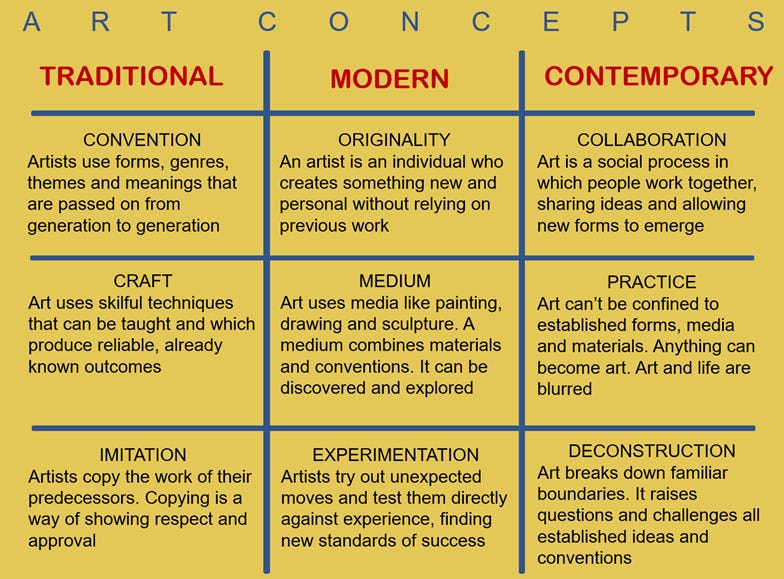
The trouble is that almost everything students think they know, their tacit understanding of photography, is unhelpful. Or, more precisely, it’s partial. They assume photographs are transparent, that a photo simply shows what was there. They think the camera records rather than constructs. They rarely notice the frame, the edit, the exclusion, the technology shaping what they see. They rely on photography’s reliability, to borrow the neuropsychiatrist Paul Fletcher’s quietly devastating phrase. So the pedagogical challenge isn’t to introduce students to something unfamiliar. It’s to make something familiar become strange. The teacher doesn’t need to build a door into a new building. The student is already inside a building they think they know. The teacher’s job is to show them the cracks.
Which brings me to Bayo Akomolafe and thresholds.
Paul John Dear, a generous reader of this Substack, recently pointed me towards his writing and I discovered this short piece called “On Doors and \cracks\.” The distinction Akomolafe draws is simple and, I think, profound. Doors are “anticipated architectural technologies.” They grant access, they permit exits, but they maintain the logic of the building. A door is part of the design. You move through it and the structure remains intact. Doors behave. Cracks misbehave. They aren’t designed. They aren’t anticipated.
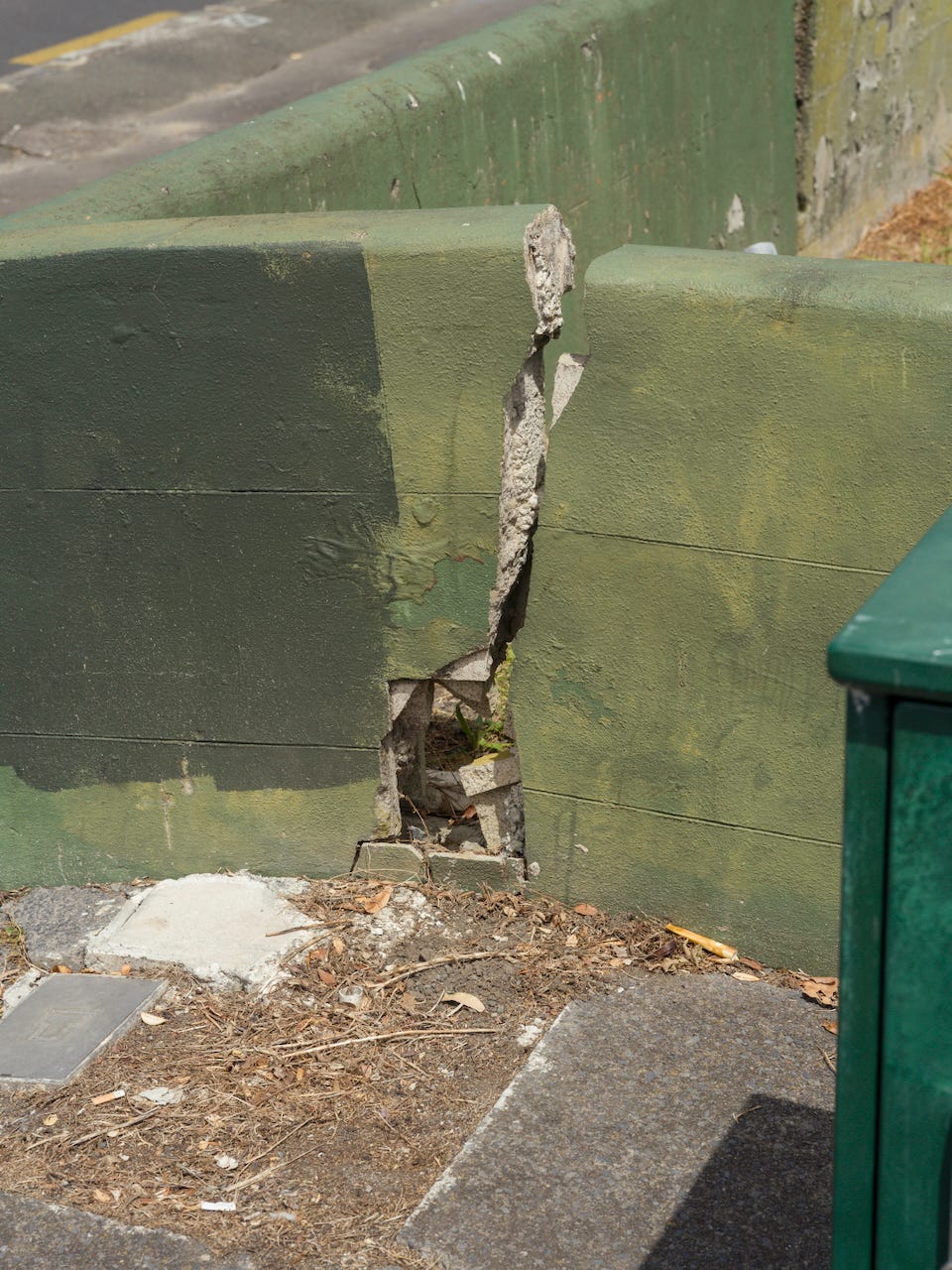
Akomolafe writes them in backslashes - \cracks\. They escape grammatical and syntactical rules. They can’t be pinned down. They don’t settle. Cracks are neither inside the frame nor outside it. They don’t offer solutions or guarantees.
Architects don't design \cracks\, don't anticipate \cracks\. \cracks\ are not part of the furniture; they are the excessiveness of the frame. Design's ecstasy.
— Bayo Akomolafe
Something about them, he says, “marks deterritorialising tensions, and obliquely trace out new realities.” The language is borrowed from Deleuze, but the idea is simpler than it sounds. Cracks unsettle the ground we’re standing on and hint at something we can’t yet name.
I don’t want to push this metaphor too hard (it might \crack\), but I think it clarifies something about what our threshold concepts are, and what they aren’t and why Neil’s critique, for all its intelligence, might be asking them to do a job they were never designed for.

When Chris Francis and I first developed the PhotoPedagogy threshold concepts, we knew they weren’t really concepts in the strict sense that Meyer and Land intended.* They were something looser. Invitations presented as propositions. Ways into rooms where several concepts might be lurking.†
Photographs are abstractions, shaped by technology.
Photographs rely on chance, more or less.
Each of them is a proposition that, when genuinely encountered, estranges the student from what they think they know. The photograph they took of their friend yesterday, casually, without thinking, is suddenly revealed as a series of decisions they didn’t know they were making. Framing, timing, angle, focus, inclusion, exclusion. The familiar becomes unfamiliar. The transparency cracks. This isn’t the same as walking through a door from one historical paradigm to another. It’s closer to noticing a crack in a wall you’ve been leaning against your whole life. The wall is still there. You’re still leaning against it. But now you can see light coming through a gap you’d never noticed before and it changes everything about how the wall feels.
I think this is what Akomolafe means when he says cracks are “the excessiveness of the frame.” They aren’t opposed to the structure. They’re what the structure can’t contain. Our threshold concepts don’t replace the need for historical knowledge, technical skill or visual literacy, in the conventional sense. But they introduce a kind of productive disturbance that no amount of historical scaffolding can provide, because what they disturb isn’t ignorance. It’s false confidence.
A student who understands the traditional/modern/contemporary framework knows a bit more about art history. A student who has genuinely encountered TC#5 knows less about photography than they thought they did. And that not-knowing, that estrangement, is where the real learning begins.
Thanks for reading PhotoPedagogy! Subscribe for free to receive new posts.
These posts will always be free but, if you enjoy reading them, you can support my analogue photography habit, and that of my students, by contributing to the film fund. Thanks to those of you who have already done so. All donations of whatever size are very gratefully received.
* https://www.tandfonline.com/doi/full/10.11120/plan.2006.00170004#d1e90
† This is currently the relationship between the propositions and particular concepts (although there are lots of related concepts lurking in the shadows):
TC#1 (genre): Photography has many genres, some old, some borrowed, some new. Genre shapes expectations. Photographs are clothed in ‘rules’ and conventions that shape our expectations. Some are inherited from painting e.g. portraiture or landscape. Some have been created by photography e.g. photojournalism. They help to define how we look. Some photographers have fun playing with these expectations.
TC#2 (light): Photography is the capturing of light; a camera is optional. Photography is, literally, writing with light. Understanding how light behaves, how it falls, reflects, reveals, conceals, is not just technical knowledge but a way of seeing.
TC#3 (purpose): Photography is a hybrid kind of picture making, democratic and diverse. There’s a lot more to the story of photography than making art. Photographs serve a host of different functions from capturing smiles at family events to analysing a crime scene. Photography has always been a popular form of image-making but, nowadays, it’s almost ubiquitous.
TC#4 (selection): Photography is an art of selection rather than invention. Unlike painting or drawing, which start with blankness, photography starts with excess. The photographer’s task is not to add but to select from the chaos of the visible.
TC#5 (abstraction): Photographs are abstractions shaped by technology. Photographs look like the things they depict, but they are not those things. They are two-dimensional, static, bounded, and silent. The apparent transparency conceals how much they leave out. The seeming truth is always partial.
TC#6 (chance): Photographs rely on chance, more or less. Reality contains more information than you can control. It is not arranged for your benefit. And, just when you think you have everything organised, something enters the frame that you didn’t expect. You can combat chance, tolerate it or embrace it. To some extent, all photographs are the result of chance processes.
TC#7 (context): Photographs are not fixed in meaning; context is everything. Photographs are wild, indeterminate, multi-layered and unpredictable things. The meaning of a photograph is never fixed. It depends on context, caption, sequence, the viewer’s knowledge or sensitivity (and many more factors). Photographs resist the control of their makers.
TC#8 (form): Photographs have their own visual language and ‘grammar’. What’s in the frame implies what’s outside of it. Every photograph represents choices, of moment, angle, distance and timing. Those choices could have been made differently.
TC#9 (power): Photographs are not neutral; they are susceptible to the abuse of power. The camera is not innocent. Photography has been used to classify, surveil, objectify and control. Understanding this history is part of understanding the medium.
TC#10 (time): Photographs warp our sense of time; they remind us of things lost. Photographs have a special connection to what was once in front of the camera. Every photograph is a memento mori, a reminder that what the camera captured is already gone.