The Adventure Continues...
Environmental portraits with the Mamiya RB67.
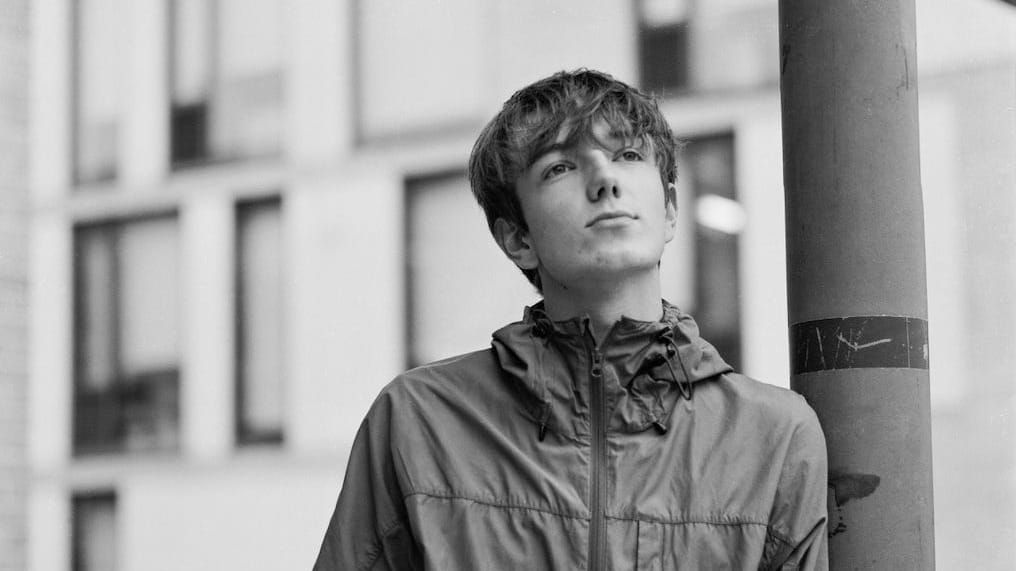
The challenge I’ve set myself this half term is to encourage my Year 12 A-level photographers to slow down and take time to stop, look and think. I’ve been reflecting on Luigi Ghirri’s idea of photography as a “great adventure”:
Beyond all critical and intellectual explanations, beyond all negative aspects it might possess, photography is, I think, a formidable visual language for fostering this desire for the infinite that inhabits each of us. As I have said before, it is a great adventure in the world of thinking and looking …
— Luigi Ghirri
My last post described how the group began their adventure a few weeks ago with medium format film.
Earlier this week I completed the first of several workshop sessions with my Year 12 A-level photographers in which the stabilisers were officially removed. They’re five weeks into the course and it’s time to stretch out a little.
When we looked together at the scans, there was an inevitable mixture of embarrassment (at looking at their own faces), displeasure (with an out of focus or poorly composed shot) and distinct pleasure in the ‘look’ of the successful 6x4.5 and 6x6 black and white images.

The group talked thoughtfully about their ‘poses’ and facial expressions, landscape versus portrait orientation, background context and the position of the subject in the composition. I wondered whether I could raise the stakes slightly by asking them to revisit the exercise but with even more intentionality.
I’d recently bought a Mamiya RB67 with the intention of making portraits in school so this seemed like the ideal tool. However, in order to really slow down and make deliberate decisions, what if each student was allowed to only make one portrait?*
There are 21 students in the class so it’s taken a while for all of them to make a portrait.† I take 2 or 3 of them to their chosen location and act as a guide while they set up the shot and collaborate both sides of the lens. We use the camera on a tripod so we have the option of slower shutter speeds. The RB67 is a big, heavy and slightly cumbersome ‘beast’ of a camera, much bigger than either the Bronica ETRS or SQ cameras we have used previously. It invites a more deliberate approach. We talk about camera angles and why it might not be a good idea to look down on your subject. We talk about composition, about verticals and horizontals, about close-ups, medium and long distance shots. We consider the environment that reveals or disguises the context of our portraits. We play with rotating back, looking at the difference between portrait and landscape orientations.‡ Once the pose has been negotiated and the camera angle set, we focus carefully, using the magnifier. Each student has downloaded a lightmeter app so we can make decisions about exposure values and get a good balance between aperture and shutter speed. We talk about depth of field, what we want in and out of focus, what should be still and what might move.
All of this takes time, precisely the point of the exercise. With only one shot, the stakes are high. Here are some of the pictures the students have made so far.


My feeling is that there has been a dramatic improvement in the quality and ambition of the portraits. Interestingly, on the walk back to class after each picture has been made, the conversation tends to be about process and ‘feel’: what it’s like to handle the heavy camera; the amount of time it takes to compose the shot; waiting for the best light; the number of different decisions that must be made; the sound of the mechanical shutter and the double wind. It’s a reminder that making/taking photographs is a physical experience and part of what constitutes photo literacy.
I’m really proud of the group. They’ve been super patient, engaged and kind to one another. I’m looking forward to making more images alongside them when we take our first trip to East London in a few weeks to see the new show at Autograph, hear from the talented Tereza Červeňová and make some environmental portraits in the local area.
I can’t wait!
Thanks for reading PhotoPedagogy! Subscribe for free to receive new posts.
These posts will always be free but, if you enjoy reading them, you can support my analogue photography habit, and that of my students, by contributing to the film fund. Thanks to those of you who have already done so. All donations of whatever size are very gratefully received.
* I was certainly trying to limit the cost of film and development, but the slightly more noble intention was to use the constraint of a single shot to really focus the attention of each photographer and encourage them to invest as much time as possible in constructing their shot.
† At the time of writing, we’ve been making these portraits for 4 hours and there are still 2 students left.
‡ One of the best features of the RB67 is its rotating back. The clue’s in the name.